Lifetime Citizen Portal Access — AI Briefings, Alerts & Unlimited Follows
Austin EMS reports lower vacancy rate, recruitment steps; public-safety dashboards previewed
Loading...
Summary
Chief Lukritz told the Public Safety Committee that Austin-Travis County EMS reduced its vacancy rate from a COVID-era peak and outlined recruitment and retention changes; the three public-safety departments previewed draft monthly dashboards to improve transparency on overtime, staffing and response performance.
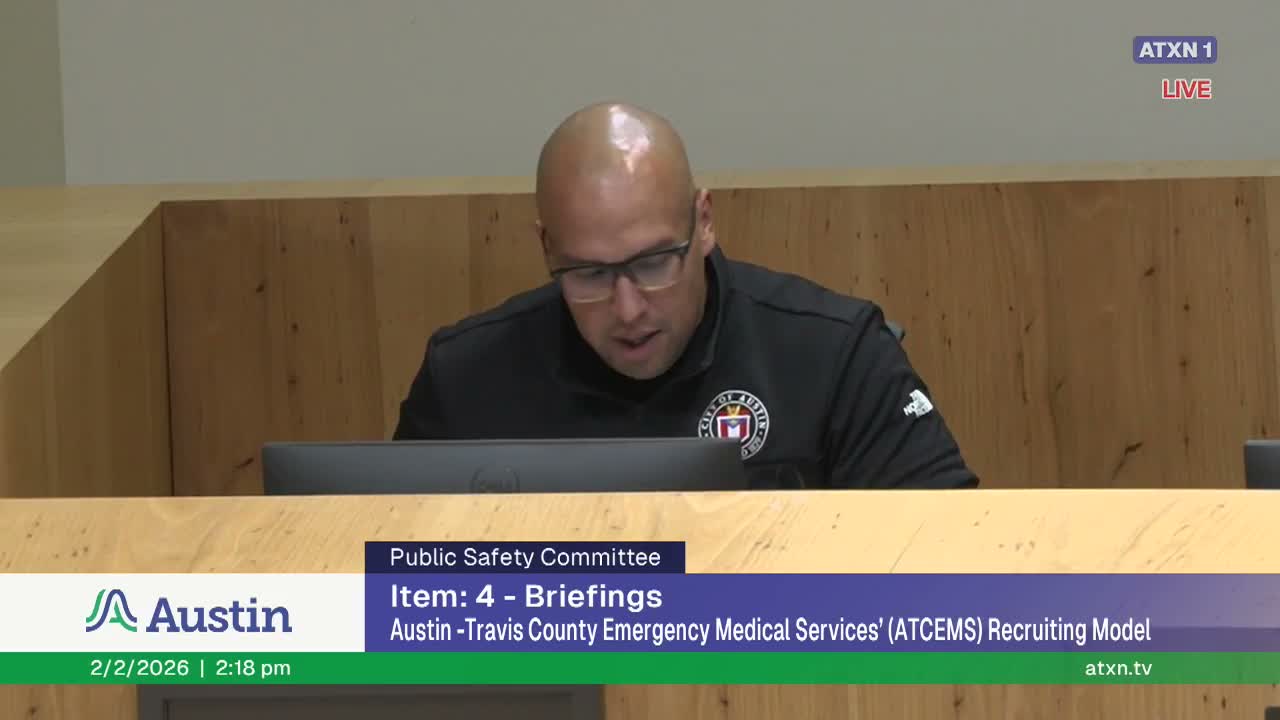
Austin-Travis County Emergency Medical Services on Feb. 2 told the Public Safety Committee it has reduced vacancies since a COVID-era peak and is pursuing a mix of recruiting and retention strategies while the city's three public-safety departments unveiled first-draft dashboards intended to publish monthly staffing, overtime and operational metrics.
Chief Lukritz said the department saw vacancy rates spike during the pandemic and reach a 25.4% peak; he presented current slide figures showing the vacancy rate down to about 15.1% and noted a related slide that reported 602 filled positions out of 715 sworn positions (a 15.8% vacancy on that slide). He said department growth (many new authorized positions added since FY 2020), retirements (about 30% of separations) and a competitive regional market are primary drivers of vacancies.
To address staffing, Lukritz described steps taken since 2022: expanding academies from two to four per year, shortening the academy from 10 to eight weeks in recent revisions, streamlining application and disqualifier rules, adding stipends and more field training officers, and launching direct hiring for paramedics to shorten time to fill paramedic-level vacancies. He said the department secured recruiting funds via the council and budget office to hire a dedicated recruiting manager and two coordinators and reported that 35 candidates are slated for an upcoming large academy.
Lukritz also emphasized retention measures including peer-support and mental-health programs and a retirement-attainability committee formed as part of a labor agreement. He described the community health paramedic program (CHP) as four teams focused on substance use, mental health, homelessness and other high utilizers and said the CHP teams had nearly 1,000 field contacts in November.
The meeting also previewed draft dashboards from Fire and APD. Fire Chief Joel Baker said November totals included about 10,447 calls (683 priority-1 calls) and discussed response-time metrics relative to NFPA's eight-minute goal. Chief Davis presented APD draft metrics showing year-to-date spending of about $84 million of a $526 million budget, roughly $5.6 million in overtime and approximately 51,000 overtime hours, and reported an APD vacancy rate figure near 19% in the slides. Committee members asked staff to add a computed percentage remaining for year-to-date budgets, include definitions for priority levels for public audiences, and allow drilldowns (for example, scheduled vs. unscheduled leave) to clarify drivers of overtime.
Staff described the dashboards as a first draft and an iterative "living" product that will be refined with council feedback. The committee asked staff to add month-to-month and year-to-year historical vacancy and separation trends and to consider separating cadet separations from other separations for clearer analysis. Staff agreed to return with revisions to the dashboards at future meetings.