Get Full Government Meeting Transcripts, Videos, & Alerts Forever!
Get email alerts on the Community Services Grant Program topic
No spam. Unsubscribe anytime.
Alpine council refines nonprofit grant policy, plans May workshops to score applications
Summary
At a Jan. 20 workshop the Alpine City Council reviewed revisions to a proposed community services grant program: removing disaster relief and beautification from eligible uses, shifting a veterans focus to elderly services, excluding library funding from the program, and directing staff to align the scoring rubric with the hotel occupancy tax process ahead of two May workshops.
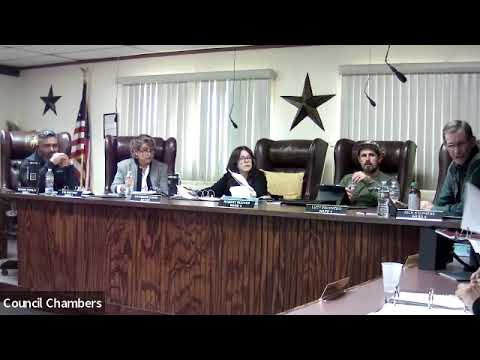
The Alpine City Council convened a workshop on Jan. 20 to review revisions to a proposed community services grant program for nonprofit organizations and to set timelines for scoring and awarding funds.
The mayor opened the meeting saying, “Today, we're discussing funding for nonprofit organizations and the possible implementation of a community services grant program,” and asked staff and a tourism official with HOT (hotel occupancy tax) scoring experience to help design an evaluation rubric. City staff summarized past work on the draft policy and said the council had discussed the item at multiple meetings in 2025 and in a Jan. 20 workshop earlier that day.
Council members agreed to several substantive edits to the draft policy. They instructed staff to remove disaster relief and community beautification as eligible categories; to replace an explicit veterans line with language prioritizing services for elderly residents; and to add children’s sports and youth recreation to the list of priority activities. The council further agreed that library funding should be excluded from the grant program and handled as a separate, city-funded line. The mayor relayed that a leadership meeting participant, Kirsten Moody, “made a valid point that she wanted us to mention is that she thinks the library funding needs to be separate from this because most municipalities support their library,” and council members asked staff to add exclusion language to the policy and draft an ordinance for legal review.
Budget constraints and transparency were recurring themes. Staff noted prior demand for subsidy exceeded available funding: “We had $400,000 budgeted, and I think it was $628,000 or something like that,” and that the year before requests exceeded $1,000,000. Council discussed whether to set aside a placeholder amount—staff suggested a $100,000 test figure—to include in upcoming budget workshops, and asked for application language that would require applicants to state what percentage of their total budget a requested award would represent.
On scoring, council asked Chris (the tourism director, present to advise on HOT grants) to map the nonprofit program’s five focus areas into the HOT scoring rubric so committee members could score consistently. Chris said he would prepare a spreadsheet and proposed columns for scoring including number served, capacity to deliver services, professionalism/financial competence, longevity/track record, and diversity of funding, with additional extra-credit points for innovation or serving particularly vulnerable populations. "If you do a straight, everyone's 20%," Chris said when describing how a 100-point rubric might be weighted.
Council agreed to a schedule to ensure the grant process aligns with the city budget calendar. The mayor asked staff to place two council workshops at 4 p.m. on May 5 to review scored applications and on May 19 to recommend awards; those sessions would inform allocations for the budget year beginning Oct. 1, 2026. Staff also noted the HOT committee’s timeline as a model: an application window in March–April, committee scoring in mid-May, then recommendations to council.
Council members and staff discussed process governance: they favored a committee to score and vet applications so council is presented with scored, vetted recommendations rather than reviewing raw applicant requests. Staff said they would finalize the scoring spreadsheet, circulate it for comment, and complete language revisions (including the library exclusion) for legal review and a future council consideration.
The workshop ended with staff commitments to produce the scoring spreadsheet and for council to reconvene in May to finalize awards. The mayor adjourned the workshop.