Get Full Government Meeting Transcripts, Videos, & Alerts Forever!
Get email alerts on the Local Budget topic
No spam. Unsubscribe anytime.
Rangeley manager proposes budget with new planning director, stipend COLA and higher benefits costs
Summary
Town manager presented a draft FY2027 budget that would raise operating costs by just under $78,000, proposing a return-to‑2019 COLA for stipends, increased HRA/health premiums, a one‑time IT spend and a new director of community development potentially offset in part by TIF project funds.
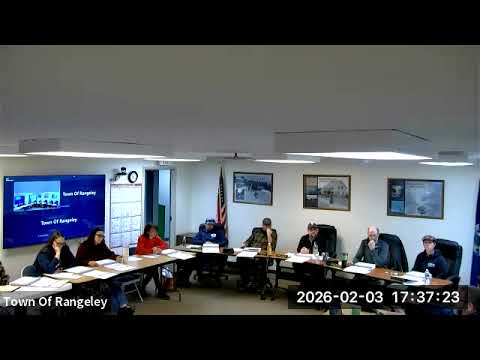
Joe, the town manager, laid out a draft FY2027 budget that would raise town operating costs by "just under $78,000," tying much of the increase to benefits and a proposed new staff position.
The budget presentation foregrounded a proposal to restore stipends to 2019 levels with a cumulative COLA (described by the manager as “about 6% in total”), which he said raises stipend lines by roughly $9,000 and pushes related FICA and workers'‑comp costs higher. "I'm proposing a COLA increase back to 2019," the manager said during the meeting.
Health benefits were another driver. The manager described an HRA arrangement in which the town reimburses qualifying full‑time employees up to $4,700 for family coverage (and $2,300 for single coverage), paid through a third party. He said the town bears the HRA cost and employees do not contribute to that town‑paid HRA. "That is absolutely correct," he told the committee when asked whether employees contribute.
A major personnel proposal is the creation of a full‑time Director of Community Development to oversee planning, codes, enforcement, economic development and tax‑increment financing (TIF) administration. Joe said building permits, inspections and other workload indicators have grown and that the new position would provide continuity and a staff champion to implement the recently adopted comprehensive plan. "I am proposing the creation of a new position…director of community development," he told the board. The manager said the position’s salary rationale was drawn from MMA averages and an earlier town study; he estimated the position could be partially funded—up to $28,000 annually—by project (TIF) funds pending required approvals.
The budget also includes a series of one‑time and recurring technology and equipment items: approximately $5,500 for replacement laptops or tablets for town users, Microsoft Project licenses to track the 10‑year comprehensive plan implementation, and Adobe/Microsoft software that managers said would improve document workflows. "We're promoting that software… that's a 10‑year project," the manager said of the plan implementation tracking software.
Public safety lines saw mixed changes. The police budget showed a small net decrease overall but included increases for training, subscriptions and two department‑owned rifles to supplement officers’ personal weapons. Emergency medical services contract costs were described as up about 2% over last year; fire department lines rose in part because of salaries and benefits.
Board members asked clarification questions across the packet: how HRA payouts operate, whether employees earn stipends or additional pay for committee work, the mileage and use of the town manager vehicle (the manager estimated roughly 8,000 miles per year), and whether TIF funds could be used for legal costs or salary offsets (the manager said TIF use for such items would require town meeting approval and/or project account authorizations).
Several operational items were highlighted for follow‑up: potential negotiation with Verizon over a tower contract set to renew near 2028, a planned website overhaul with slightly higher costs, a review of diesel fuel treatment and generator tank maintenance, and confirmation of committee appointments where paperwork was unclear.
No final vote on the budget or on the proposed new position occurred during the session; the manager said the proposed director "would not be billed until the board voted the cap of the budget process and the first policy to do." The packet and spreadsheet the manager referenced will be circulated for further review and the board indicated it will return to these items in future budget meetings.
Ending: The meeting closed after committee questions and a stated plan for members to "digest" the budget packet; no formal appropriation or adoption took place in this kickoff session.