Get AI Briefings, Transcripts & Alerts on Local & National Government Meetings — Forever.
Committee approves SB96 substitute to make licensed child‑care homes permitted by right in residential zones
Loading...
Summary
A committee substitute for SB96 would permit licensed and registered childcare homes by right in residential zones and centers in commercial/mixed‑use zones, aiming to reduce zoning barriers to opening child‑care slots; advocates said it would expand capacity, while some senators raised traffic, septic and local‑control questions. Committee moved the substitute forward by recorded vote.
Senate Bill 96 (committee substitute) would standardize zoning rules for child‑care providers statewide by permitting licensed family child‑care homes by right in residential zones and allowing centers by right in commercial, mixed‑use and high‑density residential zones. The sponsor said the change is intended to reduce inconsistent local zoning barriers that currently impede providers from opening or expanding services.
State regulators, the deputy state fire marshal and multiple child‑care and early‑childhood advocacy groups testified in support, citing research that local land‑use rules and special‑use permits create delays and inequitable access. "We lose about $536,000,000 annually because of the lack of access to affordable infant and toddler care," a state official told the committee and urged the bill to streamline licensing and zoning processes.
Providers described local obstacles: Adriana Astorghan, a registered home provider, said septic‑system requirements and local engineering costs make licensing prohibitively expensive in parts of the state and estimated that removing zoning hurdles could help several providers expand and serve dozens more children. The sponsor and ECCD counsel said state environmental and construction requirements (for example, septic rules) still apply and the bill does not waive those baseline safety standards; the change prevents local authorities from adding requirements that exceed what other residential uses would face.
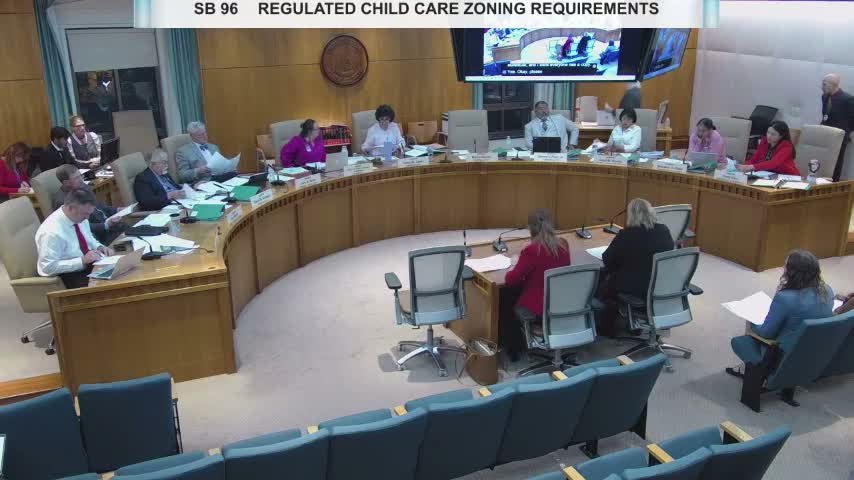
Committee members questioned traffic, neighborhood impacts and whether the bill would displace local land‑use authority. ECCD counsel and sponsors emphasized that the bill does not prohibit zoning nor exempt providers from baseline safety rules; it aims only to prevent child‑care operations being treated more harshly than other uses in the same zone. After extended questions, the committee approved a due‑pass recommendation (recorded 7–2) on the substitute.
Next steps: SB96 moves forward with committee substitute language and sponsor/stakeholder follow‑up on remaining technical questions.