Get AI Briefings, Transcripts & Alerts on Local & National Government Meetings — Forever.
Finance committee considers $2.75M private placement and TIF plan to unlock housing project
Loading...
Summary
Committee reviewed a staff proposal to issue $2.75 million in private‑placement debt to fund $1.4M of infrastructure and a ~$1.2M land purchase to enable a Casto/Capstone housing development; members pressed for guarantees, a fund‑impact analysis and legal documents before committing.
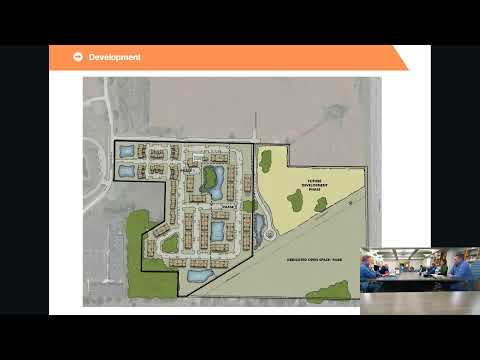
Findlay City staff outlined a financing and land‑acquisition proposal intended to unlock a private housing project in a recently established tax‑increment financing (TIF) district. Staff described a recommended private‑placement debt issuance totaling $2.75 million on a 10‑year schedule to cover approximately $1.4 million in infrastructure (road, water, sewer, storm) and roughly $1.2 million to secure 21 acres of land that the city could hold for future connectivity and park/open‑space use.
Staff said the annual debt service on a $2.75 million issue is roughly $333,000 per year for 10 years. The negotiating developer (referred to in meeting materials as Capstone/Casto) has an unfinished development agreement that would pay the city about $140,000 per year for 10 years (totaling $1.4 million). Two other adjacent property owners discussed a one‑time contribution of about $500,000 in year one. Taken together and under staff’s modeling assumptions, the TIF district’s projected revenues over a long horizon would show a net positive to the city; staff emphasized those revenues are back‑loaded and contingent on further development.
Committee members repeatedly sought clarity about downside protections: what guarantees or collateral back the development agreement; what happens to debt service if the developer does not deliver; and how a shift in property‑tax receipts (TIF capture) affects city operations. Staff said outside counsel prepares development agreements with enforcement provisions and that procedures exist to restrict utility taps or other approvals should developers default, but committee members asked to see the draft legal language and the exact guarantee mechanics.
Members also asked about site constraints (wetlands, utility easements and a Sunoco pipeline noted in the discussion) and about the sensitivity of fund ratios and the capital fund’s ability to absorb an additional $333,000 annual payment; staff said the debt could be allocated across funds (capital, sewer, water) and that the committee would receive a breakdown of impacts and debt‑to‑revenue ratios.
Next steps: staff will assemble a full package — legal documents, debt issuance timetable, pro‑and‑con analysis of cash vs. debt, fund‑impact modeling and guarantees language — and circulate it to the committee and the auditor (Jim) before further committee or council action. No formal action was taken at the meeting.