Senate committee backs online age‑verification bill that adds tax and enforcement to fund youth mental‑health services
Loading...
Summary
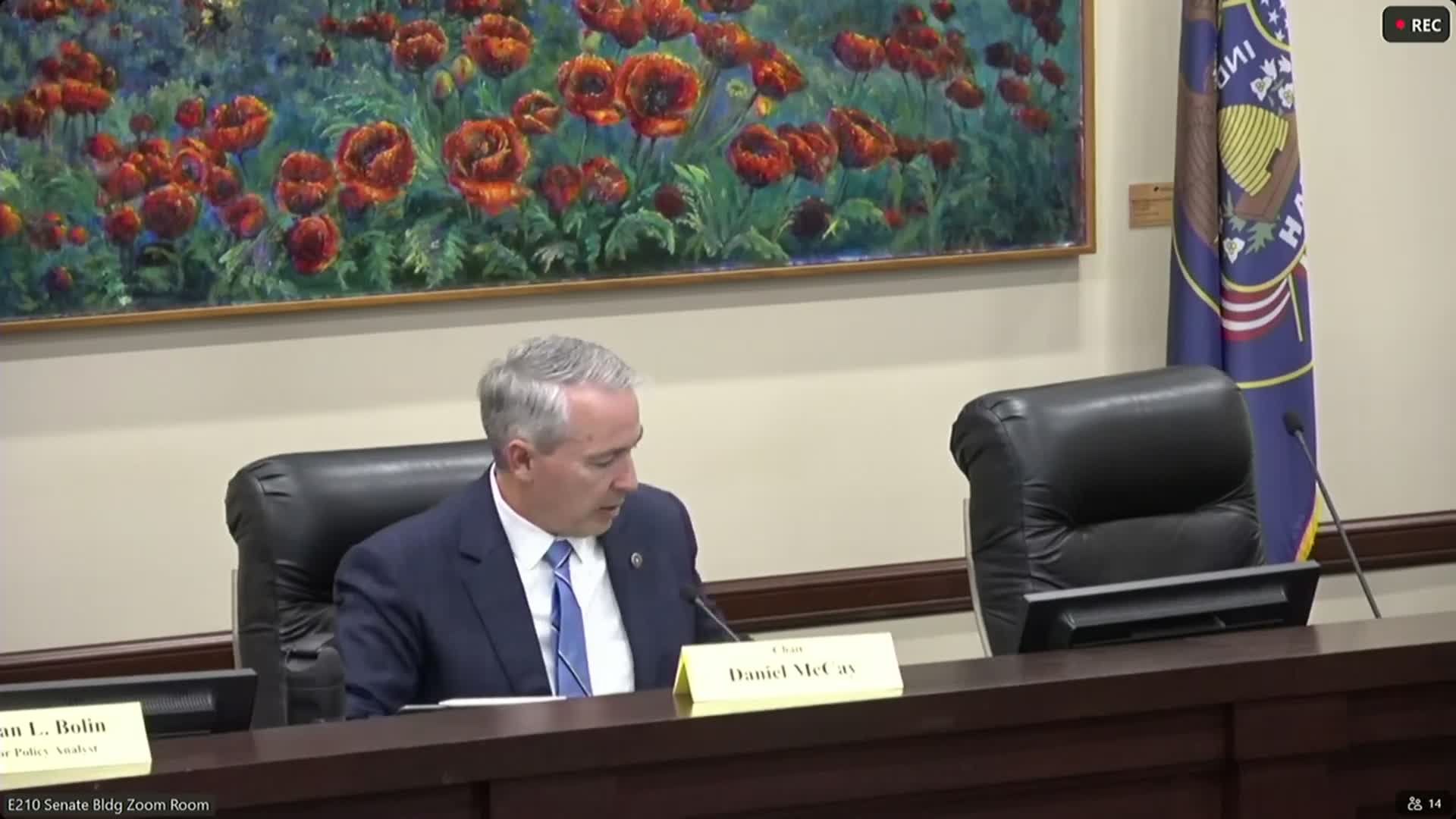
The Senate Revenue & Taxation Committee on Feb. 5 recommended First Substitute SB 73 to the full Senate after adopting an amendment that clarifies enforcement and tax administration. Sponsor Sen. Musselman said the bill creates a Division of Consumer Protection enforcement role and a 2% excise tax to fund youth mental‑health services.
Senators in the Revenue & Taxation Committee voted Feb. 5 to recommend First Substitute SB 73, a bill that would require online adult‑content sites to implement age‑verification measures, authorize state enforcement, and impose a 2% excise tax on covered transactions to fund youth mental‑health treatment.
Sponsor Sen. Jason Musselman said the bill was crafted after a 2025 U.S. Supreme Court decision and aims to impose “reasonable and transparent expectations” on providers while remaining narrowly tailored to avoid unconstitutional burdens on adult speech. “The statute only incidentally burdens the protected speech of adults,” he read from the court opinion used in drafting the bill.
Under the substitute, the Division of Consumer Protection would make initial determinations about covered entities and refer those names to the Utah State Tax Commission for tax administration. The bill establishes an online youth protection account: 90% of collected money would go to mental‑health services for youth, while a portion would be reserved for enforcement. Sponsor Musselman said the tax would be an excise on transactions and noted many sites are free so would not be taxed; he estimated the additional cost for an average subscriber would be modest.
Tax Commission Chairman John Valentine told the committee the tax commission would not be responsible for content screening and that the referral mechanism is designed so the agency would perform audits and tax collection only after referrals from Consumer Protection. “We aren’t going to give you the audit protocols,” Valentine said, noting the commission would set audit criteria for those who fail to pay.
Katie Haas, director of the Division of Consumer Protection, told senators the technology to perform age verification and to mitigate VPN workarounds is increasingly feasible. “It’s a question of whether they’re willing to do it, not whether they can do it,” she said, urging lawmakers that companies can implement the methods the bill would require.
The committee adopted Amendment 1 to clarify that the tax commission administers the tax based on referrals from Consumer Protection, then voted to send the bill, as amended, to the full Senate with a favorable recommendation.
Next steps: SB 73 will go to the Senate floor for further consideration, including a pending fiscal‑note update the sponsor said is still being calculated.