Omaha Public Schools reports big gains in AP and dual-enrollment but participation gaps remain
Summary
Omaha Public Schools officials told the board Feb. 19 that AP and dual-enrollment participation has grown substantially since 2022, with course enrollments and passing rates rising, while students eligible for educational benefits, English learners and those with IEPs remain underrepresented; the district described targeted strategies to expand access.
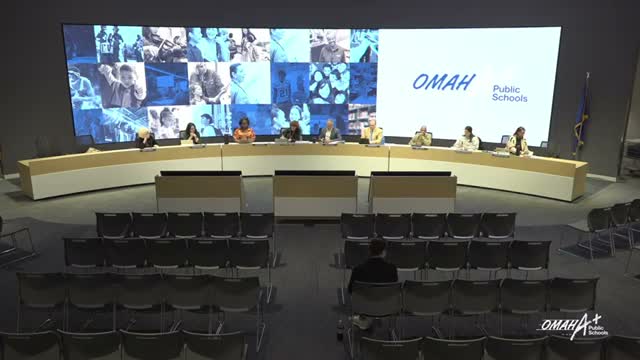
Omaha Public Schools reported significant growth in advanced-academic participation during a Feb. 19 board meeting, but district staff said work remains to close representation gaps for low-income students, English learners and students with individualized education programs.
Dr. Beth Maloney, the district's teaching and learning consultant for advanced academics and gifted-and-talented education, told the board that there were 697 more unique AP student enrollments in 2025 than in 2022, a 27% increase, and 1,585 more AP course enrollments in 2025 compared with 2022 (a 33% increase). ‘‘Passing exam scores continue to increase, up 4.1 percentage points from the previous year, equating to 405 more passing exams in just that one year,’’ Maloney said.
Why it matters: district leaders and board members described the increase as evidence that more students are accessing college-level coursework while in high school, which can translate into college credit and tuition savings. Maloney said AP Scholar recognition can represent roughly nine college credits, which she said could equate to about $2,300 in tuition savings at a state institution.
What the data shows: Maloney highlighted program breadth across OPS's nine high schools: AP Capstone is offered at Burke, North and Westview; Central offers the International Baccalaureate (IB) diploma; Benson, Bryan, Buena Vista and South offer Cambridge International ACE diplomas; and Northwest runs an early-college partnership with Metropolitan Community College. She said 86% of the first Northwest early-college cohort on the MCC campus earned Dean's List recognition after their first trimester.
Equity and access: Maloney and board members noted consistent demographic patterns: female students participate at higher rates in advanced courses, while students eligible for educational benefits, English learners and students with IEPs are underrepresented. ‘‘Looking at participation through a demographic lens helps us understand access more clearly,’’ she said, and added the district uses those data to target advising and outreach.
Strategies to expand access: Maloney said the district holds annual leadership meetings with high-school teams to review data and set school-level plans, partners with counseling staff for placement and outreach, and has added 10th-grade AP Seminar English and AP precalculus to broaden the pathway into advanced coursework. She emphasized the district prefers that students try advanced courses rather than be limited by strict test cutoffs.
Board questions and next steps: Board members asked about parental outreach, whether dual enrollment is available at all high schools, and causes for variation in pass rates between schools. Maloney said dual enrollment is available in every high school but depends on partner-approval and teacher credentials, so not all courses are identical across campuses. She said the district will continue to track participation and outcomes and to refine advising and supports.
Closing: The presentation concluded with the board thanking staff; district leaders said the work is part of a long-term continuum from elementary through high school designed to increase both access and success in college-level coursework.