
Humboldt County Human Rights Commission meeting spotlights nonprofit fragmentation, outreach gaps and a jail complaint
Get AI-powered insights, summaries, and transcripts
Subscribe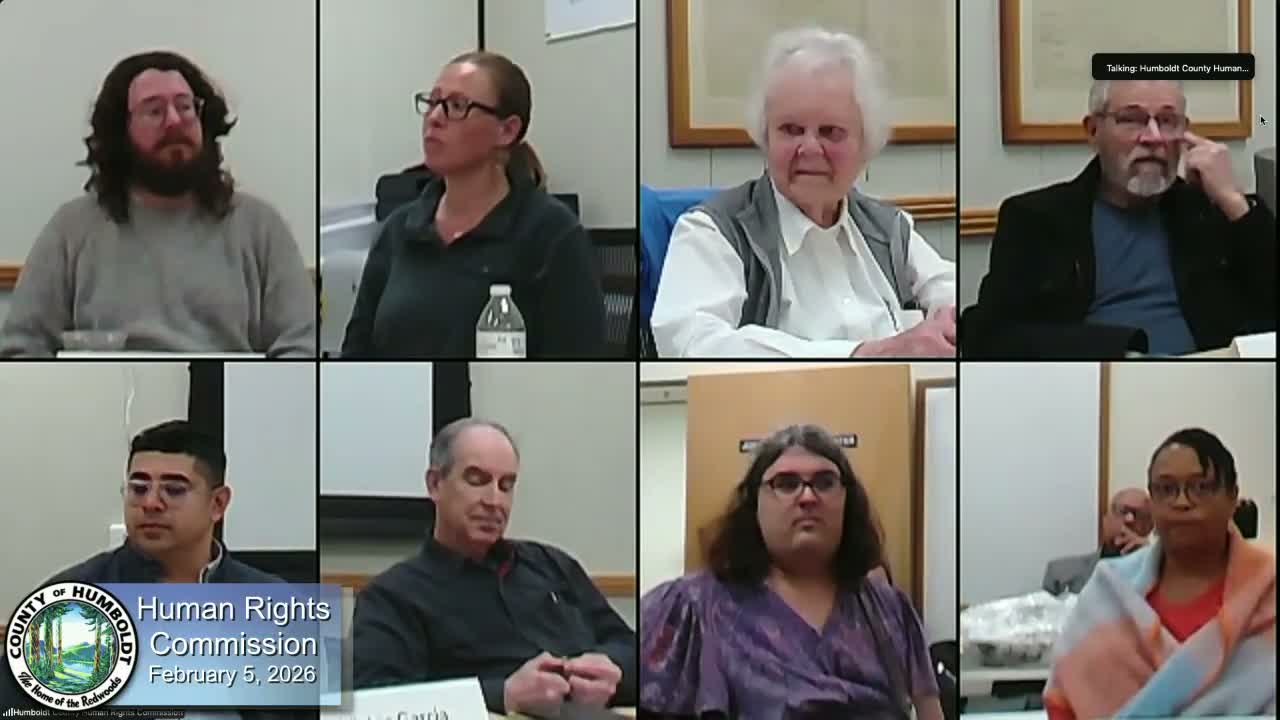
Summary
At a public meeting the commission emphasized proactive community organizing, shared-services models for nonprofits and monitoring of a transgender inmate’s housing; participants recommended focused issue meetings, media partnerships and practical steps to increase local coordination.
The Humboldt County Human Rights Commission used a public meeting with dozens of community participants to press for deeper outreach and practical collaboration among local nonprofits, and to describe an ongoing concern about jail treatment for a transgender inmate.
"Our primary function is to advise the board of supervisors on policy issues that we think benefit the community in general," said Jim Glover, chair of the Human Rights Commission, describing the panel as an all-volunteer advisory body. He said the commission helped initiate the county’s sanctuary ordinance and can make recommendations to county departments.
Participants spent much of the meeting describing barriers that limit collaboration: too many very small, niche nonprofits; insufficient general operating funds; difficulty buying insurance for events; and a lack of shared administrative infrastructure. Speakers pointed to local models—InkPeople’s umbrella approach and several cross-sector leadership tables—that pool administrative services and reduce duplication.
Several people raised concrete tools and partnerships. One attendee encouraged groups to use Access Humboldt’s "Bold Day of Giving" to raise funds; another noted local media could filter community calendars so teenagers and young adults can easily find events for that age group. The suggestion that the commission hold focused meetings for single topics—such as homelessness—won support as a practical step to move from conversation toward coordinated action.
The meeting also flagged a personnel and human-rights concern: Glover described work the commission is doing on behalf of a jail inmate who identifies as female but "is being treated as a male inmate," and said the commission has contacted external groups that might help. "We are trying to be responsive to her concerns that she is being treated as male when she identifies as female," he said.
Next steps: Commissioners said they will solicit written suggestions, invited community organizations to host or attend focused issue sessions and reminded the public the commission can receive complaints and make policy recommendations to the Humboldt County Board of Supervisors. Meeting participants were given the commission contact (email posted on the Humboldt County website) and encouraged to attend future meetings.