Get Full Government Meeting Transcripts, Videos, & Alerts Forever!
Get email alerts on the Project Downtown topic
No spam. Unsubscribe anytime.
Next Generation advisory board pushes concise, evidence-backed recommendations on Project Downtown
Summary
At a Feb. 5 meeting, Littleton's Next Generation Advisory Board agreed to draft short, one-line recommendations to City Council urging an integrated citywide investment plan, prioritized tree canopy and arborist input, designer hiring criteria, and measures to limit construction disruption; public comment said Project Downtown lacks alternatives and broader context.
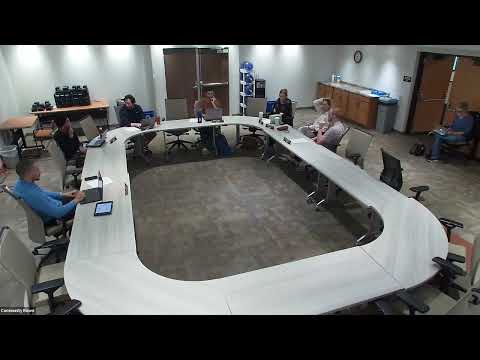
The Next Generation Advisory Board on Feb. 5 agreed to turn weeks of broad discussion about Project Downtown into a short, actionable list of recommendations aimed at Littleton City Council.
Pam Chadbourne of Loop Loggers opened public comment saying, "you haven't heard adequate information about this," and urged that Project Downtown be included "in an overall plan for all of the city," noting the project was described in materials as "like 140,000,000 and, in 5 phases." Her remarks pressed the board to seek prior letters to council and fuller disclosure of how downtown investments fit with other city districts.
Board members spent the meeting weighing big-picture goals against the need for concrete guidance. The chair, Chair, Next Generation Advisory Board, said the group should pair high‑level endorsement with specific items the council can act on: "We need to care a lot about trees in this group." Member 2, an advisory board member, urged pragmatism: "We think that project's well scoped," but recommended the board present concrete checkpoints so council sees tangible NextGen input.
The recommendations the board agreed to assemble — in a two-step approach — are to be concise one-line bullets the board can reach consensus on, followed by deeper briefs on topics that merit more research. Among the topics members said should appear in the initial list were:
- Ask council to ensure Project Downtown is coordinated with an integrated citywide investment timeline (so other districts are not disadvantaged); - Prioritize tree canopy and include an arborist on planning teams, supported by data tying canopy to business and pedestrian activity; - Advise council to require designers with relevant, place-based experience rather than a generic procurement approach; - Request that phased construction minimize disruption to downtown businesses with scheduling and staging safeguards.
Members discussed how to present those ideas to have weight with council — not merely opinion pieces but short, evidence-backed statements. Several speakers suggested attaching short data points (for example, research showing higher sales on tree-lined commercial streets) or example vendors the city might interview for design work.
On timing and next steps, the board set a two-week window for members to submit one-line recommendations to compilers (Member 2 and Ricky); the chair said the board would send a follow-up email the next day with submission instructions and planned to reconvene in March to finalize items for council. Members also flagged related upcoming opportunities for information: a Main Street improvements study session on Feb. 10 (slides and recording noted as useful background), a stakeholder kickoff meeting next Thursday from 6–7 p.m., and a Saturday event 10–11:30 a.m. listed on a state calendar.
No formal motions or votes were recorded on Project Downtown at the meeting. Instead, members emphasized consensus-building and producing a deliverable that demonstrates NextGen's capacity to give concise, practical advice. The chair closed the meeting by reminding members that NextGen holds a seat on the city's 3A subcommittee (a budget review body) and adjourned the session.
The board's immediate action is procedural: collect short bullets from members, circulate a compiled list for review, and return in March with items the board can formally forward to Littleton City Council.