Get Full Government Meeting Transcripts, Videos, & Alerts Forever!
Get email alerts on the Zoning Text Amendments topic
No spam. Unsubscribe anytime.
Planning Commission recommends zoning text amendments that would ease ADU occupancy rules and narrow special‑use permit triggers
Summary
The commission voted unanimously to recommend City Council approve a package of zoning text amendments removing age/disability ADU occupancy limits, setting size thresholds for some special‑use permits (30,000 sq ft for indoor recreation; 10,000 sq ft for certain medical care facilities), and splitting animal‑care uses to permit veterinary clinics while keeping kennels as SUPs.
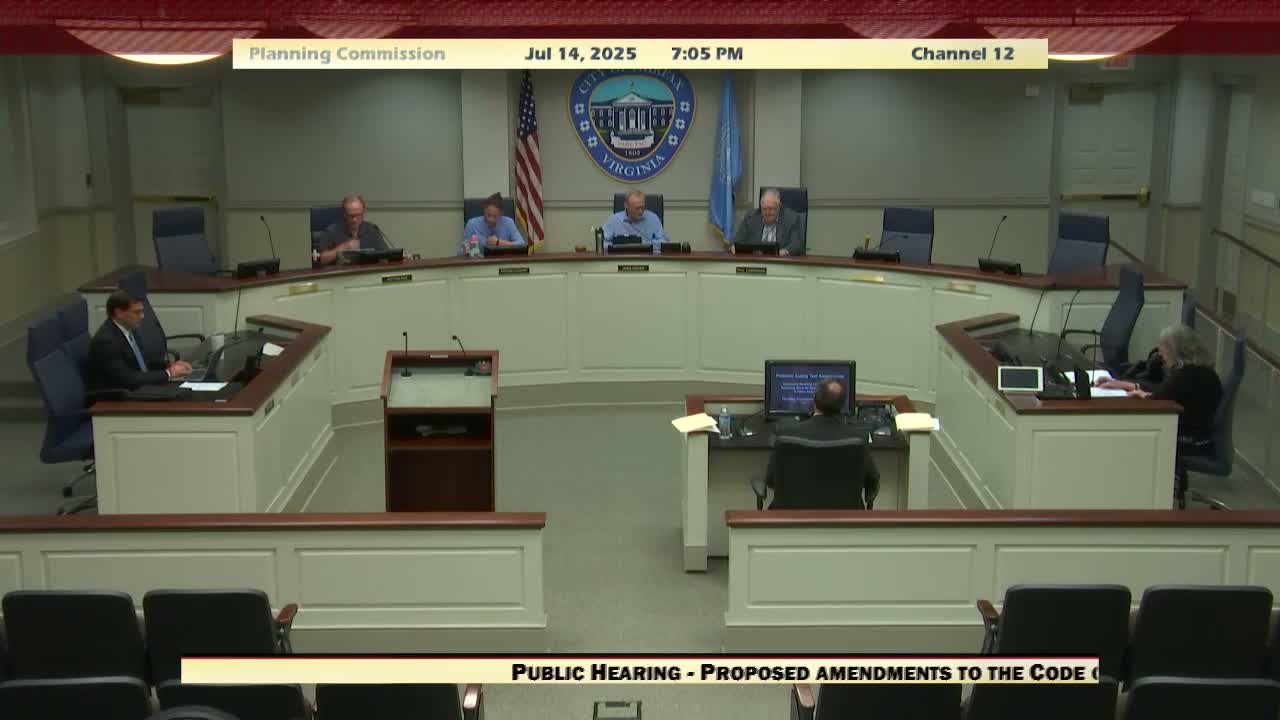
The Fairfax City Planning Commission on Monday recommended that City Council approve a set of zoning text amendments aimed at simplifying administration and removing what staff described as outdated occupancy hurdles for accessory dwelling units (ADUs).
Senior planning staff presented a package that leaves the ADU owner‑occupancy requirement in place but would strike an occupancy provision requiring that either the main house or the ADU be occupied by someone age 55 or older or by a person with a disability. “What’s being proposed here does not involve changing the physical standards of ADUs,” staff said, adding the change is limited to the occupancy language and is intended to remove a regulatory barrier for landlords and potential tenants.
The amendments also propose new, size‑based thresholds to reduce the need for special‑use permits in cases where businesses operate unobtrusively. For indoor recreation uses — historically applied to large facilities such as bowling alleys or skating rinks — the draft ordinance sets a 30,000‑square‑foot minimum for the use to retain SUP status; smaller gyms, day spas and similar venues would be classified as personal services and generally would not need an SUP. Staff pointed to recent conversions (a downtown CVS into an indoor pickleball court was cited in discussion) as examples of the smaller‑scale facilities the change would reclassify.
For medical care facilities, staff proposed a 10,000‑square‑foot cutoff to distinguish more intensive surgical centers and hospitals from smaller urgent‑care or doctor‑office uses; staff said many urgent‑care facilities now operate closer to the scale of a doctor’s office and the threshold is intended to reduce confusion in administration.
The package would also split the broad existing ‘animal care facilities’ use into two distinct use interpretations: veterinary clinics (to be permitted in most commercial and industrial zones) and animal boarding/kennels (to remain subject to SUP review in certain commercial zones). The draft use standards would add commonly applied conditions — sound mitigation, operator control of animal waste and ventilation requirements — and limit outdoor exercise areas to locations at least 300 feet from the nearest residence and to hours between 8:00 a.m. and 8:00 p.m.
A George Mason University student, Evan Ramey, told the commission he supports removing the age and disability occupancy restrictions so younger renters and students could access ADUs. “I personally really love the idea of being able to rent out an ADU,” Ramey said.
After questions and clarifications from commissioners about definitions (for example, the ordinance’s use of ‘household’ versus older references to ‘family’), Commissioner [name recorded in transcript as speaker 4] moved that the Planning Commission recommend Council approve the ordinance changes; a second was offered and the motion passed on a unanimous voice vote.
City Council is scheduled to hold a public hearing on the amendments on July 22. Staff told commissioners a separate, broader ADU ordinance rewrite and a community meeting are planned for the fall to consider detached ADUs and other ADU policy changes.
The Planning Commission’s recommendation is advisory; Council will make the final decision following its public hearing.