
Atascadero teachers, union and parents urge board to pass COLA amid budget squeeze
Get AI-powered insights, summaries, and transcripts
Subscribe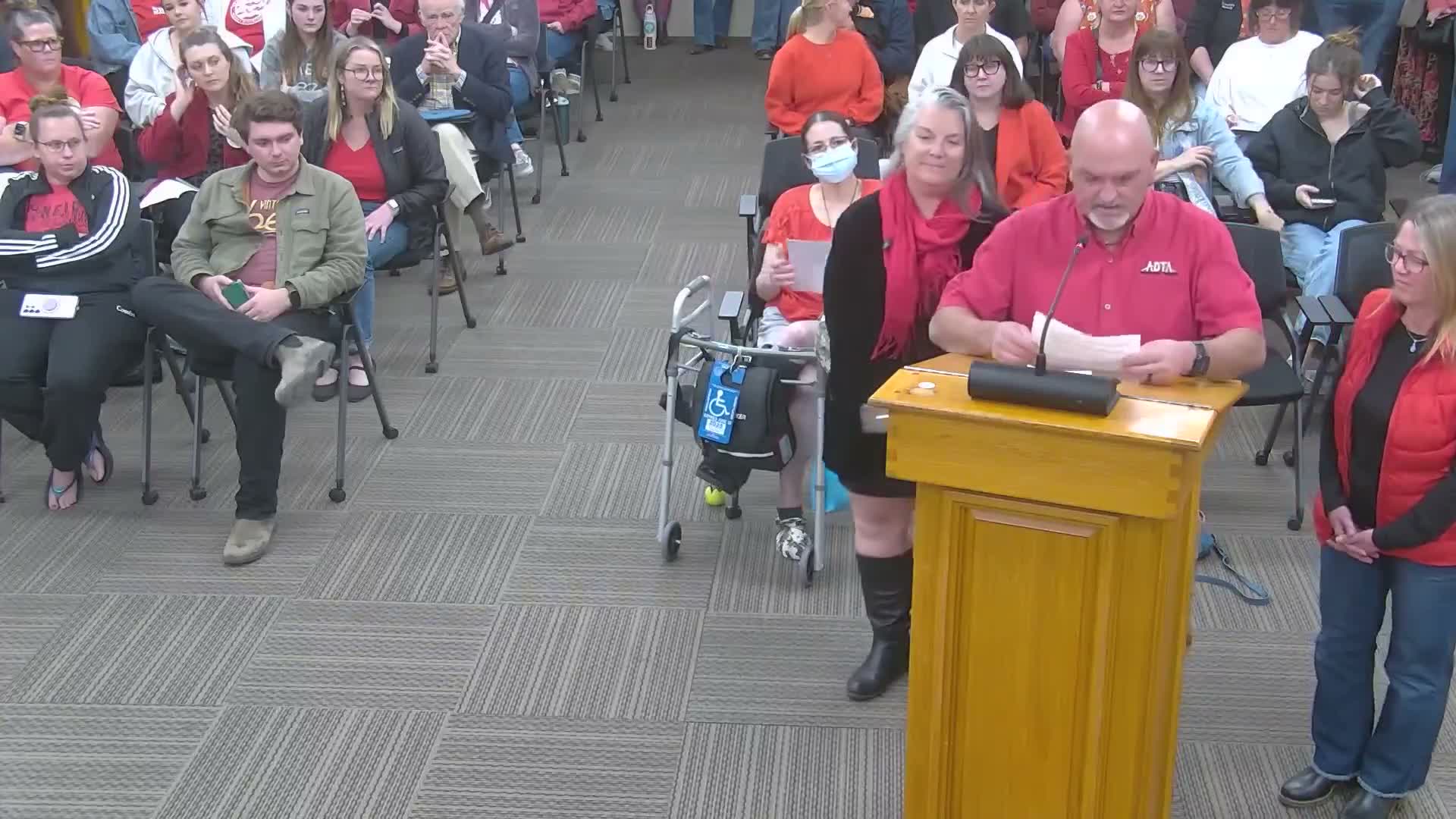
Summary
Teachers, union representatives and parents told the Atascadero Unified School District board the proposed 0% pay increase risks teacher retention and hurts classroom supports; trustees acknowledged budget pressures and said one-time state funds and a budget task force are being used to address structural deficits.
Dozens of teachers, parents and union leaders pressed the Atascadero Unified School District Board of Trustees Monday to restore cost-of-living adjustments and address staffing and classroom supports, saying proposed 0% increases amount to a real‑terms pay cut.
Robin Deary, a community member, told trustees that Atascadero teachers often teach six of seven periods — a schedule she said leaves roughly 36 fewer prep hours annually compared with districts on a 5‑of‑6 schedule — and that the district pays among the lowest salaries in the county. "Giving teachers 0%, as the district has it suggested, is a pay cut in terms of purchasing power," Deary said.
Several current teachers and parents described the immediate impacts. Third‑grade teacher Shauna Shimelfening said she has served nearly 30 years and that "My monthly paycheck is well over a $100 less this year due to the absence of cola," telling trustees the district's approach devalues senior educators. Katie Martin read a statement from a colleague who warned that without raises increased health‑care costs and the absence of step movement could leave some employees taking home less money next year despite higher nominal salaries elsewhere. "The state has provided the district with the funding to cover a 2.5% cost of living adjustment," Martin said.
Carrie White, president of CAPS and a parent, highlighted support staff struggles, noting a district instructional aide in her family earns $19 an hour and frequently works beyond scheduled hours. "A 0% increase doesn't just fail to keep up with inflation, it actively moves them backwards," White said.
The district also heard from union leadership. Andrew Weatherly, identified as an association president at the meeting, said teachers report insufficient classroom support, including cases where staff buy paper and face limits on site copying. The association asked how the district is advocating at the state level and urged plans to reduce reliance on third‑party contractors and to recruit and retain staff who will stay long term.
Superintendent (identified in remarks as the district superintendent) acknowledged the concerns, thanked speakers for attending and said a budget subcommittee task force is reviewing options to reduce expenses and pursue revenue. The superintendent said the district has two levers — increase revenue and decrease expenses — and pledged to "work together in transparency and open communication" while staff and trustees evaluate tradeoffs.
District staff briefed trustees on a one‑time state discretionary block grant (Student Support and Professional Development Discretionary Block Grant) awarded to the district for $1,200,000 and noted that one‑time funds expire over time. A staff presenter warned trustees that "the challenge with using one‑time funds for salaries is that salaries continue and one‑time funds expire," and trustees debated the limits of using that money for long‑term compensation.
The board did not take a vote on any salary adjustments at Monday's meeting. Trustees approved several administrative items — including a search firm contract discussed elsewhere on the agenda — and said they will continue budget deliberations. The board's next regular meeting is scheduled for Feb. 17, with a closed session at 5:30 p.m. and the regular session at 7 p.m.