Get Full Government Meeting Transcripts, Videos, & Alerts Forever!
Get email alerts on the Transportation topic
No spam. Unsubscribe anytime.
Pacific Grove council seeks more work on e‑bike rules and enforcement for the recreational trail
Summary
Following a staff presentation on what the city can and cannot regulate under the Vehicle Code, councilmembers directed staff to pursue stakeholder discussions, possible Traffic Safety Commission review or a workshop, and clearer signage and enforcement strategies for e‑bikes and other mobility devices on the Monterey Bay recreational trail.
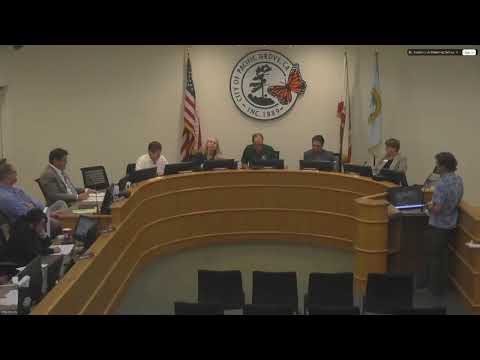
Councilmembers and staff spent substantial time Feb. 4 discussing electric bicycles (e‑bikes), motorized scooters and shared‑use safety on Pacific Grove’s waterfront recreational trail. Staff and special counsel described the state vehicle‑code framework that limits local regulation in some contexts and allows local rules for sidewalks, trails and parkland; staff urged a focused approach because the city cannot regulate operation on ordinary roadways in ways the vehicle code prohibits.
Special counsel outlined the three federal/state e‑bike classes and explained that class 1 and 2 e‑bikes are typically limited to 20 mph, while local rules may set lower limits for trails and park areas. Existing local code already prohibits bicycles and e‑bikes in particular park locations; the city’s code currently allows class 1 and 2 e‑bikes on the recreational trail with a posted 12‑mph operation limit. Staff noted inconsistencies and flagged the need to reconcile that language with other code sections and with adjacent jurisdictions.
Public commenters and several council members emphasized enforcement shortfalls: community members reported repeated unsafe behavior on the trail, including devices exceeding the posted speed limit and incidents involving pedestrians, children and wildlife. The chief of police and staff said enforcement capacity is limited and that many violations are infractions; the department is prioritizing education, targeted enforcement for high‑use times, and school outreach. Councilmembers suggested clearer signage, better trail striping, engagement with rental vendors and tour operators, consideration of age limits, and a community workshop involving stakeholders.
The council did not enact new rules at the meeting. Instead staff were directed to convene stakeholders (police, traffic safety, recreation, neighbors, rental operators, Hopkins Marine Station and other nearby entities), consider sending the matter to the Traffic Safety Commission or holding a public workshop, and return with recommended code updates and enforcement options. Staff said stakeholder meetings and a targeted follow‑up could be scheduled quickly and that a more comprehensive ordinance for commercial and research UAS (separately) would follow.
What happens next: Staff will propose next steps (workshop or Traffic Safety Commission review), clarify conflicting code text (including the paved vs. DG trail use language), and return with options for council consideration.