Lifetime Citizen Portal Access — AI Briefings, Alerts & Unlimited Follows
Caltrans seeks modest over-target ITIP programming, emphasizes rail and active-transportation investments
Loading...
Summary
Caltrans presented its 2026 Interregional Transportation Improvement Program requesting about $176.6 million — roughly $7.6 million above its target — and said most new programming will support rail and active-transportation projects; staff will verify eligibility and full funding commitments.
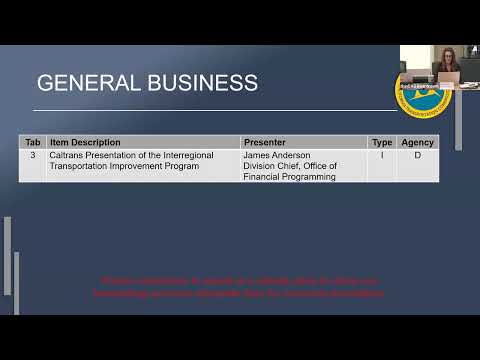
Caltrans presented its draft 2026 Interregional Transportation Improvement Program (ITIP) at the CTC’s South hearing, saying the package would rely on a new ITIP capacity of about $169.9 million and that Caltrans’ request totals roughly $176.6 million with an over-target request of approximately $7.6 million.
James Anderson, chief of Caltrans’ Division of Financial Programming, said the ITIP includes five new projects (mass transit, passenger rail, active transportation, and a managed-lanes highway project) and a number of cost updates or added phases for existing projects. He said about $61.2 million is available for programming new projects and that around 87% of the proposed new programming supports rail or active-transportation investments.
Anderson said staff are still verifying eligibility for some proposed projects (for example, ensuring projects are part of adopted regional transportation plans and have a full funding plan beyond SB 1). He described a process to work with project sponsors to determine which phases are required to start projects and how to sequence funding.
Caltrans also noted it received public comments and letters largely in support of the ITIP but with requests for additional information on certain projects, including the managed-lanes proposal and several active-transportation projects. Anderson said responses to questions and comments are incorporated into the final ITIP document that staff will post online.
No formal action was taken; commission staff said they will confirm eligibility and funding commitments and incorporate those findings into the staff recommendation posted Feb. 27, 2026.