Lifetime Citizen Portal Access — AI Briefings, Alerts & Unlimited Follows
Bernardi presentation: village hears case for keeping broker-dealer model, staff asked to study longer-term buys
Loading...
Summary
A Bernardi Securities representative reviewed the village's municipal bond portfolio, recommended remaining on the broker-dealer transaction-cost model (15 bps last year) and suggested the board consider extending the general fund's maximum maturity to capture higher yields; trustees asked the treasurer to evaluate options and return recommendations.
A representative from Bernardi Securities reviewed the village’s cash-management portfolios and recommended keeping the accounts on the firm's broker-dealer transaction-cost model while asking staff to explore selectively extending maturities to lift yields.
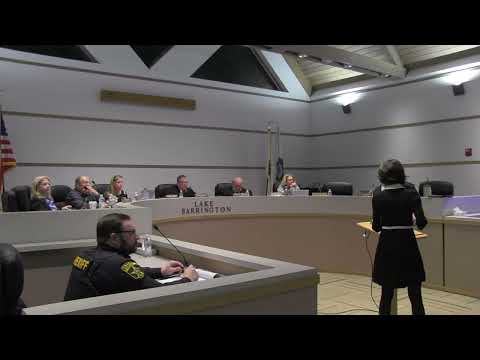
At the meeting, Bernardi’s presenter (Speaker 4) said the firm has operated for more than 42 years and manages roughly $2,000,000,000 in assets. He explained the village has two platform choices: a broker-dealer transaction-cost model and a registered investment-adviser fee-based model. "The direct transaction cost last year was about 15 basis points, 0.15," he said, adding that the fee-based option would have been about 20 basis points, 0.2.
The presenter described the village portfolios as short-duration—average maturities of about six months to two and a half years—dominated by taxable municipal bonds and AA+ average credit quality across holdings. He said many holdings were bought at "low- to mid-fours" in yield and that this locked-in income should support performance for the next two to three years. On the macro side he noted the fed funds rate was 3.75% and that market participants were expecting possible rate cuts later in the year if inflation cooled.
On strategy, the Bernardi representative recommended the village consider allowing longer maximum maturities for the general fund (currently limited to three years) to enable purchases with higher yields. He said the portfolios are diversified across about 23 states with concentration in the Midwest, and that a proprietary index combining FEMA disaster probability and insurance nonrenewal data showed elevated risk in coastal states—an argument he used to support modest extension of maturities for improved income.
Board members responded positively to the presentation. One trustee asked Treasurer Desholl to evaluate structuring some portion of the portfolio for longer-range buys to offset potential short-term losses and to bring recommendations back to the board in coming months. The meeting record shows appreciation for the current manager and no immediate motion to change platforms; the board asked staff for follow-up analysis rather than taking formal action that night.
Financial-statement details were also presented by staff. The transcript lists "assets of $4,311,000," "liabilities of $447,000," and "equity $3,000,008.64." The transcript's phrasing around revenues and net income is unclear; expenses were read as "$2,379,000" and net income was described as "almost $900,000." Staff said surplus funds would return to fund balance.
Next steps: trustees requested a staff evaluation of maturity-extension scenarios and longer-range purchases, to be reported back to the board for future consideration.