Get Full Government Meeting Transcripts, Videos, & Alerts Forever!
Get email alerts on the Public Libraries topic
No spam. Unsubscribe anytime.
LINC links 13 Clackamas County libraries and moves nearly 2 million items a year, manager says
Summary
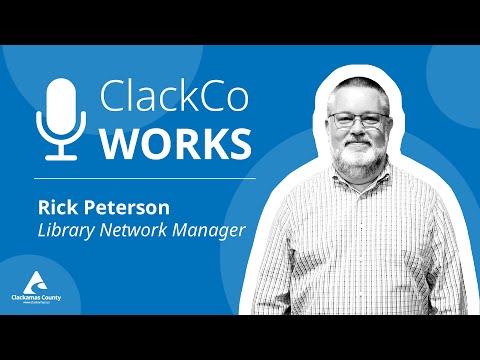
Rick Petersen, Library Network Manager, described how LINC— a consortium of 13 Clackamas County libraries—shares catalogs and materials, runs a central hub and automated sorter, and provides services from ebooks and cultural passes to interlibrary loan; funding comes from a 2008 library district levy and county general funds.
LINC, a consortium that connects 13 libraries across Clackamas County, allows residents to search one catalog and borrow materials from any member library, Library Network Manager Rick Petersen said. Petersen said the system moves just under 2,000,000 items each year between libraries and operates a central processing hub at the Red Soils campus in Oregon City.
The consortium provides centralized services—including cataloging, some IT support and daily delivery—so individual libraries can remain locally operated while sharing access to collections and digital resources such as databases, e-books and audiobooks. "We move just under 2,000,000 items each year back and forth between libraries," Petersen said, describing a delivery operation that begins pickups at about 5:30 a.m. each morning.
Petersen explained governance and funding: two libraries (Oak Lodge and Gladstone) are run by a county program within the Department of Transportation and Development, while the other 11 are operated by their respective cities and retain autonomy over programming and events. He said a library district approved in 2008 provides a levy that is collected and distributed to the cities that run libraries; in the episode he cited a figure phrased as "39¢, 40¢ per thousand dollars of assessed value." Petersen added that centralized Library Network services are supported through the county general fund, which he described as funded by property taxes.
Beyond print collections, Petersen highlighted expanded services that include large e-book and audiobook collections, a "Library of Things" where patrons can check out tools, kitchen appliances or musical instruments, and digital cultural passes that provide free admission to venues such as the Japanese Garden. He said LINC provides passes to more than a dozen venues and expects to add the Bigfoot Museum in Estacada.
Petersen also emphasized interlibrary loan: staff can place requests with other library systems across the U.S., including the Library of Congress for specialized items. He said LINC obtained over 5,000 items for patrons from other libraries last year and that patrons are usually not charged for those requests. "If you don't find it in the library catalog, talk to those great folks who are within the library, and they'll help you out," Petersen said, encouraging listeners to ask librarians for help.
The episode closed with Petersen reiterating that LINC's shared services and delivery operation aim to broaden access while allowing local libraries to tailor programming to community needs.