Get Full Government Meeting Transcripts, Videos, & Alerts Forever!
Get email alerts on the Education Budget topic
No spam. Unsubscribe anytime.
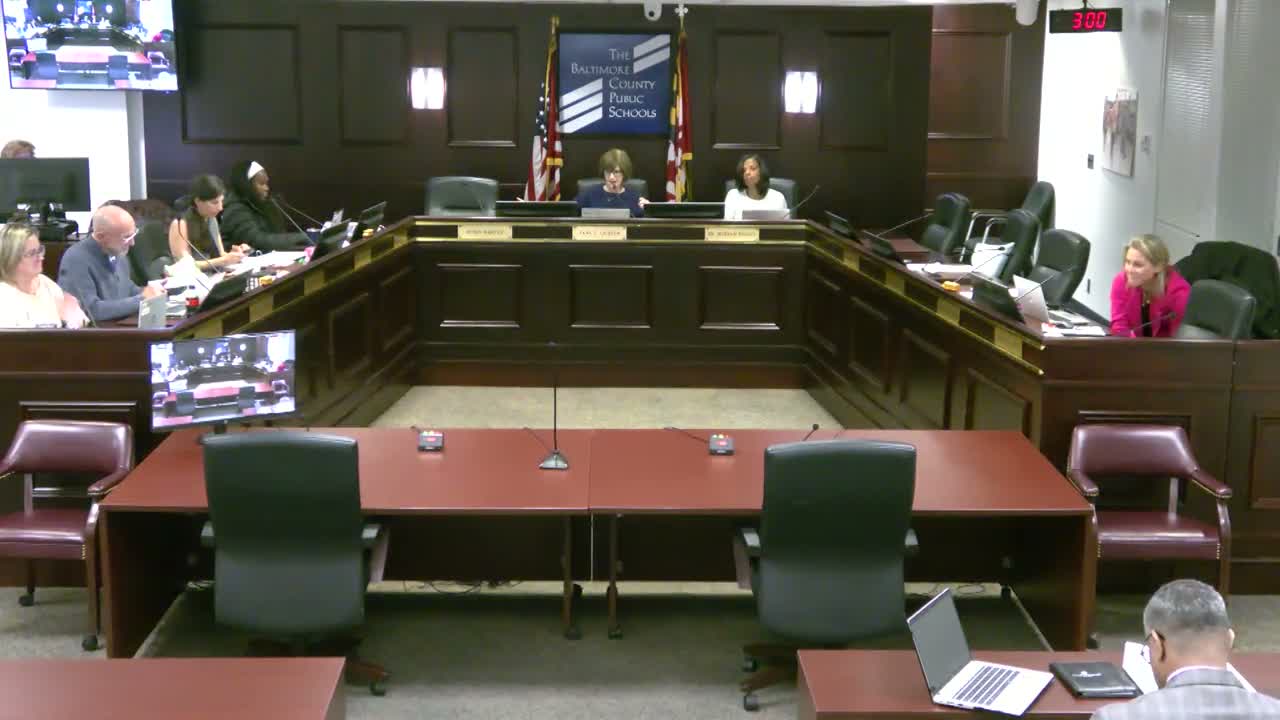
Community speakers urge Baltimore County Board to reject class‑size increases and demand budget transparency
Summary
At a Jan. 20 public hearing on the superintendent's proposed FY2027 operating budget, dozens of parents, teachers and advocates warned that raising average class sizes to 25:1 and cutting hundreds of positions would harm students and called for an independent audit and greater transparency about which school‑based roles are at risk.
Speakers at a Jan. 20 public hearing urged the Board of Education of Baltimore County to reject parts of Superintendent Miriam Rogers’s proposed fiscal 2027 operating budget, saying it would raise class sizes, eliminate hundreds of school‑based positions and rely on unsustainable one‑time reserves.
The hearing, called by Chairwoman Jane Lichter, drew parents, teachers, PTA leaders and union representatives who emphasized that the package protects negotiated pay increases but shifts costs into staffing reductions and larger classroom rosters. Lloyd Allen, vice president of TABCO, told the board, “There is no world where removing 594 adults from our school system improves student outcomes,” and called for full transparency about which positions are slated for abolishment.
The issue matters to families and educators because the proposal would reshape how many teachers and specialists are in classrooms. Several speakers said the plan to set an average target of 25 students per class masks wide variation and can produce many classes well above that number. Sarah Valentine, identifying herself as a BCPS alum and parent, said the proposed changes eliminate “324.8 FTEs due specifically to changes in teacher staffing ratios” and called a one‑time $50,000,000 fund balance “not sustainable.”
Supporters of preserving school‑based roles argued that cuts would disproportionately affect students who need extra help. Leslie Webber, president of the PTA Council of Baltimore County, praised proposed investments in special education, multilingual learner supports and expanded full‑day pre‑K but urged that class sizes remain “as small as practical.” Erica Mann, an English language development teacher at Lansdowne Elementary, said previous staffing increases lowered ELD teacher caseloads from as high as 70–90 to about 50 and warned that reversing that progress would harm instruction.
Several speakers pressed the district for better data and outside oversight. One participant asked BCPS to publish median class sizes and the distribution of class sizes rather than an overall average, and another urged formalizing independent budget oversight through the office of the inspector general. Edwin Perez described the fiscal pressure plainly: “Facing a $62,100,000 reduction is a monumental task,” he said, and called for a recurring fund for building maintenance and healthy school environments.
Advocates for particular services also spoke. Christie Regalano, a library media specialist, urged the board to prioritize full‑time library media specialists in secondary schools, saying they are high‑leverage instructional partners who co‑teach and support research and digital literacy. Sharon Sarhof, a special education advocate, warned that classrooms of 25–27 students make it impossible to meet many students’ Individualized Education Program requirements.
The hearing also included calls that touched on safety and enrollment. Glenn Gilhar, who said he is a candidate for the Maryland House of Delegates, urged maintaining or increasing school security and criticized a TABCO letter he said would obstruct cooperation with federal immigration officials. Several speakers raised concerns about declining enrollment—Superintendent Rogers has said the district lost over 2,000 students—and how that loss affects funding.
No formal votes or board decisions were taken at the hearing. Chairwoman Lichter closed the session, reminded the public that comments can be emailed to boe@bcps.org and noted that members of the public may register to speak at the board’s Jan. 27 meeting. The public comment period provided the board with dozens of specific requests for clearer staffing lists, median class‑size data and consideration of external financial review.