Get Full Government Meeting Transcripts, Videos, & Alerts Forever!
Get email alerts on the Wellhead Protection topic
No spam. Unsubscribe anytime.
Weston commissioners debate annual inspections and rules for private salt storage in wellhead areas
Summary
Commissioners debated whether to require annual inspections for private salt storage facilities in the village’s wellhead protection areas, whether requirements should extend village‑wide, what enforcement tiers or fees would apply, and whether standards should mandate doors, paved aprons or other measures.
Village of Weston planning commissioners spent the longest portion of their Jan. 12 meeting debating how and whether to formalize an inspection program for privately owned salt storage facilities, particularly those within wellhead protection areas.
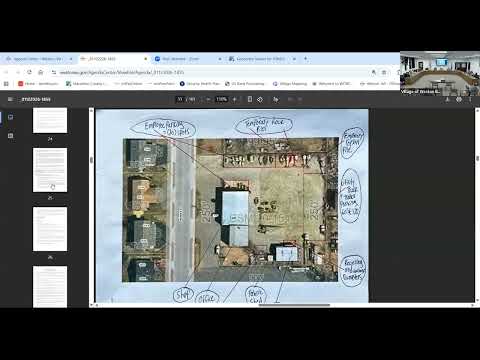
Staff told the commission that only two privately permitted salt storage facilities are currently recognized inside the village’s wellhead protection overlay (Kudronowitz at 5906 Hilgeman Street and Riverview Construction) after TurfMDs withdrew its proposed bin. Commissioners weighed multiple options: (1) an annual inspection requirement limited to properties inside wellhead protection zones (consistent with DNR guidance and the cited 1,200‑foot threshold), (2) extending inspections village‑wide through an ordinance change, or (3) relying on complaints and referrals to state agencies in the absence of codified authority.
Several commissioners argued for annual inspections "to keep staff in a cadence for the inspections," citing roof and grading checks and the risk that structural damage or poor grading could allow salt to reach groundwater. Others warned about the burden on local businesses and on municipal staff time, and suggested staff consult the village attorney and neighboring municipalities about legal authority and fee structures. Commissioners also discussed DOT guidance (Trans‑277) and DNR triggers for environmental study; staff noted that a DNR environmental study for one applicant previously would have cost in excess of $5,000 and involved DNR review.
On operational detail, commissioners debated whether a door, watertight roof, paved apron or other controls should be required; they discussed enforcement tiers for 'egregious' violations that pose immediate risk and lower‑level defects that can be remediated on a schedule. Several commissioners directed staff to research legal authority, practices in comparable jurisdictions, and the staffing/fee implications of an inspection program and to return with proposed language and options.