Lifetime Citizen Portal Access — AI Briefings, Alerts & Unlimited Follows
Senate committee advances bill to create state‑endorsed digital identity program
Loading...
Summary
The Senate Government Operations Committee voted unanimously to favorably recommend SB275, which would convert last year’s digital identity principles into a State‑Endorsed Digital Identity (SETI) program with a digital bill of rights, rulemaking, audits and an opt‑out right for users.
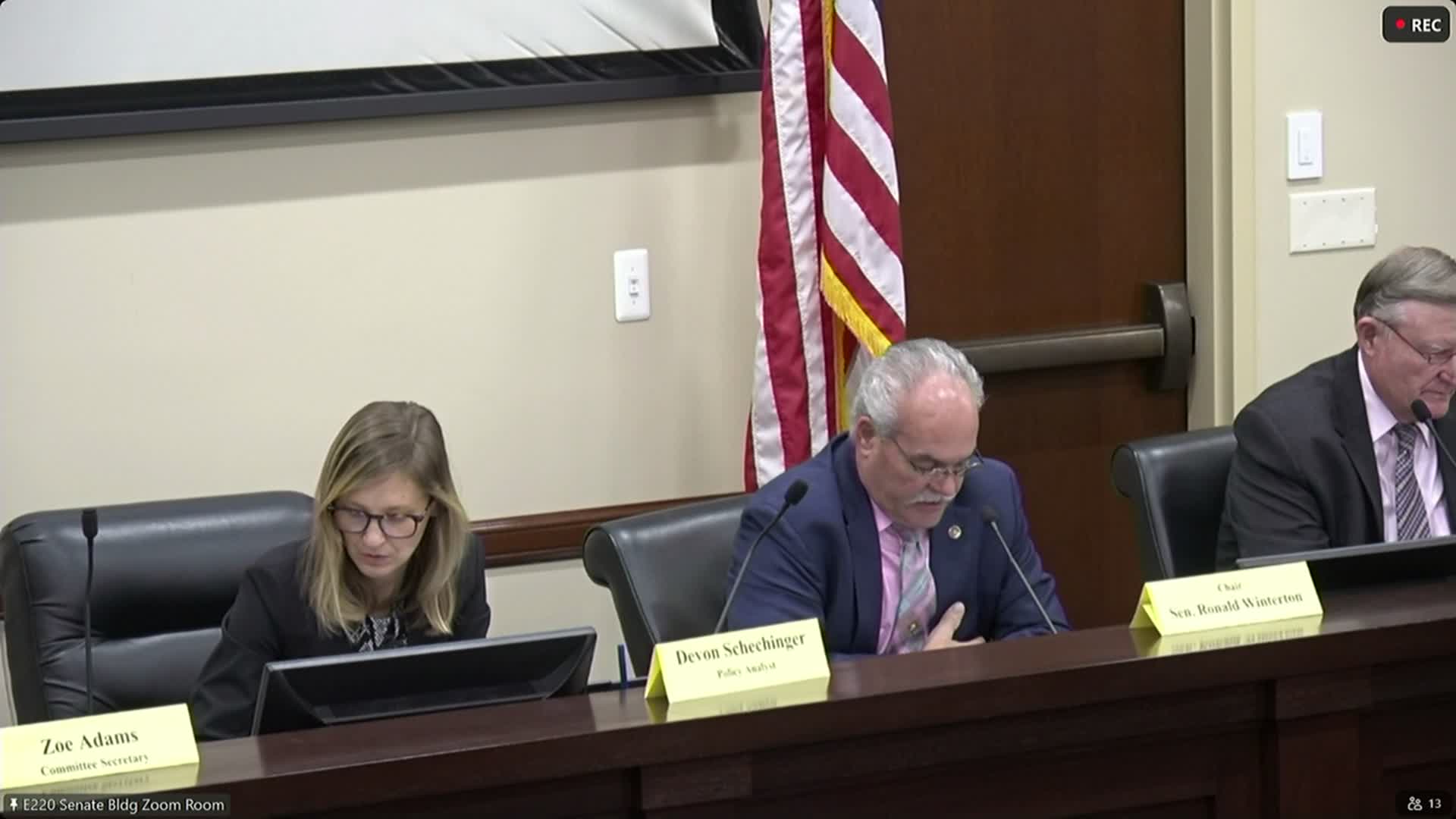
The Senate Government Operations and Political Subdivisions Committee on Thursday voted to favorably recommend Senate Bill 275, which would create a State‑Endorsed Digital Identity program (SETI) and codify a digital identity bill of rights.
Sponsor presentation and bill aims Sponsor (referred to in the hearing as Senator Colmore) told the committee that last year’s SB260 established guiding principles declaring that identity belongs to the individual, embedded privacy and anti‑surveillance guardrails, and required study before implementation. SB275 would convert those principles into an operational program with formal rulemaking, mandatory public comment, annual reporting to the Legislature, a qualified program manager, and technical infrastructure housed in a state‑controlled data center. The sponsor said the bill guarantees the right to use a physical ID instead of a digital ID, the right not to be compelled to use a digital ID, selective disclosure of identity attributes, protections against surveillance or profiling, and transparency in system operations.
Agency perspective and national context Christopher Bramwell, chief privacy officer and director of the Utah Office of Data Privacy, said the office led broad outreach—locally and internationally—and framed Utah’s approach as distinct because elected officials make the policy decisions rather than leaving them solely to administrative agencies. Bramwell described risks seen abroad from centralized digital identity systems and surveillance practices and said the SETI model is designed to ensure that individuals control their identity and that private and public parties who receive identity attributes owe a duty of loyalty to the user.
Support at the hearing A sequence of public commenters spoke in support. Amelia Powers Gardner, a Utah County commissioner, said SETI could reduce government costs and improve remote services without creating a tracking system and that, in her view, the program would enhance privacy compared with existing physical‑ID scanning. Other supporters included Gail Rizzica (Utah Eagle Farm), Max Simms (private citizen), Maryann Christensen (executive director, Utah Legislative Watch), Steve McCown (identity professional), Timothy Ruff (Digital Trust Venture Partners), Will Seggos (Park City resident and SETI workgroup participant) and Michael Propper (advisor to the Utah Blockchain Association). Will Seggos cited a private‑sector projection that the U.S. decentralized identity market could reach $23,000,000,000 by 2030 and estimated, as an example, that a 3% share would equal roughly $690,000,000 in economic activity for Utah. Several commenters described initial skepticism that gave way to support after reviewing the bill’s digital bill of rights and fiduciary language for credential wallets.
Committee action and next steps Senator Vickers moved that the committee favorably recommend SB275 to the full Senate. The committee called the question and the recommendation passed by voice vote; the committee reported the recommendation as unanimous (committee stated '6 to 0'). SB275 now moves to the full Senate for further consideration.
Why it matters SB275 seeks to move Utah from principle to practice on digital identity, framing the state as an endorsing authority with statutory protections that its backers say will protect privacy and avoid centralized, revocable identity schemes seen elsewhere. Opponents did not dominate testimony at this committee hearing; committee members and a range of stakeholders presented primarily supportive testimony and asked that implementation details be addressed through rulemaking and public comment.
What’s next The bill will appear on the full Senate calendar after committee reporting. Sponsors and agency staff indicated rulemaking and annual legislative reporting are planned parts of implementation, and supporters offered to continue stakeholder engagement as the measure advances.