Lifetime Citizen Portal Access — AI Briefings, Alerts & Unlimited Follows
DLS flags tobacco-funding language, seeks clarity as Maryland prevention budget drops
Loading...
Summary
Legislative analysts told a Maryland Health subcommittee the Prevention and Health Promotion Administration’s FY27 budget falls to $508.3 million and recommended technical fixes to contingent tobacco-funding language; MDH said it will use 2024 BRFSS data to update goals and expects to release pediatric cancer RFPs in late 2026.
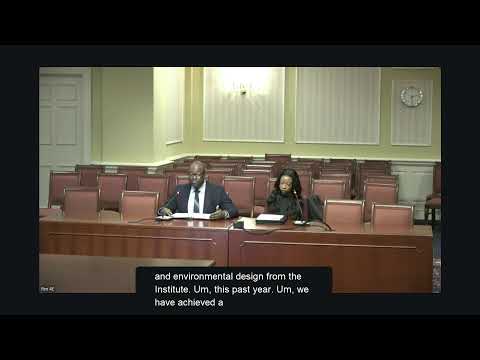
Naomi Camaro, budget analyst for the Department of Legislative Services (DLS), told the Health and Human Services Subcommittee that the Prevention and Health Promotion Administration(FIPA) fiscal 2027 allowance falls 6.7% to $508,300,000 and reviewed program-level shifts including declines tied to the end of one-time COVID-era funding.
Camaro highlighted tobacco-prevention performance measures and said adult cigarette smoking has declined below FIPAgoals in the most recent reporting years. DLS noted a discrepancy between the language in the Budget Reconciliation and Financing Act (BRFAA) provision and the fiscal 2027 budget bill language that would change the general-fund mandate for tobacco cessation funding. "DLS is recommending modifying the budget bill language to align with the provision in the BRFAA as introduced," Camaro said, and asked the agency to explain how the new mandated level of $17,520,000 was calculated and what effect the reduction would have at the local level.
Deputy Secretary Meg Sullivan, representing the Maryland Department of Health (MDH) in the hearing, said MDH concurs with DLSthat language should be aligned and that the department will use 2024 Behavioral Risk Factor Surveillance System (BRFSS) data to update adult tobacco-use goals in FY28. Sullivan said the tobacco-control program has produced "significant decreases in tobacco use" and that MDH does not anticipate a negative impact from setting the mandated level at $17,520,000, though she added it is difficult to be certain about outcomes and that the department will monitor prevalence and raise a flag if trends worsen.
Public commenters reiterated enforcement and youth-use concerns. Laura Hale of the American Heart Association warned that high-school tobacco use—driven in part by electronic smoking devices—has reached 15.9 percent and urged the committee not to cut tobacco-control enforcement funding, citing gaps in electronic-device tax collection and retailer compliance.
Camaro also summarized grant and fund-balance issues. DLS said some federal grants are at risk because of ongoing litigation, though FIPA had not yet lost funding. The analysis described MATAP (the Maryland AIDS Drug Assistance Program) revenue declines tied to lower infection rates and said MDH plans to allocate approximately $46,000,000 in MATAP fund balance over five years for onetime and multiyear investments including an integrated client-management data system and prevention programming.
On the pediatric cancer fund, Camaro said chapters 253 and 254 of 2022 established the fund and a commission; DLS reported the governor added $5,000,000 in 2023 but funds were not expended because the commission had not been appointed. MDH told the committee the commission is now fully appointed and that the department expects to release a request for proposals in November 2026 with awards beginning in March 2027. MDH said it will hire a program administrator after the hiring freeze ends.
What comes next: DLS requested that FIPA provide calculations and local impact analysis for the proposed tobacco mandate level and explain contingency-language alignment. MDH said it will provide updated goals using 2024 BRFSS data and will monitor program indicators closely.
Sources: DLS presentation by Naomi Camaro and MDH testimony by Deputy Secretary Meg Sullivan.