Lifetime Citizen Portal Access — AI Briefings, Alerts & Unlimited Follows
Fairbanks North Star Borough School Board unveils FY27 budget that cuts class sizes and restores programs
Loading...
Summary
Administrators presented a FY27 proposed budget that would add about 21 full-time-equivalent positions, reduce elementary class sizes and restore elementary instrumental music, funded largely by a stronger-than-expected fund balance and careful vacancy assumptions.
The Fairbanks North Star Borough School District presented its FY27 proposed budget on Feb. 2, recommending targeted restorations across classrooms after several years of reductions.
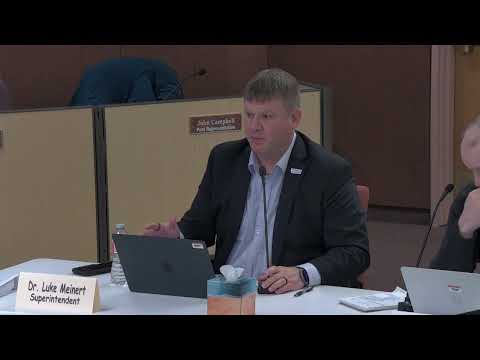
District Chief Operations Officer Andy DeGraw and Superintendent Doctor Minor told the school board that improved revenue assumptions, a closeout bump in federal Impact Aid and lower-than-expected health-plan claims created room to reinvest in students. The proposed budget adds about 21.21 FTE districtwide and calls for lowering elementary pupil-to-teacher ratio (PTR) from 26 to 23; middle-school PTR from 29 to 28; and high-school PTR from 32 to 30.
The budget also includes a planned restoration of elementary instrumental music (about 8 FTE), an increase in discretionary supply budgets (a 25% boost at elementary and secondary schools), before-school care at elementary schools (roughly $250,000), targeted ELP and tutor positions, and a modest increase in districtwide curriculum funding.
"We're excited to present our budget tonight," DeGraw said, framing the proposal as "restorations and investments into our students rather than millions of dollars worth of cuts." Superintendent Doctor Minor said the budget reflects the work of prior boards and administration to position the district for reinvestment.
Board members pressed for implementation details, including recruitment timelines and how many of the proposed positions could realistically be filled if the board approves the direction early. DeGraw said early board direction would allow the administration to begin recruitment sooner — potentially in February rather than April — improving the district's chances of filling the newly budgeted positions.
Budget committee chair Miss Julian told the board the committee's memo urged adopting the state's PTR targets as a starting point and called the PTR reductions the committee's primary priority. "Smaller class sizes positively impact both student achievement and staff well-being," she said.
The administration said the total cost of the proposed investments is about $6.75 million, with the largest single item being PTR reductions at roughly $3.6 million. That package is balanced in the proposed budget by a combination of earlier-year vacancy savings (about $1.4 million) and $2.3 million of one-time fund-balance use in FY27, plus projected federal and state revenue changes.
The board asked the administration to provide follow-up information at future work sessions, including cost estimates for making SALCHA whole, the Barnett staffing history, and scenarios for additional counselor and CTE investments. DeGraw asked board members to submit any requests in writing so staff can model them in a balancing tool for an upcoming session.
The administration will present an abbreviated version of the work-session slides at the board's regular meeting the following day; the formal recommended budget is expected to be finalized in March and delivered to the borough by April 1.