Get Full Government Meeting Transcripts, Videos, & Alerts Forever!
Get email alerts on the Save America Act topic
No spam. Unsubscribe anytime.
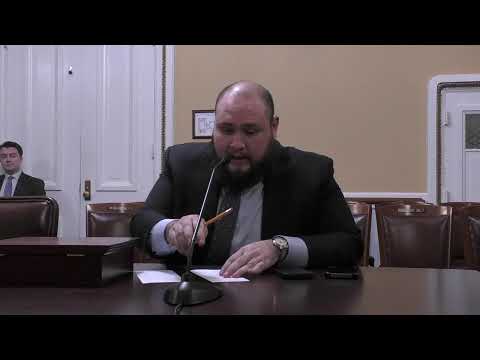
House Rules Committee advances Save America Act under closed rule after heated hearing
Summary
The House Rules Committee voted 9–4 on Feb. 13, 2026 to grant a closed rule for S.1383, the Save America Act, after a contentious hearing where proponents framed the measure as enforcement of existing law and opponents warned it would disenfranchise students, rural residents, Native Americans and other voters.
The House Rules Committee on Feb. 13, 2026 approved a closed rule to bring S.1383, the Save America Act, to the House floor after a contentious hearing that split along partisan lines over proof‑of‑citizenship requirements, photo identification rules and whether states should share voter‑registration lists with the Department of Homeland Security.
The committee granted the closed rule by roll call, 9 yeas to 4 nays. Representative Chip Roy moved the rule; the clerk recorded the final roll call as 9 yeas, 4 nays and the motion was agreed to. Representative Roy will manage debate for the majority on the floor and the minority designated Representative James McGovern for their side.
Supporters told the committee the bill strengthens enforcement of existing federal prohibitions on noncitizen voting by requiring documentary proof of U.S. citizenship at initial registration and by standardizing a photo‑ID requirement. “The Save America Act is common sense, and it does two main things. One, it requires photo identification to vote. And two, it requires states to confirm U.S. citizenship when someone first registers to vote,” a panel witness identified in the hearing said.
Opponents said the rules in the bill would create barriers to registration and voting for many eligible Americans. Ranking Member McGovern warned the bill is “a dangerous effort to disenfranchise, you know, countless American voters,” citing studies and court opinions that have found in‑person impersonation fraud to be extremely rare. Democrats repeatedly pointed to real‑world costs and logistical barriers — the expense of passports or birth‑certificate requests, the long distances rural voters could face to reach election offices, and limits on the use of tribal IDs for Native Americans — as evidence the bill would block access for eligible voters.
Several members pressed for more time and broader committee consideration. Democrats offered multiple amendments, including language to expand acceptable forms of identification and to substitute key provisions of the Freedom to Vote Act; the amendments were debated in committee but were not adopted as part of the rule.
Committee discussion also focused on two procedural and implementation questions: whether the measure primarily enforces current law or creates new federal mandates, and the bill’s effective date. Supporters said the bill primarily strengthens verification at registration; the manager’s amendment clarified that active‑duty service members and their spouses would be exempted from certain in‑person registration requirements and made the act effective upon enactment. Members on both sides disagreed about the practical ability of states to implement the changes quickly before upcoming primaries.
Members on both sides cited prior court opinions and state experiences. Democrats repeatedly referenced courts and academic studies that questioned the empirical basis for strict voter‑ID laws, while proponents cited examples of noncitizen registrations and argued uniform federal standards would restore voter confidence. Several members also raised litigation risks and noted the bill explicitly exempts itself from the Paperwork Reduction Act.
The committee’s action means the bill will proceed to the House floor under the closed rule established by the Rules Committee, with one hour of general debate allocated equally between the designated floor managers. The committee record will include multiple inserted articles and academic pieces referenced during the hearing.
What happens next: floor consideration under the rule adopted by the Rules Committee; members may debate the measure under the time and amendment limitations specified in the rule. The committee said it expects to coordinate timing with upcoming House business.