
Tarrant County adopts new agenda‑creation and decorum rules amid fierce public opposition
Get AI-powered insights, summaries, and transcripts
Subscribe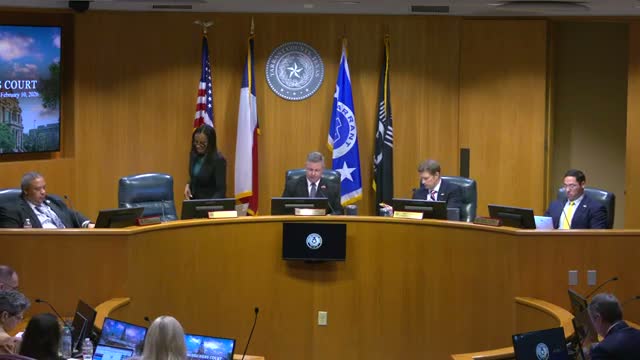
Summary
After extended public testimony and split votes, the Commissioners Court passed a revised agenda‑creation policy and decorum rules that move public comment to the start of meetings and add time and topic thresholds critics say restrict First Amendment rights.
Tarrant County Commissioners Court adopted a revised agenda‑creation policy and updated rules of decorum on Feb. 10 following hours of debate and an extensive public comment period. The changes put public comment at the beginning of meetings, modify thresholds that trigger reduced speaking times when many speakers sign up, and place limits on briefing topics and appeal routes for removals from the dais.
Proponents said the changes improve accessibility by placing public comment earlier so working residents need not wait through a long agenda, expand sign‑up timing from 72 hours to 5 p.m. the day before, and create clearer procedures for appeals. Commissioner Matt Krause said the revisions aim to prioritize efficient, predictable public participation and reduce disruptive theatricality during official business.
Opponents, including the Texas Civil Rights Project, the League of Women Voters and dozens of community members, argued the combined effect of reduced meeting frequency (the court now meets monthly), per‑speaker aggregate time caps, and limits on briefing topics functionally curtail the public’s right to petition and risk violating the Texas Open Meetings Act. Several speakers testified the policy would “punish people for being engaged” because the rules reduce time as turnout increases. Legal observers on the public record warned the rules could be susceptible to First Amendment and open‑meetings challenges.
The court proceeded to a vote after public comment. Commissioners who supported the change argued similar rules exist in other Texas counties and that the new policy provides additional sign‑up flexibility while preserving reasonable decorum. Commissioners opposing the policy said it amounted to an attempt to restrict public oversight and threatened the integrity of local government.
The measure passed on the floor (vote recorded in the transcript) with the majority noting staff will implement the policies and that questions about legal compliance can be answered in subsequent briefings. Civic‑rights groups said they will review the adopted language and consider legal options if they judge the changes to unlawfully restrict public participation.