Lifetime Citizen Portal Access — AI Briefings, Alerts & Unlimited Follows
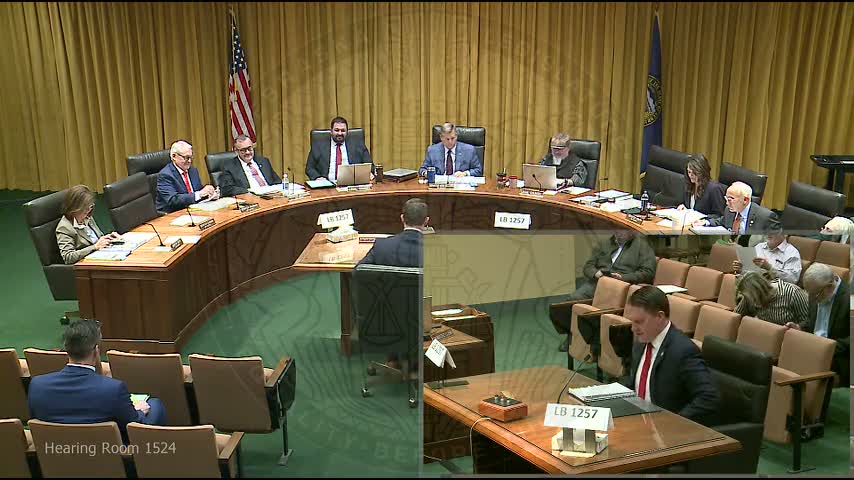
Senate hearing on 'Clean Slate Act' (LB1257) spotlights tradeoffs of taxing services to cut school property levies
Loading...
Summary
Sen. Ben Hansen’s LB1257 would remove most sales tax exemptions and tax many services, depositing revenues in a new School Relief Fund to lower school levies from $1.05 to $0.60 and provide a 6% teacher pay increase; proponents say it modernizes the tax base, opponents warn of regressivity and harm to small businesses, agriculture, and aviation fuel rules.
Sen. Ben Hansen told the Revenue Committee LB1257 — which he called the "Clean Slate Act" — is designed to reset Nebraska's sales tax exemptions, broaden the tax base to include many services, and direct those revenues into a dedicated School Relief Fund to finance per‑pupil foundation aid and reduce the maximum school levy from $1.05 to $0.60 over two years.
"When we make special carve outs in the form of tax exemptions ... the overall tax burden falls on the property owner," Hansen said, arguing the proposal shifts revenue responsibility and prioritizes homeowner stability. He said the bill is intended as an evolving framework and that carve‑outs (for example, aviation fuel) would be considered.
Proponents included Connie Connoke of OpenSky Policy Institute, who supported removing most exemptions while recommending the broadened sales base be paired with a lower rate or set‑asides to stabilize school funding because sales tax revenue can be volatile. She recommended using established formulas (TEOSA) or equalization mechanisms to distribute aid.
Opponents were numerous and varied. Ken Allen of the Nebraska Board of Barber Examiners urged a carve‑out for hair care, warning service taxes hit lower‑income families; he testified "LB1257, as proposed, will take food out of the mouths of children." The Omaha Airport Authority (Jason Snowden) warned that taxing aviation fuel and using proceeds for general purposes could violate federal airport revenue‑use requirements and potentially jeopardize air service. Industry groups — including the Nebraska Beverage Association, grocery and retail associations, agricultural organizations, and municipal parks representatives — said the expansion would be regressive, harm small businesses, risk reduced participation in youth sports, and tax agricultural inputs that could hurt competitiveness.
Agriculture representatives cautioned that taxing inputs causes cascading costs through the production chain and could increase consumer prices and reduce margins for producers. Chamber and business groups recommended base broadening be matched with a sales rate reduction rather than immediate expansion without offset.
Hansen repeatedly said the goal is immediate and permanent property tax relief and that revenues should be directed to schools rather than the general fund. He told the committee he plans to work with colleagues to refine carve‑outs and technical details. The committee took no formal vote; testimony will inform any amendment or next steps.