Get Full Government Meeting Transcripts, Videos, & Alerts Forever!
Get email alerts on the Specialty Plates topic
No spam. Unsubscribe anytime.
Committee hears bills to create 'Back the Blue' and high‑contrast plates to fund developmental disability services
Summary
Sen. Elliot Bostar told the Transportation and Telecommunications Committee LB1092 would create 'Back the Blue' and 'iconic design' plates and direct proceeds to law‑enforcement support and a new DHHS capital fund for developmental‑disability providers; DMV cautioned about labeling, toll‑reader impacts and uncertain revenue projections.
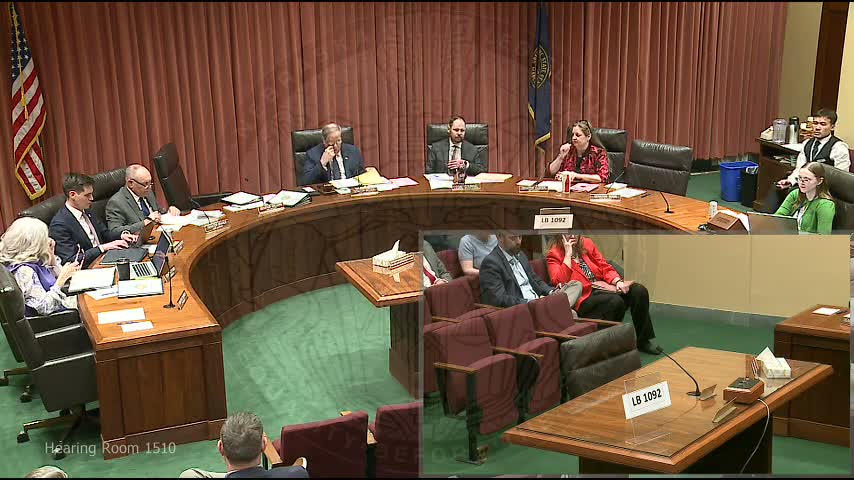
Sen. Elliot Bostar introduced LB1092 to the Transportation and Telecommunications Committee, asking lawmakers to authorize two new specialty license plates — a Back the Blue plate and a set of minimalist “iconic design” plates — and to direct associated fees to dedicated funds. "The goal is simple, to give Nebraskans a clear and voluntary way to show support for for the men and women who serve in law enforcement across our state," Bostar said.
Supporters — including DD providers, county officials and the State Troopers Association — urged the committee to advance the bill as a way to provide one‑time grants for vehicles, facility upgrades and safety equipment that Medicaid reimbursement does not cover. Alan Zavodny, chief executive of Northstar Services, said providers face rising costs and thin margins and that specialty plate grants could help with capital needs without diverting direct‑care dollars. "LB 10 92 represents an effort to help support our fellow Nebraskans that experience intellectual and or developmental disabilities," Zavodny testified.
Several witnesses pointed to other states’ experience with solid‑color, high‑contrast plates as evidence of demand and revenue potential. Proponents cited Colorado’s program; committee discussion showed differing figures were cited in testimony and fiscal briefings about how much Colorado’s plates generate and how the revenue is split for grants versus other uses.
Rhonda Lamb, director of the Department of Motor Vehicles, testified in neutral capacity and warned the committee the bill’s definition of “iconic” plates could be read more broadly than intended. She said some of the proposed black/white designs resemble general‑issuance plates and could create ambiguity about which plates are subject to the proposed $100 fee. Lamb also said a solid‑black plate could be misread by toll‑plate readers and that historical fiscal experience shows specialty‑plate sales are difficult to predict.
Committee members asked for clarity on fees and the fiscal note; Sen. Bostar said he would follow up with precise fee language for the Back the Blue plate. Several advocates urged including revenue from LB972 (choice color plates) in any amendment that establishes a developmental‑disability capital and equipment maintenance cash fund so the funding stream is more robust.
No formal vote was taken; the bill remains under committee consideration. The committee also heard a separate proposal for a scarlet‑and‑cream plate (LB1099) that the DMV recommended folding into the choice‑color plate bill for production and fiscal alignment. LB1099’s sponsor said the scarlet‑cream design aims for a retro look and would direct fees to the DMV cash fund.
What’s next: The committee will consider technical clarifications and potential amendments to align plate labeling, fee language and fund administration before advancing any measure to the floor.