Lifetime Citizen Portal Access — AI Briefings, Alerts & Unlimited Follows
Sen. Cruz seeks to codify 'Blue Envelope' program to help drivers with unseen disabilities
Loading...
Summary
At a Senate Corrections and Public Safety Committee hearing, Sen. Cruz presented House Bill 277 to formalize the voluntary "Blue Envelope" program -- a tool to help drivers with unseen disabilities communicate needs during traffic stops. DSP and DMV voiced support; the committee lost quorum and did not vote.
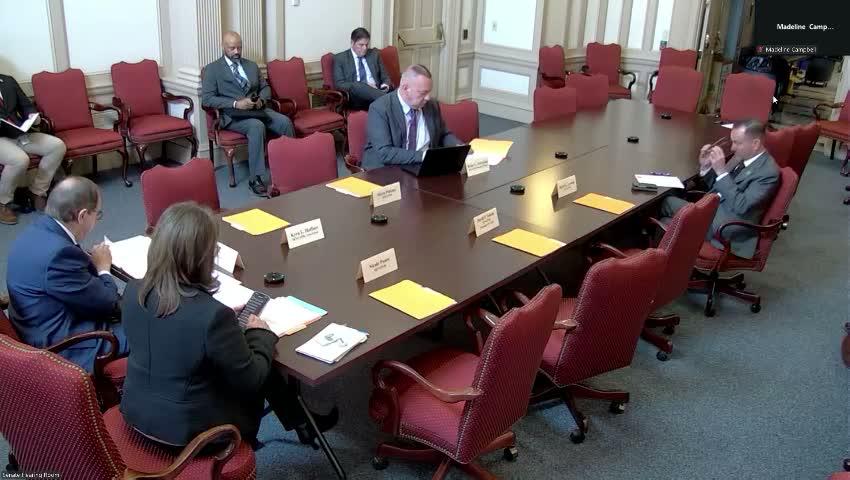
At a hybrid hearing of the Senate Corrections and Public Safety Committee, Sen. Cruz presented House Bill 277 to codify the voluntary "Blue Envelope" program, a tool intended to help drivers with unseen disabilities communicate during traffic stops. The measure drew public support from the Delaware State Police (DSP), the Division of Motor Vehicles (DMV) and the Office of Defense Services but the committee did not take a vote after losing quorum.
Sen. Cruz said the blue envelope "signals to officers that the driver has or may have some of those unseen challenges," and described the envelope as containing the usual documents for a traffic stop plus notes on a person's communication needs to help officers "engage" more smoothly. He said the bill would codify a pilot program and scale a voluntary safety tool rather than create any new legal obligations for drivers.
Sergeant Mike Ripple of the Delaware State Police told the committee that the pilot had been expanded from earlier work, funding was secured (described in the transcript as a minimal amount and an identified source), and the envelopes have been "distributed to all the troops" and to most municipal agencies in the state. "We've actually gotten it to almost every municipal agency in the state," he said, adding that troopers are being trained to recognize and respond appropriately when they see the envelope.
Committee members pressed whether the information could instead be flagged in DMV records so officers would see it when running tags. Representatives from DSP said voluntary entries in DMV are possible but cautioned against placing identifying marks on vehicles because the registered owner might not be the driver at the time of a stop.
Elana Mosik, legislative director with the Office of Defense Services, said her office has already been distributing blue envelopes to clients and strongly supports codifying and publicizing the program to reduce negative interactions involving people with physical, intellectual or developmental disabilities. "Codifying the program helps to achieve both of those goals," she said.
Committee staff explained public-comment procedures: preregistered attendees would speak in order, unregistered attendees could comment afterward, each speaker would have two minutes, and written comments would be accepted via the committee email and would be part of the public record for 24 hours after adjournment.
The chair acknowledged additional senators joining the meeting and several members asked to be listed as cosponsors. Because the committee lost quorum before it could approve minutes or advance other items, the chair said the remaining bills would be "walked" for later consideration. The meeting concluded after a motion and second to adjourn were recorded.