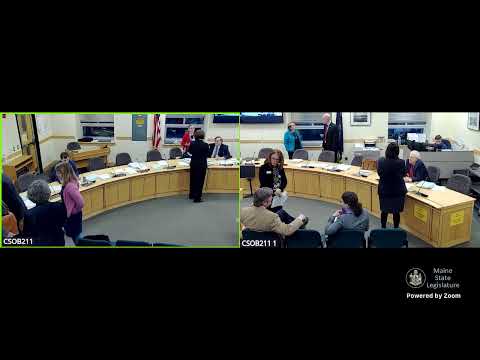
Maine committee debates data-center coordination council and proposed temporary moratorium
Loading...
Summary
An amendment to LD 307 would create a statewide AI/data center coordination council to study benefits and risks and recommend policy, and sponsor-proposed moratorium language (20 MW threshold through 2028) prompted a contentious debate about economic development, local control, and carve-outs for projects with existing permits; members moved to table further action.
Representative Meli Sacks presented an amendment to LD 307 that replaces the concept draft with a requirement for the Department of Energy Resources to convene a "Maine artificial intelligence data center coordination council" to evaluate opportunities, benefits, and risks and to report to the governor and the Energy, Utilities and Technology Committee by Feb. 1, 2027. The amendment also included provisions discussed by the sponsor: review of rate impacts, use of community benefit agreements, tribal representation and—most contentiously—a temporary moratorium on new data centers above a 20-megawatt threshold through 2028, with carve-outs for projects with permits, leases or certifications issued before July 1, 2026.
The proposal prompted sharp debate. Supporters said a pause would create time to standardize permitting, consider grid impacts and draft model community benefit agreements; opponents said a moratorium risks killing large economic-development projects and sending a bad market signal. Senator Harrington said projects in his district were well along and raised concerns the moratorium would "kill" thousands of jobs; others urged careful study and local consultations.
The committee heard from DOER staff, who said the department opposed a blanket moratorium and preferred a notification requirement to preserve state awareness without blocking projects. After extended debate, Senator Harrington moved "ought not to pass," and later Representative Wadsworth moved to table the bill; the chair took the tabling motion and the committee then moved on to subsequent business.
What happens next: The bill was debated and effectively tabled for further consideration; staff will be available to work on language with sponsors and the committee if members wish to pursue council structures or narrower notification mechanisms.