Lifetime Citizen Portal Access — AI Briefings, Alerts & Unlimited Follows
City officials present 2023 greenhouse gas inventory, cite declines in waste and city operations but rising transportation emissions
Loading...
Summary
City leaders presented the 2023 greenhouse gas inventory, reporting an 11% decline in community-wide emissions since 2015, large reductions in solid-waste emissions and city operations, and a rise in transportation emissions that officials say will require multi-department action and expanded EV charging.
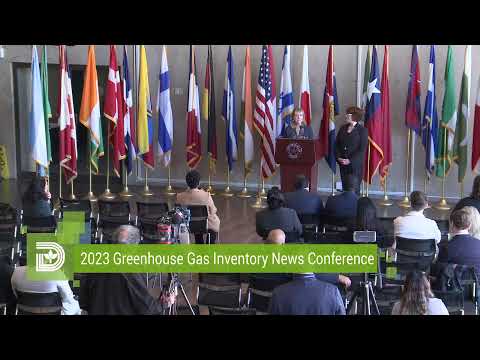
City officials presented findings from the city's 2023 greenhouse gas emissions inventory during a parks, trails and environment briefing, saying the data show progress on several fronts but also point to growing transportation-sector emissions.
"Overall, community-wide emissions have decreased 11% since the baseline inventory conducted in 2015," Councilwoman Kathy Stewart, chair of the Parks, Trails and Environment Committee, said during the presentation. She credited waste-diversion efforts and urban canopy gains for much of the improvement.
The inventory, officials said, is intended to track progress under the Comprehensive Climate Action Plan (CCAP) and to guide departmental budgets and short-term work plans. "With 16 city departments actively involved in implementing the CCAP, this plan serves as a shared roadmap," City Manager Tolbert said, adding that the city aims for net-zero emissions by 2050.
Key findings highlighted by speakers included a 28% decline in solid-waste emissions since 2019 and a reported reduction equivalent to 543,131 tons less material sent to the Macomas Landfill. Officials also said the city and partner nonprofits plant roughly 3,000 trees annually; the inventory attributes roughly 87,000 metric tons of carbon dioxide equivalent captured to the urban forest, an increase from about 78,000 metric tons in 2015.
"The data gained from this inventory and the contributions from residents and stakeholders motivates us to continue to work to reach our goals," Stewart said.
Officials flagged transportation as the sector with rising emissions. The inventory attributes about 82% of transportation emissions to passenger and commercial vehicles, and speakers linked the increase to population growth and the region's role at the intersection of several heavily traveled interstates. Stewart said the city will continue working with the North Central Texas Council of Governments (NCTCOG), Dallas Area Rapid Transit (DART) and other stakeholders and will pursue NCTCOG grant funding to expand electric vehicle charging infrastructure.
Angela Hodgescott, director of the Office of Environmental Quality and Sustainability (OEQS), focused on local government operations, which the presentation said account for roughly 4% of community-wide emissions. Hodgescott said emissions from city operations fell 17% since 2019 and 29% since the 2015 baseline, attributing reductions to renewable-energy projects and lower energy consumption.
As examples, Hodgescott cited a roughly 30.3% reduction in electricity-related emissions at Dallas Water Utilities' treatment plants (including on-site power generation from biogas at the South Side wastewater treatment plant) and a 24% decrease in electricity use from city-owned streetlights and traffic signals since 2019 (57% since 2015). She also said a planned solar installation at a city recreation center is expected to reduce that facility's annual electricity consumption by about 72%.
Hodgescott reported that the city's vehicle fleet emissions decreased about 19.1% since 2015, including a 15.8% drop between 2019 and 2023 tied to investments in electric vehicles and lowered fuel use.
During the Q&A that followed, Hodgescott described transportation as a multi-pronged issue requiring coordinated planning across departments (planning, transportation and public works) to reduce idling, improve buffers near highways and design more walkable neighborhoods. She said the CCAP will be broken into five-year increments beginning this year to produce more specific, actionable short-term plans.
The presentation included OEQS staff and a consultant representative, Alex DaSilva, to assist with technical questions. The public Q&A segment concluded after committee members discussed practical barriers to tree planting in medians and other locations.
Next steps officials identified included using the inventory to inform departmental budgets and producing five-year implementation plans under CCAP; speakers did not announce a formal vote or ordinance at the briefing.