Credential Engine tools aim to make credential data interoperable as 35 states adopt registries
Summary
Credential Engine presenters described tools and practices to publish linked, machine-readable credential data, including a CTDL assessment for procurement, an AI extractor (CTDL Xtra), and an open-data pipeline; speakers said 35 states and two regional consortia are already participating.
Credential Engine representatives told a Midwestern Higher Education Compact webinar that structured, linked credential data can help learners and employers connect learning to jobs and ease institutional reporting.
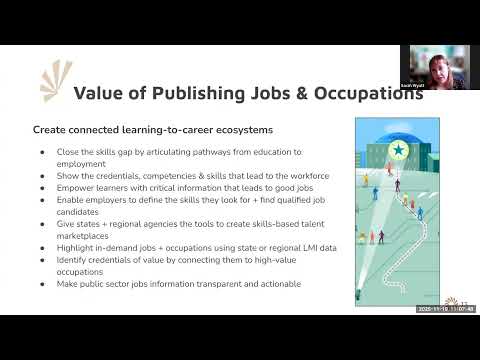
"It's tapping into the credential registry" that AI tools use to surface pathways, Partnerships Manager Sarah Wyatt said, showing a ChatGPT example where the registry helped recommend steps toward a cybersecurity career. Wyatt emphasized that the registry assigns a CTID (credential identifier) to each entry, making credentials uniquely discoverable.
Jeff Grama, Credential Solutions Lead, said the registry is already in operation across a broad national network: "35 states, 2 regional consortia," and urged institutions and agencies to align policy language so data are "publicly available, structured, open, linked, and interoperable." He recommended the CTDL voluntary assessment (CTDL VAP) as a practical procurement checklist for CIOs and procurement teams and described CTDL Xtra, an AI-powered extractor that converts public program pages into CSV files ready for registry upload.
Grama also described an "open initiative" that transforms publicly available data into linked open data and noted growing federal interest: he cited a recent FIPSI grant category that includes "$50,000,000" for talent marketplace and credential registry work, which he said indicates continued federal funding opportunities.
Panelists urged institutions to focus on use cases and integration points. Wyatt compared the registry to travel-booking sites that link flights, hotels and restaurants: a single search can connect credentials to occupations, required skills, costs and financial aid. The speakers also stressed privacy limits: Credential Engine catalogs credential attributes, not personally identifiable student records.
The webinar closed with a call for practical next steps: adopt shared CTDL values in procurement, pilot CTDL Xtra to reduce lift for institutions without technical teams, and use the CTDL VAP to ensure new vendor purchases support linked open data.
AI generated
The text on this page is AI generated. Summaries, highlights, analysis, and video transcripts are all produced from the original source material.
AI can make mistakes, so if you spot one, and we will fix it for everyone.
Note: the source content is unaltered by us. Any content source we link to, be it a video, an audio recording, or a document, is presented exactly as its publisher released it. That publisher is usually a government body, sometimes an individual official or another organisation.