Get AI Briefings, Transcripts & Alerts on Local & National Government Meetings — Forever.
Stafford adopts stricter data‑center rules after marathon public hearing; developers, residents split
Loading...
Summary
After an extended joint hearing and more than six hours of public comment, the Stafford County Board of Supervisors and Planning Commission adopted changes to the comprehensive plan and updates to the county's data‑center zoning rules, including larger buffers, sound testing and water‑use disclosures. Supporters cited fiscal benefits; opponents warned of environmental and health risks.
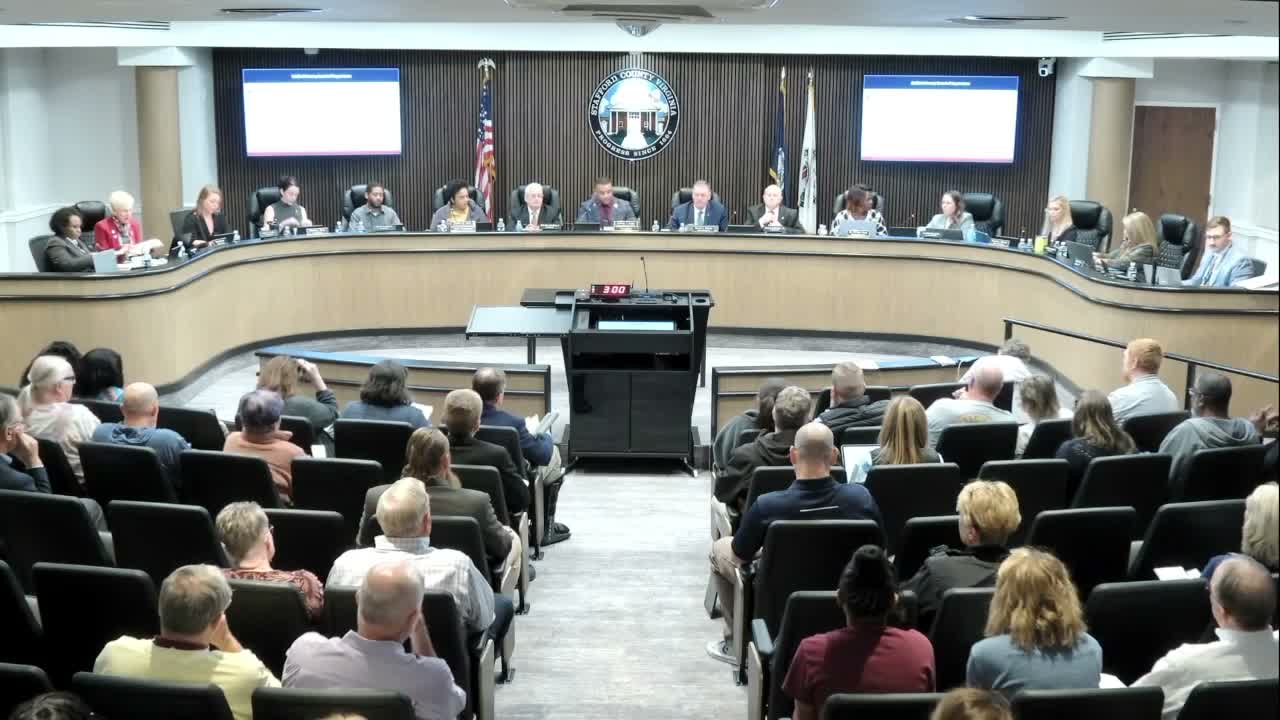
The Stafford County Board of Supervisors on Oct. 18 adopted revised comprehensive‑plan guidance and new zoning rules aimed at tightening where and how data centers may be built in the county, following a marathon joint public hearing with the Planning Commission.
The package revises Chapter 3 of the comprehensive plan and updates Section 28‑39 of the county code to require earlier disclosure of cooling technologies, add low‑frequency sound (dBC) into noise reviews, expand landscape and tree‑preservation requirements and raise buffer setbacks where data centers abut residential zoning or sensitive waterways. The advertised setback in the proposal was 1,320 feet in some circumstances; after debate the board approved an amended posture and additional study and oversight measures alongside a compromise setback approach.
Why it mattered
Supporters — including Planning Commission members and environmental groups — said the changes correct shortcomings in earlier rules and give residents stronger, enforceable protections. Brent Hunsinger of Friends of the Rappahannock urged the board to protect riparian forests and to require public disclosure of water use, writing that tree canopy is already being lost across the Chesapeake Bay watershed.
Opponents argued the changes could be arbitrary and damage the county's ability to attract large commercial investment that helps pay for schools and services. Applicant attorneys and some business representatives asked the board to allow flexibility in certain cases where on‑site conditions reduce impacts.
What the new rules require
- Early disclosure of facility cooling approach to allow review of water and energy demands. - Noise limits that add an assessment of low‑frequency sound (dBC) and require pre‑construction and post‑occupancy testing; the ordinance sets a boundary target of 55 dBA and a dBC cap that local regulators will monitor. - Enhanced buffers and tree‑preservation plans, and a requirement to preserve existing canopies within buffer zones to the extent feasible. - Limits on the use and testing hours of backup generators and proffers to fund county sound monitoring when testing occurs. - Requirements for view‑shed analyses and building‑mounted lighting limits to reduce visual impacts.
Board reaction and vote
Board members said they had heard thousands of emails and hundreds of hours of testimony over the past months. "We have to strike a balance between protecting neighborhoods and keeping Stafford's fiscal footing," Chairman Deontay Diggs said during deliberations. After extended debate the Board approved the changes and asked staff to return with more detailed implementation language and with proposals for a standing advisory committee of citizens, professionals and staff to refine rules as the industry and science evolve.
Other business at the meeting
The board also took a series of votes on unrelated but consequential items: it reallocated funds to fully fund the Rappahannock Regional Jail budget (resolution R‑25‑266) and approved an emergency order that waives December personal‑property penalties and interest until Jan. 9 to provide taxpayers an extra month to pay. The Board approved the Crane's Corner data‑center rezoning with proffers and several design and noise mitigations, and approved a revised proffer amendment for the Garrison at Stafford mixed‑use development after hours of public comment and a 4‑3 vote on the motion before the Board.
What happens next
The ordinance and comprehensive‑plan amendments now become county policy; staff will begin drafting implementing language and administrative procedures. The Board directed staff to continue outreach with utilities and to return with implementation plans, including possible independent noise‑and‑water review protocols, and to consider legislative requests for the General Assembly where local authority is limited.
A long hearing and divided public
More than a hundred speakers addressed data‑center policy and projects at tonight's joint hearing. Public commenters included conservation groups, public‑health professionals, homeowners and developers. Many residents asked that existing applications already in the county's queue be held to the new standards; others warned that retroactive application could complicate projects that are far along.
Notable quotes
"We simply can't afford to have our natural resources in this county beyond life support," said Jeff Eastland of Rock Hill during public comment on watershed protections. Chris Hornung, chairman of the Stafford Regional Airport Authority, told the board the airport is seeking to extend authority operations to allow longer leases for new hangars and promote corporate aviation growth.
The board plans additional follow‑ups by staff and a public advisory process to refine technical details, including an independent review of noise and water monitoring approaches. For now, the county has adopted new baseline protections intended to reduce the most significant community impacts of large industrial data campuses.
What to watch
- Staff language implementing the dBC requirement and monitoring protocol. - Any legislative requests to the Virginia General Assembly to expand local authority over cooling water, tax treatment and other matters. - How pending applications in the county's pipeline are processed in light of the new rules.
Sources: Stafford County Board of Supervisors meeting transcript and staff presentations.