Lifetime Citizen Portal Access — AI Briefings, Alerts & Unlimited Follows
DOJ official tells forensic conference: 'You practice science in the name of justice'
Loading...
Summary
A Department of Justice representative defended trace and pattern forensic disciplines, described DOJ initiatives to improve standards and capacity, and cited NIJ funding and rising violent-crime trends as reasons for continued support.
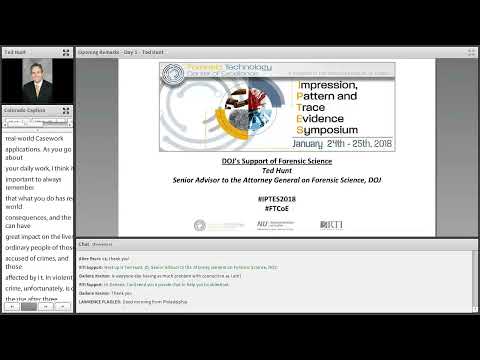
An unidentified Department of Justice representative told a national gathering of forensic experts that trace and pattern impression disciplines remain central to criminal investigations and urged practitioners to continue rigorous, transparent work.
"You practice science in the name of justice," the speaker said, thanking more than 600 attendees and framing forensic examination as a vital tool for prosecutors, defendants and fact-finders. The speaker described trace and pattern evidence as "the heart and soul of forensic science," arguing that these disciplines often lead investigations and that DNA frequently later confirms their conclusions.
The speaker framed recent and planned investments as part of the department's effort to strengthen forensic practice. The National Institute of Justice (NIJ) "funded more than $119,000,000 for crime laboratories" in 2017 and "more than $25,000,000 for forensic research, development and innovation," the speaker said, noting that some of that support targets trace and pattern analysis. Participants were told to expect presentations on new techniques, including 3D imaging for shoe, tire and tool marks.
Citing public-safety priorities, the speaker pointed to rising violent crime and said Attorney General Sessions has made reducing violent crime "a top priority." The speaker gave national statistics—"In 2015, violent crime increased by 3% nationwide" and the murder rate "increased by more than 10%"—and said some cities have seen larger increases.
The address also responded to critics who question whether certain laboratory work is "science." The speaker argued that science includes systematic observation, interpretation and judgment, and that different scientific questions call for different methods. Referring to courtroom practice, the speaker invoked Federal Rule of Evidence 702, saying admissibility depends on whether expert testimony helps the trier of fact understand the evidence or determine a fact.
The official outlined departmental initiatives to bolster reliability and consistency: research and development, "greater standardization through the uniform language for testimony and reports," quality monitoring of testimony, improved communication with state, local and tribal partners, and efforts to increase capacity and efficiency among forensic providers.
The speaker closed by reminding attendees of the real-world consequences of forensic work for victims, defendants and the justice system and by thanking them for their service. "Being a forensic scientist is a tremendous privilege but it's also a tremendous responsibility," the speaker said. The department said more specifics about some initiatives would be released in the coming weeks.