Lifetime Citizen Portal Access — AI Briefings, Alerts & Unlimited Follows
Appeals court hears challenge to admission of voicemails in Gudgel case
Loading...
Summary
At oral argument before the Washington Court of Appeals, Division I, defense counsel argued that admission of prior voicemails was unduly prejudicial under ER 404(b); the state said the trial court reasonably limited 16 messages to five and that the voicemails, plus other evidence, supported the convictions. The court took no immediate ruling.
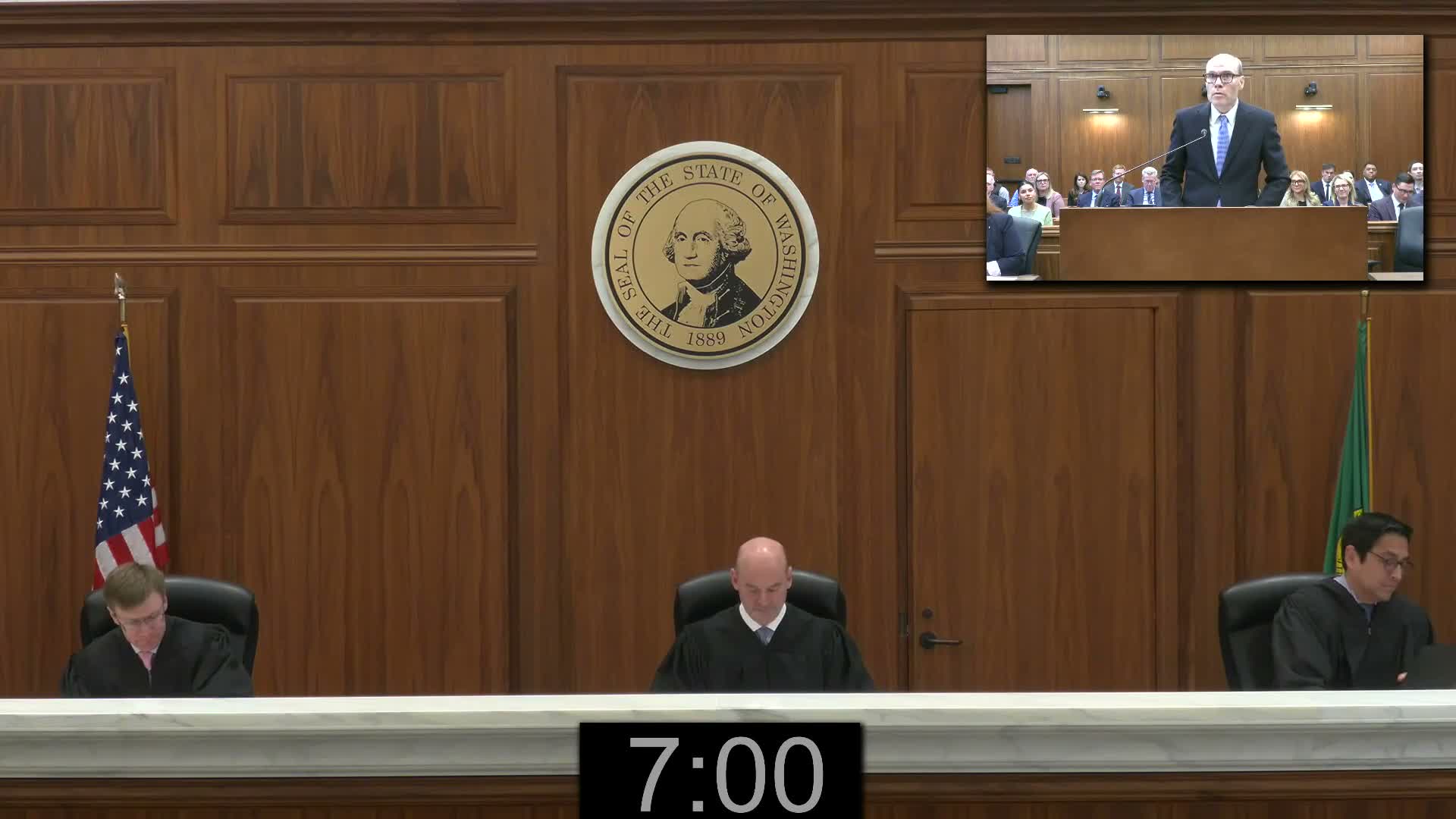
SEATTLE — The Washington Court of Appeals, Division I, heard oral argument over whether the trial court improperly admitted prior voicemails in State v. Gudgel, an appeal that could affect the defendant’s convictions.
Defense attorney Casey Grama told the panel the "erroneous admission of ER 404(b) evidence can devastate the accused prospects for a fair trial," arguing the voicemail evidence was largely inflammatory and its probative value was minimal compared with the danger of unfair prejudice. Grama said the correct legal framework places the burden on the state to show that probative value outweighs prejudicial effect and stressed the cumulative impact of multiple messages: "it's like taking a match and throwing it on the powder cake when you admit evidence like that." He noted there was other motive evidence in the record, including testimony from Ms. McLean, and questioned why the state needed to admit multiple voicemails rather than a single representative message.
Assistant attorney Margot Martin, arguing for the state, urged the court to affirm. Martin said the trial judge narrowed the prosecution's request from 16 voicemails to five and that limitation is "significant," arguing the selection reduced the risk of unfair prejudice. She also pointed to other evidence admitted at trial, including surveillance exhibits, and noted that footage which toggles between black-and-white and color can change perceptions of a vehicle’s color — in her words, "it's actually a mid red" on the color moments — undermining a defense factual argument about the vehicle seen on video. Martin also argued the voicemails showed an unresolved dispute about a vehicle that supported a motive theory and that Gudgel’s custody during part of the interval made the messages more probative of a pattern.
Judges on the three-member panel pressed both sides on whether the court should assess the trial court’s decision against the universe of materials the prosecutor sought to admit (16 messages) or only the smaller subset the judge allowed (five messages). The bench and counsel also debated how ER 403 balancing (probative value versus prejudicial effect) intersects with ER 404(b) propensity concerns and the appropriate standard of review — whether an abuse-of-discretion standard permits affirmance where a reasonable trial judge could have reached the same result.
Neither side identified a controlling appellate case that squarely resolves whether the burden shifts in the same way under ER 403 balancing as it does under ER 404(b) argument, and panel members noted that difference could matter mainly in cases where the decision is otherwise a close call. Counsel agreed that domestic-violence cases can raise heightened concerns about inflammatory evidence but disputed whether the text of the evidence rule itself requires special treatment for such offenses.
The court did not issue an immediate ruling at the hearing and proceeded to call the next case on its calendar. No date for a decision was announced from the bench during the session recorded in the transcript.
Authorities cited during argument included references to ER 404(b) and ER 403 evidentiary rules and the trial judge's rulings limiting the number of admitted voicemail files. Exhibits and trial testimony (including a cited Ms. McLean testimony and surveillance video exhibits) were discussed as part of the state's harmless-error and sufficiency arguments.
What happens next: The panel may take the arguments under advisement and issue a written opinion addressing whether the trial court abused its discretion in admitting the selected voicemail evidence and whether any error was harmless given the remaining record.