Lifetime Citizen Portal Access — AI Briefings, Alerts & Unlimited Follows
Judges and legal leaders warn of rising threats to the judiciary and urge public, institutional action
Loading...
Summary
At a symposium panel, judges, legal educators and reporters described rising credible threats to judges, recounted violent attacks and doxing, and proposed measures—security funding, media training, civic education and coalition building—to defend judicial independence.
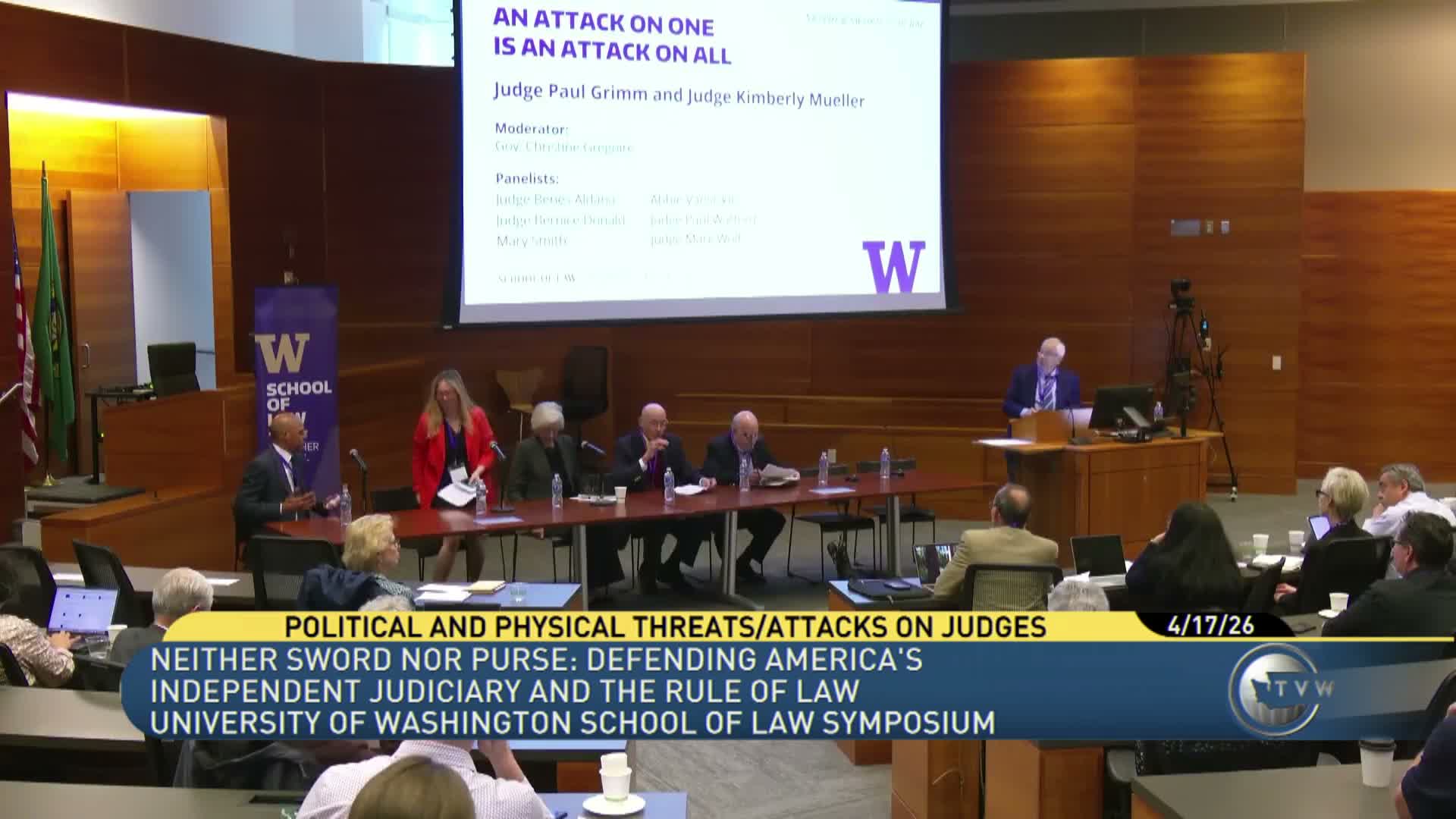
A multi‑speaker panel at a symposium on the rule of law warned that judges across the United States are facing increasing threats and urged collective action from courts, the bar and the public.
Paul Grimm, immediate past director of the Bolch Judicial Institute, said the U.S. Marshals Service has tracked rising numbers of credible and serious threats. Citing the Marshals’ tallies as he read them aloud, Grimm described “224 in 2021, 403 in 2022, 630 in 2023, 509 in 2024 and 564 in 2025, with 256 so far this year,” and said the forms of intimidation range from voicemails and letters to targeted doxing, posting family locations and pizza bequests meant to signal knowledge of a judge’s home. Grimm invoked the attack on U.S. District Judge Esther Salas’s family—her son was killed in a 2020 attack at her home—to illustrate the stakes and cited legislative efforts to enhance judicial security.
Journalists and judges described how the tactics have shifted. Abby, a New York Times reporter, summarized reporting on doxing and swatting and said the personal impact and logistics of covering threats are constrained when judges cannot speak publicly about them. Judge Wolf described resigning and publishing an Atlantic piece to speak out on the deterioration of norms and said his public‑facing approach produced broad attention and mostly positive responses.
Panelists advocated several responses. Kim Mueller, director of the Bolch Judicial Institute and a former federal judge, urged “offense” as well as defense: media training for judges and chief judges, targeted civic education modules for public audiences, coordinated use of retired judges and lawyers as communicators, and use of social and traditional media to explain court procedures in plain language. Judge Benes Aldana of the National Judicial College and others emphasized procedural fairness and leadership in restoring public trust. Judge Watford proposed structural change to judicial protection, arguing the marshal service’s protective function would be better housed under the judicial branch to avoid dependence on executive‑branch discretion.
Panelists also warned about delegitimizing rhetoric from high office, congressional hearings calling judges to account for rulings, and the chilling effects of executive pressure on law firms and bar organizations. Several speakers urged Congress and legal institutions to increase funding for security, to support education and to build coalitions such as the Article 3 Coalition to amplify nonviolent, factual explanations about the courts’ role.
The panel closed with a call for coordinated institutional action and continued public education; the symposium agenda scheduled follow‑up sessions after lunch to develop concrete next steps.