Get AI Briefings, Transcripts & Alerts on Local & National Government Meetings — Forever.
Mount Vernon City Schools finance chief warns state tax changes could cost district about $8 million
Loading...
Summary
District finance staff told the board that recent state property-tax changes and related county actions could reduce the district's revenues by roughly $8 million over the five-year forecast; staff also described a one-time $5 million cash adjustment and explained how calamity days and remote-learning waivers affect required instructional hours.
The Mount Vernon City Schools Board of Education on Feb. 13 heard a five-year financial forecast that cautioned the district faces substantial revenue headwinds from recent state property-tax reforms.
"The property tax reform is gonna cost our district, as it stands right now, about $8,000,000 over the life of the forecast," said Judy, the district finance staff member who presented the report, during the board's fiscal services update. She told the board the district is still evaluating the changes and urged careful planning.
Why it matters: the forecast combines multiple changes in state law and county implementation choices that reduce ongoing property-tax collections. Judy told the board that 230 other districts face similar pressures and that one-time adjustments will not fix ongoing revenue shortfalls.
Key details: Judy said the district received a one-time $5,000,000 adjustment that improves a single year's cash position but does not increase ongoing revenue. She also outlined cash balances and reserves, noting a self-insurance fund of $3,000,000 and a general fund balance of about $15,000,000.
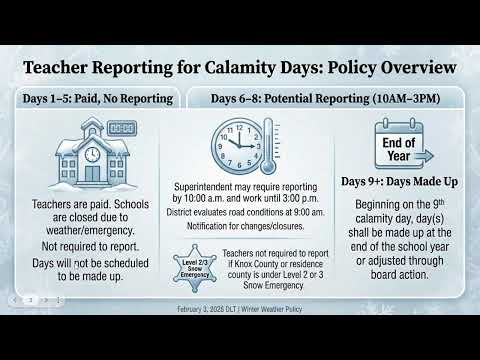
The presentation explained how the state's move from counting "days" to counting instructional "hours" affects makeup planning. The district secured three remote-learning waivers earlier in the year; those waivers mean certain remote days do not count against required hours but do affect the district's calculation of minimum instructional time.
On tax credits and timing: Judy said a July credit of roughly $2,230,000 will appear on taxpayers' July bills as a one-time credit tied to 2023 over-assessments; the state will absorb that credit rather than charging it back to districts, she said. The finance presentation included an explanation of the GDP deflator used in calculations and cautioned that the overall interaction of county-level decisions (for example, a temporary 2.5% owner-occupied credit adopted in some counties) could change how much revenue the district ultimately receives.
Board action: after questions and clarifications, the board approved the fiscal items as presented by roll-call vote.
What comes next: finance staff offered to share the full forecast and supporting charts with board members and will monitor county and state implementation of tax credits and any further legislative action that could affect revenue.