Get AI Briefings, Transcripts & Alerts on Local & National Government Meetings — Forever.
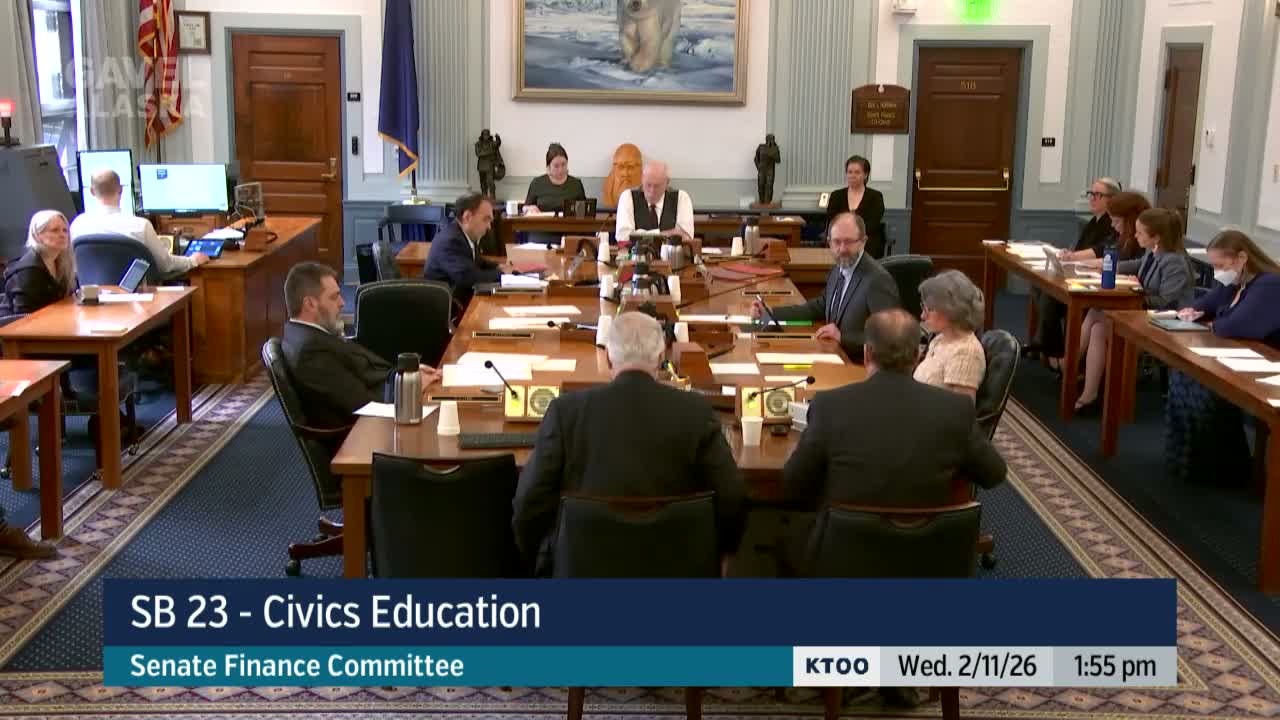
Committee hears Senate Bill 23 to require civics instruction and a civics assessment for high‑school graduation
Loading...
Summary
Senate Bill 23 would require a civics curriculum and a civics assessment or completion of a course for graduating seniors. Education groups and civic organizations testified in support; the department fiscal note lists first‑year costs and one permanent position.
Senate Bill 23, sponsored by Senator Gary Stevens, directs the Board of Education and Early Development to develop a statewide civics curriculum and requires an exit civics assessment or equivalent project for high‑school graduation or course completion. The sponsor said the bill is intended to strengthen civic knowledge and community engagement among students.
Advocates and educators testified in support. Alex Copley, representing Kenai Peninsula Votes, urged project‑based assessments and cited local examples of student‑led candidate forums and service learning. Molly McCannon of the Alaska Historical Society said stronger civic instruction would prepare young people for citizenship and civil discourse. Sean Healy of iCivics (Sandra Day O'Connor’s legacy organization) presented national data showing that standalone high‑school civics courses improve test outcomes and recommended dedicated instructional time, teacher professional learning, and funding.
Senator Kiel reviewed a fiscal note from the Department of Education and Early Development that the committee recorded as stating first‑year costs of "837.1" and one permanent full‑time position, with out‑year costs declining to "179.1" until year five; the transcript does not specify monetary units in the record provided. After questions about district implementation and resources, the committee set SB 23 aside for further review.