Lifetime Citizen Portal Access — AI Briefings, Alerts & Unlimited Follows
Scholars and Journalists: Courts Need Better Public-Facing Summaries and Social-media Strategies
Loading...
Summary
Reporters, judges and researchers at a Seattle panel urged courts to adopt public-oriented communication tools—short case briefs, coordinated press offices and social-listening—to counter mis- and disinformation and rebuild public trust; schools and civic groups were urged to expand civic and digital-literacy education.
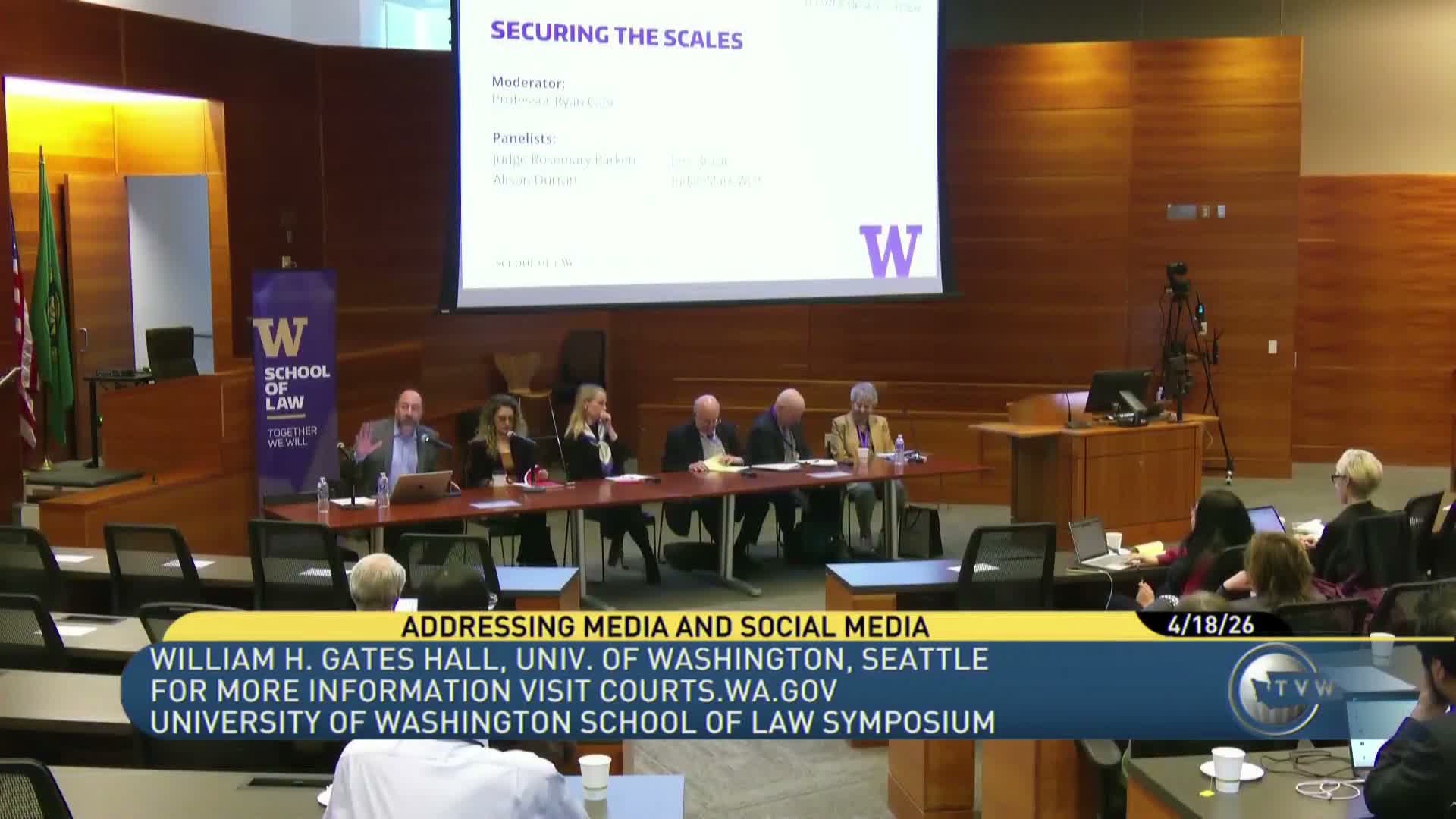
Journalists, academics and judges at a University of Washington panel on social media said courts can blunt misinformation and improve public understanding through simple, public-facing communication practices and better civic education.
Ryan Calo, a law professor who moderated the panel, introduced a diverse group of speakers from the bench, legacy press and academic research centers. Researchers described a fragmented online environment—multiple platforms (X, TikTok, YouTube) where participatory discussion and misinformation coexist—and urged institutions to monitor narratives around high-profile court cases.
A research manager working on election rumors said researchers find two broad phenomena: local, participatory misinterpretations in emotionally charged family- or criminal-court matters and better-resourced disinformation campaigns around national constitutional cases. She noted platforms and API restrictions make long-term social-listening harder for researchers.
Panelists who are current and former judges and reporters recommended a set of achievable communication tactics. These included issuing concise, plain-language “cases in brief” for widely noticed rulings; equipping court websites and social accounts with timely, shareable summaries; and creating a public-information role in district and state courts so reporters and citizens can get accurate process information during unfolding cases. A state chief justice described a pilot that used brief web summaries and said such materials can reduce misunderstanding when reporters must meet tight deadlines.
A Wall Street Journal reporter urged accuracy and process reporting and said that exposing internal memos (as recent national reporting has done) is sometimes essential to public understanding of how emergency dockets operate but also changes public perception of the court’s role. “This type of process reporting is relatively new,” the reporter said; the panel debated the tradeoffs between transparency and institutional functioning.
Education and training were a recurrent theme. Leaders from iCivics and public-broadcasting education teams said rebuilding civic knowledge in K–12 is vital; they recommended more state-level civics instruction so students can act locally and have an early experience that real action produces results. A digital-inquiry researcher urged schools to teach modern credibility skills that address search-engine strategies, social feeds and AI-generated content rather than older, purely Socratic critical-thinking exercises.
Panelists closed by urging courts and civic organizations to pursue modest pilot programs: readily digestible case summaries, automated social-listening for spikes in mis- or disinformation about court cases, and short curricular modules for schools on how the judiciary works. The proposals aim to make trustworthy information easier to find than inaccurate alternatives.
Organizers said the recommendations will inform follow-up work between court public-information offices, research centers and nonprofits focusing on civics education.