Lifetime Citizen Portal Access — AI Briefings, Alerts & Unlimited Follows
Treasurer's office proposes overhaul of Ohio Checkbook; estimates $5 million to implement
Loading...
Summary
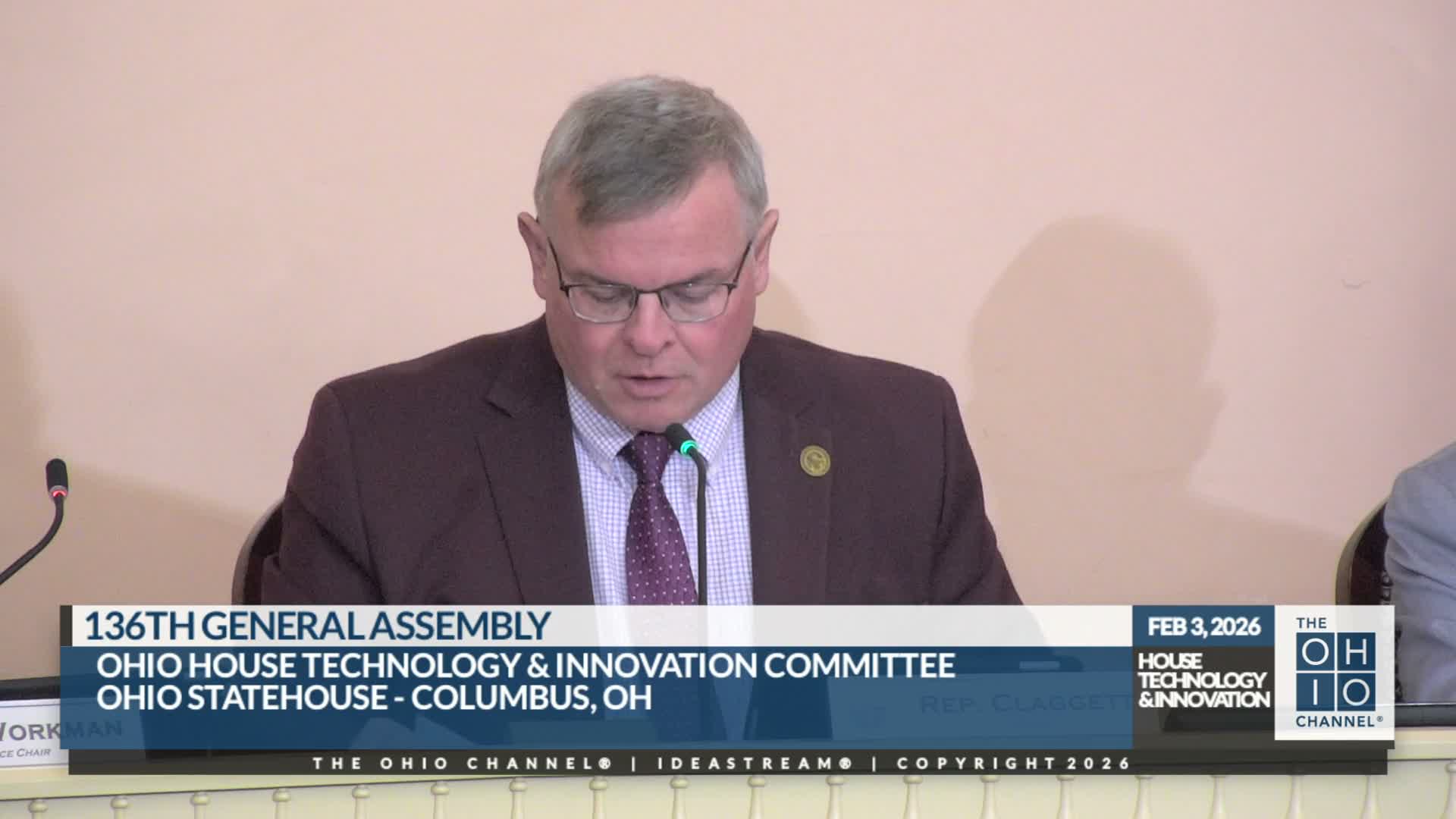
Deputy chief of staff Zack Prouty told the committee HB413 would split the Ohio Checkbook into separate state and local components, require roughly 4,000 local governments to participate, and carry an estimated state implementation cost of about $5,000,000, a figure based on Idaho's experience and not inclusive of local impacts.
Zack Prouty, deputy chief of staff for the Ohio Treasurer's Office, testified in support of House Bill 413, which would rework the Ohio Checkbook to create separate state and local components and make local participation mandatory. Prouty said the original checkbook launched in 2014 and that the current, unified platform was codified in the 2021 budget cycle after a 2020 partnership among the Treasurer's Office, the Office of Budget and Management (OBM) and the Department of Administrative Services (DAS).
Under HB413, Prouty said, the state would ‘‘recreate the local side of the checkbook from scratch’’ and estimated about 4,000 local governments would be required to participate annually. He said historically about 1,100 jurisdictions have displayed data at some time, roughly 500 are consistently active, and 800–900 provide data on a semi‑regular basis. The bill would expand the platform to include revenues as well as expenditures.
Prouty said the Treasurer's Office estimated a state implementation cost of roughly $5,000,000, based on conversations with Idaho's comptroller and the smaller scale of that state's project. He said that estimate does not take into account potential costs to local governments for reconfiguring accounting systems and staffing; his office intends to rely substantially on a vendor to build interfaces and on existing accounting systems where feasible.
Committee members asked about stakeholder engagement, local impacts and independent oversight; Prouty said the office had not conducted formal local outreach beyond two‑way conversations and that participation protocols and auditing by the state auditor would be part of future work.
The fourth hearing on HB413 concluded after questions.