Get Full Government Meeting Transcripts, Videos, & Alerts Forever!
Get email alerts on the Financial Accountability topic
No spam. Unsubscribe anytime.
Bonner County ambulance board presses for review of $2 million transfers, asks legal to draft MOU after W-2 confusion
Summary
Trustees discussed that roughly $2 million of ambulance-district funds were used on county-owned facilities, debated accounting remedies and asked legal and the clerk's office to draft memoranda of understanding to clarify payroll, billing and communications after erroneous W-2s were produced.
The Bonner County Ambulance Service District board spent the bulk of its Feb. 18 meeting addressing financial-accountability concerns and communication failures with the county clerk's office that produced incorrect W-2 tax documents for EMS employees.
Board members raised a longstanding problem: district funds had been used to improve county-owned buildings even though the ambulance district is a separate taxing district. One board member said the district's budget had been reduced by about $2,000,000 after money was placed in a county building the district does not own. "That is still I've been researching what to do about that because in terms of the ambulance district's money, it is not supposed to be used in the way that it was used," said an unnamed board member during the meeting.
The board discussed options for remedying the transfers, including reconciling recent years of transactions (board members discussed 5- to 10-year reviews), looking for offsets such as other funds the county provided, and exploring deeds or credits for facilities the district helped finance. Several commissioners urged convening all stakeholders—the ambulance district, the county clerk and comptroller, and county legal counsel—to reach an agreed resolution.
Board members repeatedly emphasized the fiduciary role of the clerk's office as the financial "firewall" that should prevent improper inter-district transfers. A commissioner said the clerk's office is responsible for ensuring transfers comply with accounting principles and suggested the Government Finance Officers Association (GFOA) guidance would be the prevailing standard to consult.
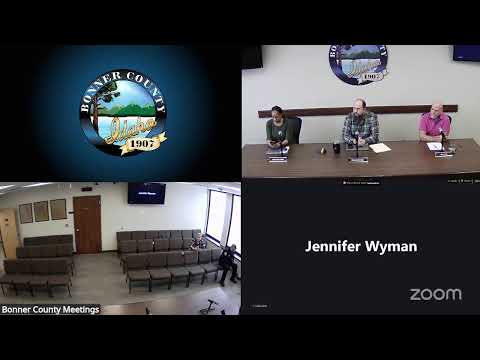
In a closely related procedural matter, the board considered communications problems that produced duplicate and inaccurate W-2s. Jennifer Wyman, identified in the record as the Bonner County EMS bookkeeper, said the EMS became the payroll administrator in October and has its own EIN; nevertheless, she said the county's Tyler payroll system produced additional W-2s for 2025 that are not accurate. Wyman told the board she asked the clerk's office to retract the erroneous documents and send a formal notice advising employees to disregard the county-produced W-2s.
Wyman described a specific discrepancy in how overtime was reported (Box 14 of the W-2), which could lead some employees to file incorrect tax returns. "A March W-2 is not a full picture. It is not accurate by no means," she said, adding that she has tried to explain why the EMS-produced W-2s are the correct records.
To reduce future problems, the board asked county legal counsel ("Bill" in the record) to draft proposed memoranda of understanding (MOUs) or a single comprehensive agreement governing: communications between the clerk's office and EMS; payroll responsibilities and end-of-year filings; billing and payment procedures for shared utilities and facilities; and clarity on which party handles vendor payments, credit-card reconciliations and facility repairs. Board members discussed splitting legal-drafting costs and circulating drafts to the clerk's attorney, Robert Abel, for review.
No formal board vote on a remedy for the $2 million transfers occurred at the meeting. Instead, the board directed staff to gather accounting records, involve the clerk and comptroller, and request legal draft language to memorialize agreed processes and responsibilities. The board agreed that any final MOU or written agreement should define ownership, maintenance responsibilities, and billing procedures for shared county facilities used by EMS.
Next steps: the board asked staff and legal to prepare draft MOU language and recommended a joint meeting with the clerk's office and county legal counsel to resolve outstanding accounting questions. The board also asked for further internal accounting work (an internal audit recommendation based on GFOA principles) and a report back to the commissioners.