Get Full Government Meeting Transcripts, Videos, & Alerts Forever!
Get email alerts on the Wea Board Administration topic
No spam. Unsubscribe anytime.
Panel hears bill to adjust WEA oversight board rules, remove dashboard mandate
Summary
The committee heard Substitute Senate Bill 5,931, which would extend co‑chair terms to two years, allow the WEA oversight board to meet more than four times annually, require consulting the Student Achievement Council on investments, and eliminate a statutory dashboard requirement; WASAC testified the dashboard was never built and had been defunded.
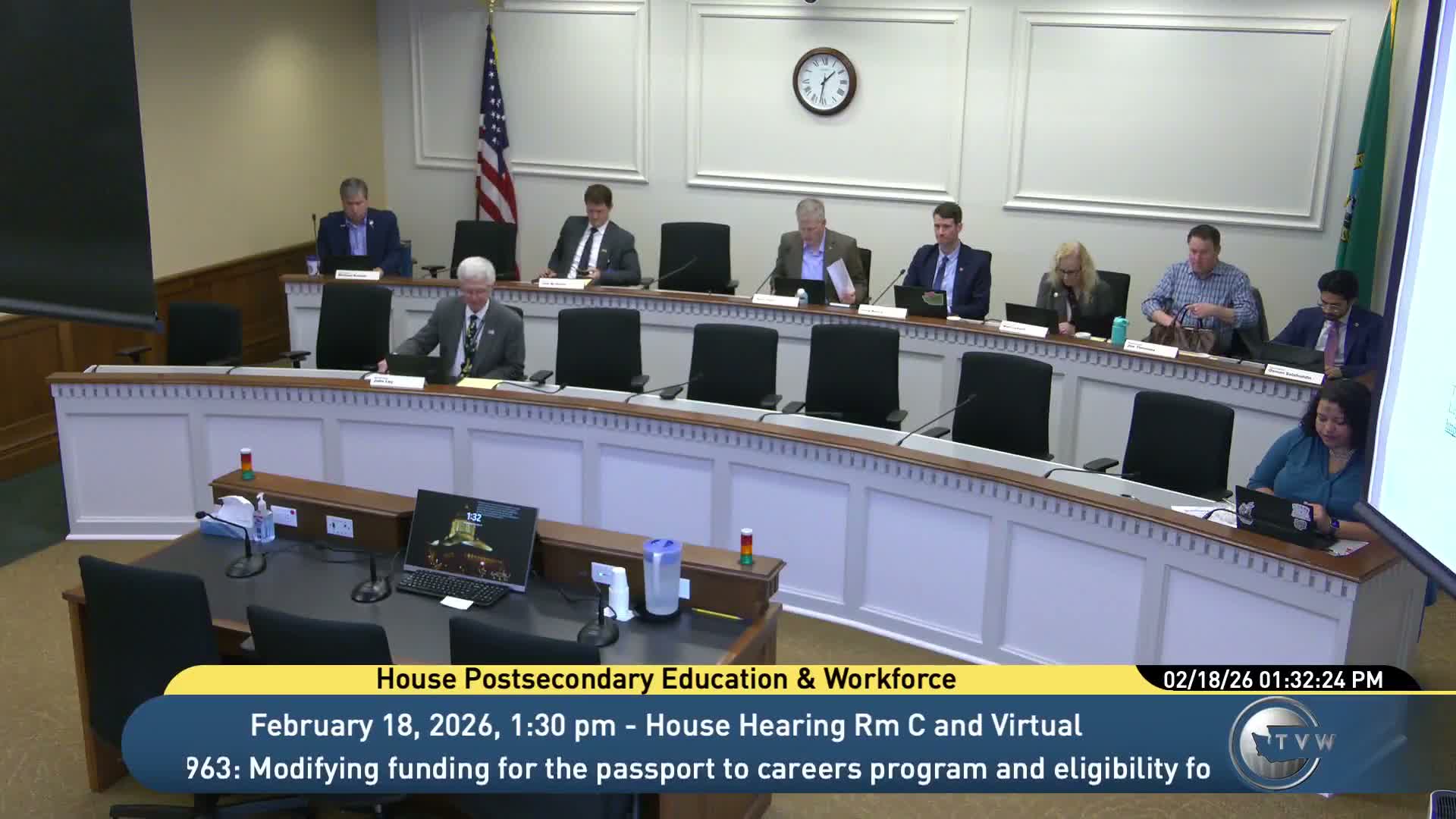
Substitute Senate Bill 5,931, proposing administrative changes to the Workforce Education Investment Account oversight board, was heard Feb. 18 by the Post Secondary Education & Workforce Committee. Saranda Ross, staff to the committee, summarized the bill’s principal changes and committee witnesses described the proposal as technical and nonfiscal.
The bill would lengthen co‑chair terms from one year to two years, align co‑chair elections with budgeting cycles, allow the WEA board to meet more than four times a year, require the board to consult with the Student Achievement Council when reviewing whether investments increase student success and career readiness, and remove the statutory requirement that the board maintain a public data dashboard. Saranda Ross described the measures as administrative adjustments and noted the bill is a companion to House Bill 2,311.
Joel Anderson, associate director of legislative and external affairs at the Student Achievement Council (WASAC), testified in support and described the board’s work. Anderson said the board provides guidance and recommendations to the Legislature but “does not have any authority to actually appropriate or grant funding,” and that WASAC staffs the board with one FTE. He told the committee the data dashboard required by statute “was never created due to inadequate funding” and that it was fully defunded in last year’s biannual operating budget.
Anderson said WASAC has spent significant staff time tracing carry‑forward appropriations in the WEA account, which include multi‑year line items that are not always readily visible in public budget data. He said the board’s most recent legislative report documents about 98–99% of funds coming from the WEA account and offered to share that report with the committee. Vice Chair Nance reported 42 people signed in on the bill (41 pro, 1 con); one person testified in person in support.
The committee took no formal vote during the hearing. The chair closed the public hearing on SSB 5,931 and said he intends to consider (execute) the bill at the committee’s Tuesday executive session if a majority of members agree. Members were reminded of amendment deadlines and instructed to send potential amendments to staff promptly.
The committee record includes the staff analysis, WASAC testimony, and a public sign‑in showing broad support; no fiscal impact was reported during the hearing.