
DFM says vacancy-savings targets are estimates, not fixed cuts
Get AI-powered insights, summaries, and transcripts
Subscribe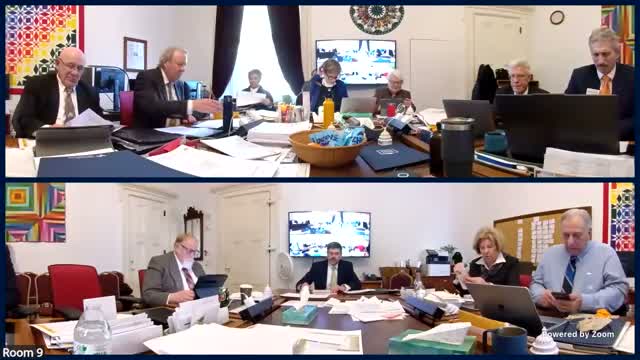
Summary
Deputy Commissioner Hardy Merrill told the House Appropriations Committee there is no single formula for budgeted vacancy savings; departments submit estimates and DFM reviews them, using tools such as pay-act requests and carryforward management to address midyear funding needs.
Deputy Commissioner Hardy Merrill of the Department of Finance and Management told the House Appropriations Committee on Feb. 19 that budgeted vacancy savings are not produced by a single formula and are intended as estimates departments must justify during budget review.
"There is not a set, any set formulaic calculation to arrive at vacancy savings numbers," Merrill said, describing the position-summary and VTHR tools departments use to build budgets and the DFM review that follows. Merrill said the governor's recommended budget shows roughly $81.5 million in budgeted vacancy savings across all funds while a point-in-time count of vacant positions equated to about $104 million in salary and benefit value.
The distinction matters because departments sometimes budget vacancy savings as a way to meet targets rather than cutting programs. Merrill described several managerial levers DFM uses to manage midyear staffing and payroll pressures, including the pay-act appropriation overseen by the secretary of administration and carryforward reservation: "We create extra capacity in our ability to, quote, unquote, dole out pay act from the secretary's $25,000,000 pot by making certain departments... self fund their pay act," he said.
Committee members pressed why agencies that appear fully staffed nonetheless show budgeted vacancy savings; Merrill said departments may book savings to meet targets or because of fund-type complexities (general fund vs. special/internal service funds). He cited the state's attorneys, corrections and state police as examples where vacancy dynamics, collective bargaining and shift differentials can produce differences between snapshot vacancies and budgeted savings.
Members asked for a deeper appropriation-level spreadsheet and said the committee would revisit vacancy savings in a longer April session to examine FY27 implications.