Get Full Government Meeting Transcripts, Videos, & Alerts Forever!
Get email alerts on the Property Taxation topic
No spam. Unsubscribe anytime.
House committee approves bill to prevent "stacking" of homeowners exemptions if initiative passes
Summary
The House TRW committee on Feb. 20 approved House Bill 147, a narrowly written repeal that would remove a 25% homeowners exemption only if a separate people's initiative creating a 50% residential exemption is later implemented. Supporters said the measure avoids administrative burdens and prevents cumulative tax cuts; opponents raised timing concerns.
CHEYENNE, Wyo. — The House Travel, Recreation & Wildlife Committee on Feb. 20 voted 7-2 to advance House Bill 147, a measure that would automatically repeal a prior 25% homeowners exemption if a separate people's initiative that creates a 50% residential exemption is later implemented.
Sponsor Representative Tony Locke, R., said the bill is narrowly tailored to prevent exemptions from being "stacked" so that a 50% initiative would not be layered on top of an existing 25% homeowner exemption. "All it really does is it just repeals what was implemented with Senate File 69," Locke told the committee, adding the intent was never to have both exemptions in effect at the same time.
The bill drew support from county officials and assessors at the hearing. Ken Gill, administrator of the Department of Revenue's Property Tax Division, described the fiscal presentation as an illustration of the net effect of removing one exemption and replacing it with another. "The previous homeowner exemption exempted over $1.4 billion in assessed value last year," Gill said, which he said equated to roughly $101 million in statewide tax using an average mill levy. He also said agency and LSO analyses estimate an overall residential property tax reduction on the order of $43 million in fiscal year 2028 and about $43.9 million in fiscal year 2029 if the 50% initiative were implemented.
Nick Agopian, representing the Wyoming County Commissioners Association, told the committee the association had voted to support the bill at its legislative hearing and said the measure would help counties manage the administrative and fiscal implications if a people's initiative is enacted. "The bill is what's before us today, and it certainly helps blunt what the People's Initiative would bring," Agopian said.
Commerce County Assessor Dixie Huxtable said assessors back the bill for practical reasons. Without the repealer in statute, she told the committee, assessors would still be required to process the 25% homeowners exemption in their offices until the Legislature acted in a later session even if a people's initiative passed. "For us, it's very important that this go through to help us with our processes," Huxtable said.
Opponents and some members urged caution about adopting the repeal before the initiative passes. Representative Provenza said the people's initiative has not passed and is not effective immediately; he said the Legislature has time before implementation and that he would vote no because he did not want the repeal in the statute books if the initiative failed. "I'm gonna be voting no because I think that we can clean this up, and I don't want this in our statute books if it doesn't pass," Provenza said.
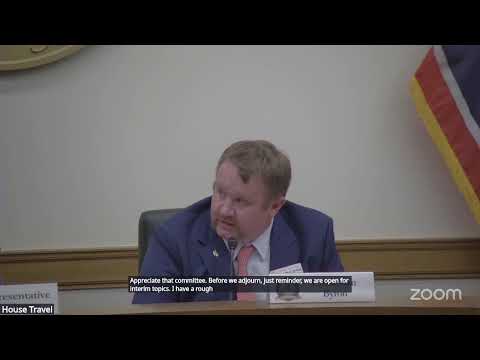
After brief floor discussion and no amendments, Representative Wharf moved and Representative Fair seconded consideration of the bill. The committee then took a roll-call vote. Tellers recorded these votes: Campbell, Connolly, Jarvis, Thayer, Wharf and Chairman Byron voted aye; Provenza voted no; Representative Storer submitted an absentee no; the chair reported the motion passed 7-2.
The bill's sponsor said he had not yet secured a Senate sponsor and would seek one on the floor. The Department of Revenue offered to share county-level breakdowns of the initiative's effects with the committee and said it had worked with the Legislative Service Office on that analysis.
The committee adjourned after the vote and the sponsor indicated he would continue seeking cross-chamber support for the measure.