Lifetime Citizen Portal Access — AI Briefings, Alerts & Unlimited Follows
State Parks details historic-district approach, Fort Wharton landmark work and mitigation practice
Loading...
Summary
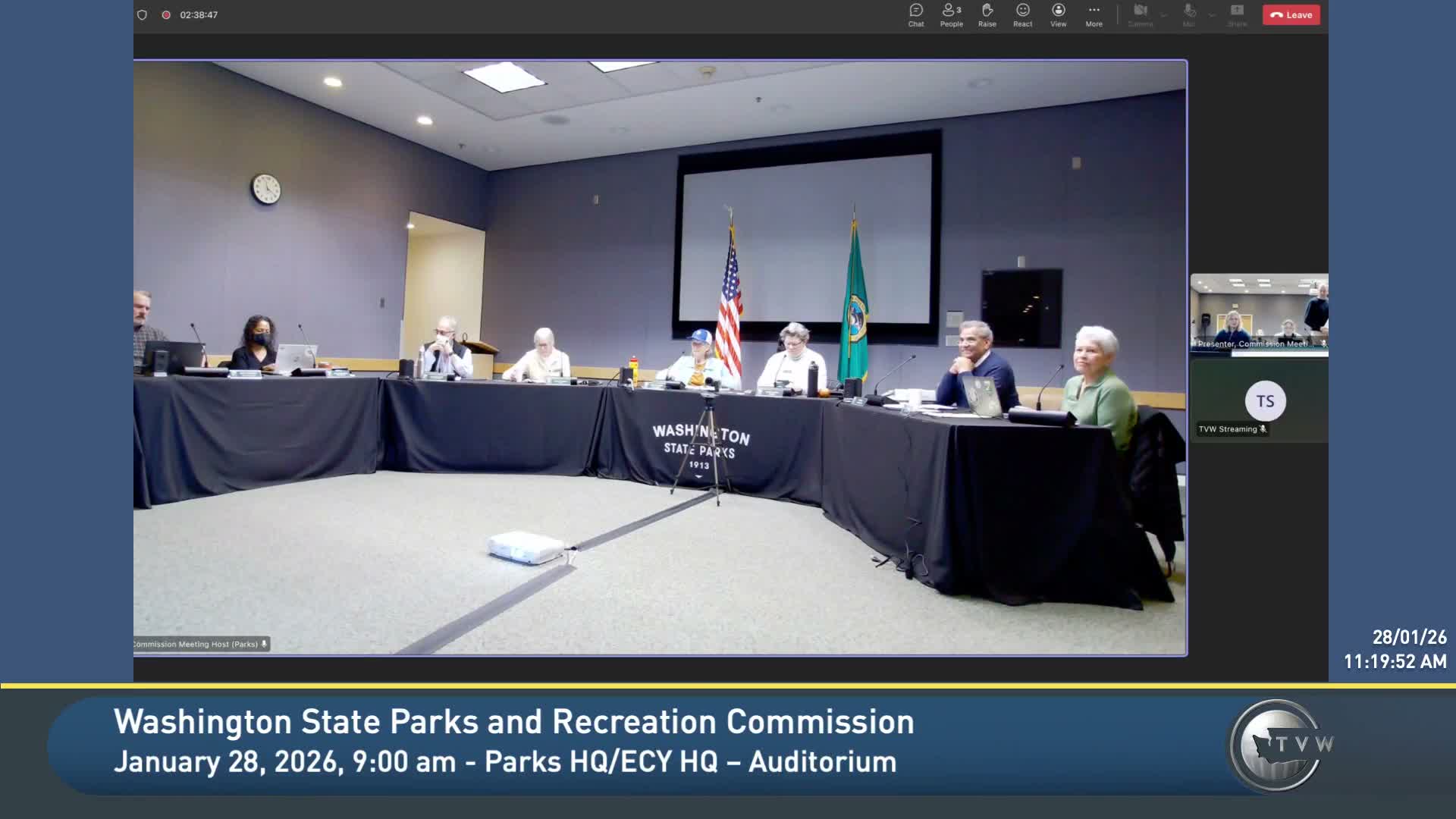
The commission received a technical briefing on historic districts, mitigation and Secretary of the Interior standards, with Fort Wharton and Moran State Park used as case studies; staff reviewed preservation and rehabilitation examples and explained mitigation workflows.
Alex, historic preservation lead at Washington State Parks, briefed commissioners on the agency's historic-preservation policy, historic districts and mitigation practices and provided examples from Fort Wharton (a National Historic Landmark) and Moran State Park (a National Register district).
Alex explained that a historic district is a collection of resources sharing a historic context; listing districts simplifies management and allows contextual additions over time. He said State Parks has 570 listed resources and 25 historic districts in its system, with only 14 individual listings.
Using Fort Wharton as an example, Alex described a recent revision that included World War II-era buildings and led to reaffirmation of the site's National Historic Landmark status in 2024. He reviewed project standards and mitigation approaches: when an adverse impact is unavoidable, mitigation can include documentation, inventory, salvage of materials for future repairs, and interpretive outreach. He gave two mitigation examples from the agency's record: a replacement-interpretive project tied to a 2010 memorandum of agreement, and inventory and story-map work to document panabode-style camp buildings after a local demolition.
Alex also described Building 202 at Fort Wharton, a rehabilitation carried out in 2015 that used federal historic-preservation tax credits and cost about $5,000,000. He highlighted the standards applied: retaining historic character, substantiating replacements with documentary evidence, and ensuring new construction is discernible from original fabric.
Commissioners asked about district status for Moran and the difference between listing levels; Alex clarified Moran is listed at the statewide level and noted how district nominations and master plans shape program decisions. He said the agency continues to develop guidelines to govern work within districts and prioritize adaptive reuse, public benefit mitigation, and documentation.