Get Full Government Meeting Transcripts, Videos, & Alerts Forever!
Get email alerts on the Well Washington Fund topic
No spam. Unsubscribe anytime.
Representative Scott unveils ‘Well Washington Fund’ and two companion bills to shore up services
Summary
Representative Scott announced three bills including the Well Washington Fund, a proposed $3 billion-per-year corporate payroll tax on wages above $125,000, saying the package will protect housing, health care and education from expected federal cuts. Advocates from housing, higher education and labor urged hearings and legislative action in 2026.
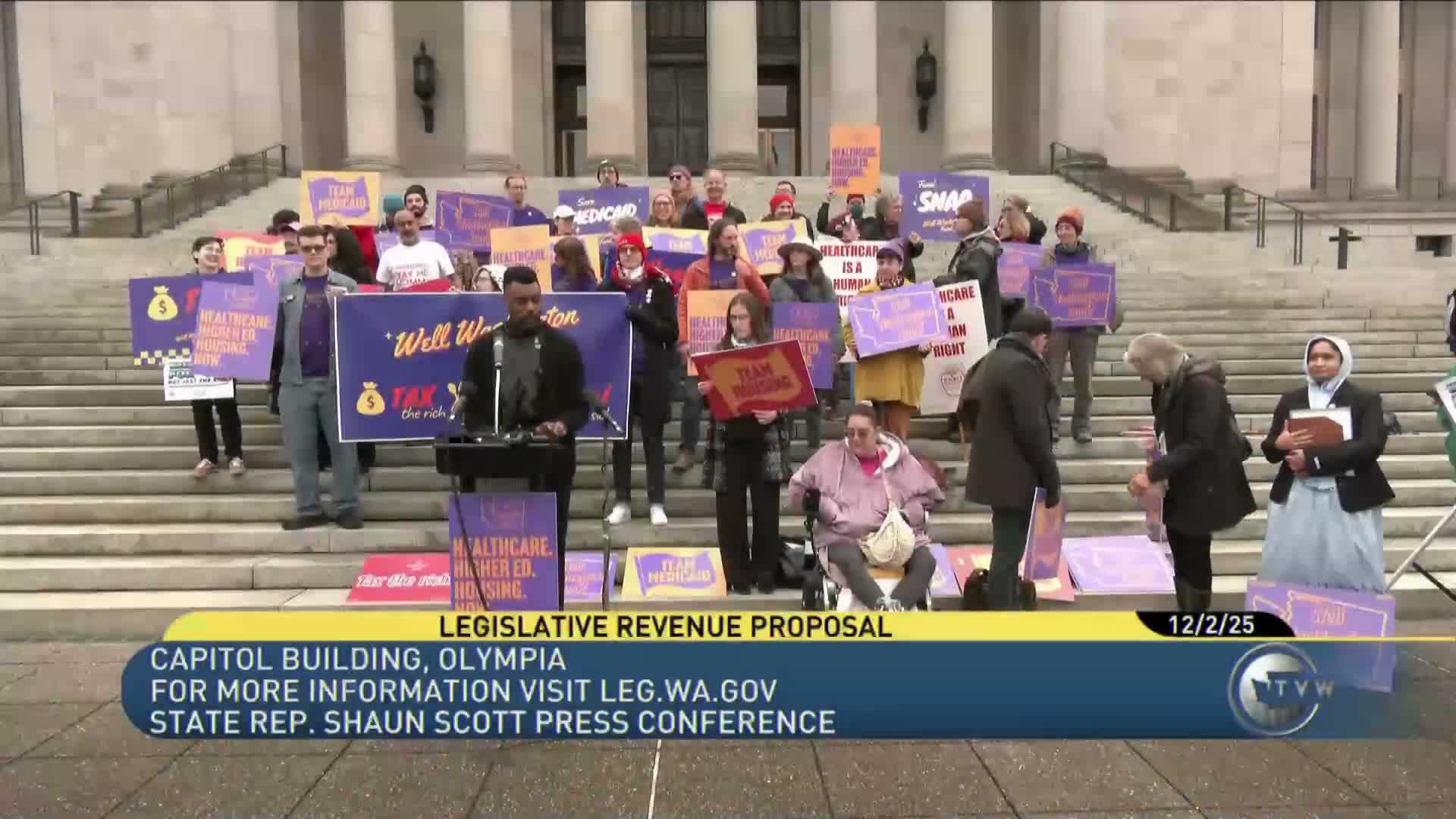
Representative Scott announced a three-bill package at a midday press conference, saying the measures would protect Washington state services from anticipated federal cuts. The centerpiece, the Well Washington Fund, would create a dedicated account funded by a corporate payroll tax on annual wages above $125,000 and is projected in her remarks to generate $3 billion annually. Scott said the payroll tax would apply to “only the largest 1% of Washington corporations.”
The package also includes what Scott identified as the Wildfire Alleviation Support Act (referred to in remarks as "house bill 20 89") to restore funding to the wildfire response account by ending a tax break for large banks, and a separate bill to allow counties to levy corporate taxes for the first time in state history. Scott said the bills are designed to respond to federal budget changes tied to HR 1 and to prevent erosion of services such as early learning, childcare, higher education and health care.
Why it matters: supporters said federal policy choices could trigger large gaps in state services. Michelle Thomas of the Washington Low Income Housing Alliance told the press conference that without state action “over 5,000 people who are currently safely housed may lose their housing next year,” and that the alliance is asking the state to invest an additional $3 million in the next legislative session to shore up eviction prevention and related supports. Christina Savitsky, who identified herself as a homeless disabled veteran, described how changes to Medicaid, SNAP and proposed work requirements could make it harder for people with disabilities to maintain benefits and obtain employment supports.
University and labor voices joined the call. Ibrahim Flaxman, a professor who also described a cooperative project that lost Census Bureau support, warned that federal uncertainty could produce nine‑digit budget shortfalls at the University of Washington and undermine research and course offerings. Amy Hagopian of the AAUP described faculty losses, cancelled grants and threats to health-professional training programs. Mikey Stramska, president of the Washington Federation of State Employees, said agencies are understaffed, citing that the Department of Corrections is down about 200 positions and a backlog of more than 13,000 active warrants; he also cited an estimated $1 billion maintenance backlog in state parks.
Supporters framed the Fund as a progressive-revenue solution that would ask large corporations to share in funding public services. Fatima Baxwalla of Tech for Taxes said, “The Well Washington Fund is a critical first step in getting these corporations to pay what they truly owe into our tax system,” and vowed to organize for passage despite anticipated opposition.
On process and politics: Scott said she will pursue committee hearings and legislative consideration in 2026 and raised the capital gains tax referendum passed in November 2024 as evidence of public support (“2 out of 3 voting Washingtonians elected to continue taxing the ultra wealthy,” she said). Reporters asked whether the bill would include an emergency clause to make it referendum‑proof; Scott said the idea would be explored but emphasized the need to balance urgency with the legislative process. She also acknowledged concerns that some businesses might relocate higher-paying jobs in response to such taxes and responded that adequately funded public services can attract people and business.
No formal motion, committee action or vote was recorded at the press conference. Scott and allied advocates urged that the House Finance Committee hear the Well Washington Fund in 2026 and asked supporters to mobilize.
Next steps: organizers and Scott urged movement‑building before the upcoming legislative session; Scott said she had held preliminary conversations with some stakeholders, including a credit-union lobbyist whose input influenced house bill 20 89. The bills will require formal introductions and committee referrals; a hearing and any vote remain pending.