Get Full Government Meeting Transcripts, Videos, & Alerts Forever!
Get email alerts on the Fish Passage And Restoration topic
No spam. Unsubscribe anytime.
State, federal and Yakama Nation leaders break ground on Cle Elum fish passage project
Summary
Tribal leaders, Governor Jay Inslee and federal officials marked the completion of a juvenile fish passage facility and broke ground on an adult fish collection facility at Cle Elum Dam, a project officials say will reopen nearly 30 miles of upstream habitat for salmon and steelhead and is supported by new federal and state funding commitments.
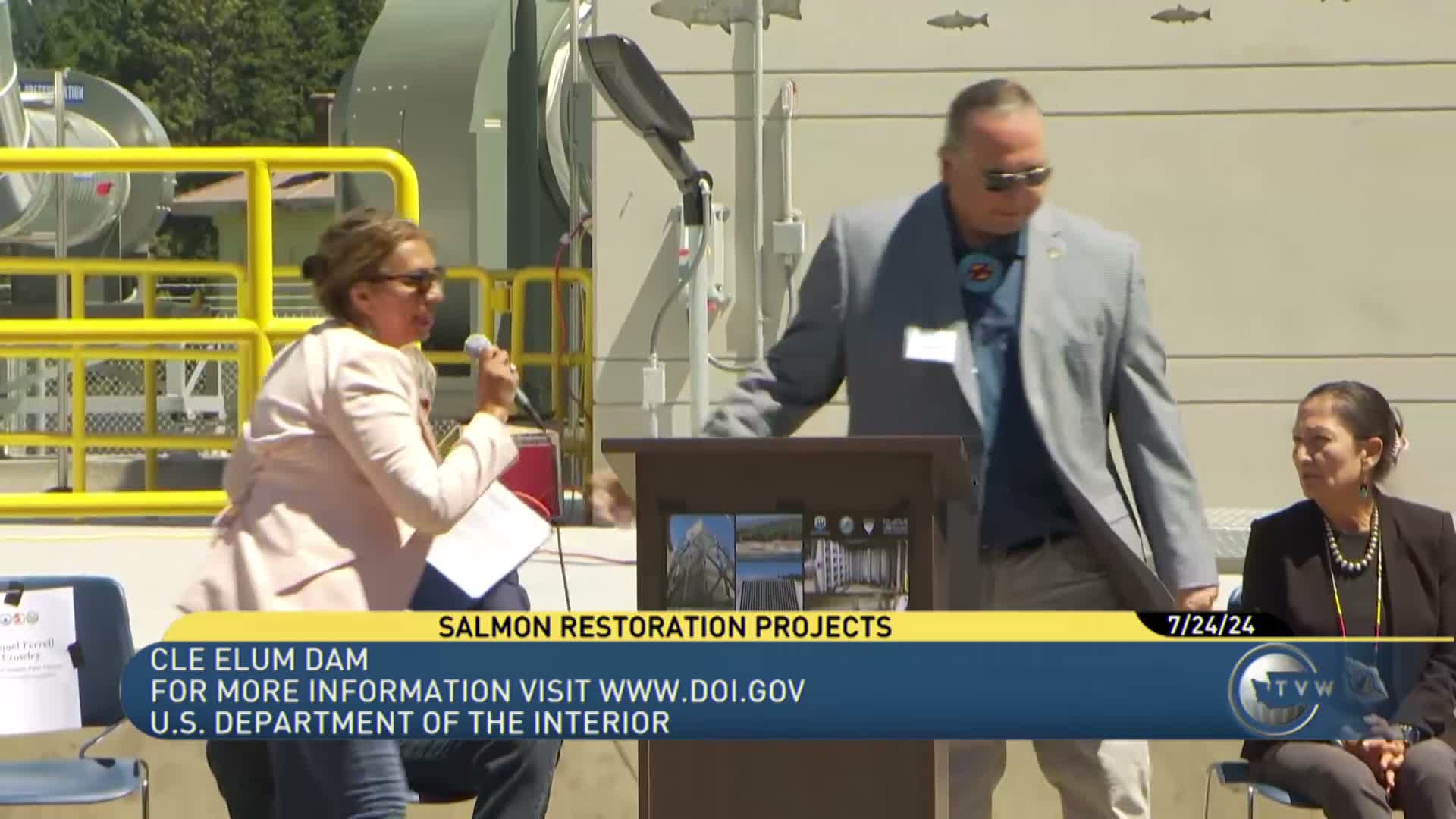
Cle Elum, Wash. — Tribal, state and federal leaders on the Cle Elum Dam site marked completion of a juvenile fish passage facility and broke ground on an adult fish collection facility that officials said will reopen nearly 30 miles of upstream habitat for salmon and steelhead.
"This project will restore salmon and other threatened fish populations above the Cle Elum Dam, creating nearly 30 miles of protected fish habitat and ensuring that these crucial species can continue to recover," Raquel Crowley read from a letter by U.S. Sen. Patty Murray.
Why it matters: Officials said the work is intended to support reintroduction of sockeye and coho salmon and to strengthen river and irrigation systems relied on by Central Washington agriculture. The event emphasized multiagency cooperation among the Yakama Nation, the Bureau of Reclamation, the Department of the Interior, the Washington State Department of Ecology and the Washington Department of Fish and Wildlife.
Governor Jay Inslee framed the project as decades in the making and linked it to state and climate funding priorities, noting state support and the role of the Climate Commitment Act in financing similar watershed projects. "As the salmon go, so go we," he said, urging continued work on water-temperature challenges that can limit fish survival.
Chairman Gerald Lewis of the Yakama Nation recounted the Nation's long involvement in fisheries operations and reintroduction efforts, saying the tribe helped collect and transport adult fish for early trials. "If it wasn't for Yakama Nation, we wouldn't be here," Lewis said, emphasizing tribal stewardship and local knowledge as central to the project's success.
Interior Secretary Deb Haaland said the Bureau of Reclamation would invest another $16,000,000 from the federal Investing in America agenda for drought-resilience work in the Yakima Basin and cited a separate $3,700,000 contribution toward an irrigation project in the Wapato area. She said the Basin supports roughly 400,000 people and an approximately $4.5 billion agricultural industry, per her remarks.
Other members of Congress sent statements read at the event: Sen. Maria Cantwell praised the Yakima Basin Integrated Plan as a "model for the nation," and Rep. Dan Newhouse’s office commended the Bureau, tribal partners and contractor Garco Construction Inc. for their roles in the project.
What happened next: After the remarks, event organizers invited the assembled leaders to the riverbank for a ceremonial shovel-turn groundbreaking and a community reception; the program did not record any formal votes or regulatory actions.
Notes on sources and scope: All direct quotes and statements are drawn from remarks and letters read or delivered at the event. Funding figures and project descriptions above reflect the amounts and program names as stated by speakers during the ceremony.