Get Full Government Meeting Transcripts, Videos, & Alerts Forever!
Get email alerts on the Land Use Tables topic
No spam. Unsubscribe anytime.
Murray Planning Commission begins rewriting land-use code, flags drive‑throughs, self‑storage and auto sales for further study
Summary
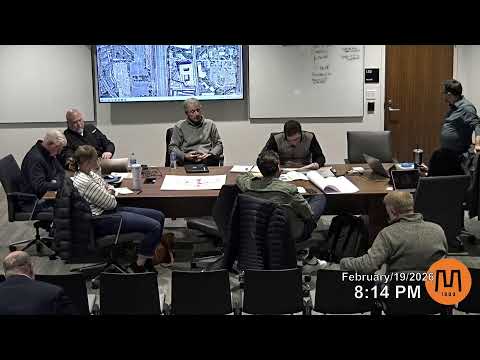
At a Feb. 19 work session the Planning Commission reviewed draft land‑use tables meant to replace the outdated standard land use code. Staff led an interactive exercise; commissioners asked staff to return with research on restaurant sizing, drive‑throughs, auto sales in manufacturing zones, self‑storage locations, data centers and cannabis.
The Murray City Planning Commission on Feb. 19 reviewed a draft approach to replace the city’s verbose “standard land use code” with a simplified set of land‑use tables and objective standards. Staff led commissioners through an interactive exercise meant to prioritize permitted, conditional and prohibited uses in three pilot zones: CD, MG and CN.
Why it matters: staff told commissioners the existing standard land use code lists thousands of narrowly defined uses that confuse the public and staff. Replacing that approach with a compact table and clearer definitions is intended to make permitting decisions more predictable and easier for applicants and residents to understand.
Staff presentation and exercise: Zach Smallwood, planning staff, said the standard code contains many specific entries (he noted “over 6,000 individual types of land uses”) and proposed consolidating to broader use categories. Commissioners placed green or red stickers on proposed categories to indicate support or concern, giving staff quick feedback about areas to prioritize for follow‑up.
Key issues flagged for additional research: commissioners asked staff to return with refined options and data on several items: - Restaurants and drive‑throughs in neighborhood commercial (CN): commissioners agreed restaurants should be considered but asked staff to research objective size limits (square footage or occupancy) and whether drive‑throughs should be conditional depending on location and traffic impacts. Staff noted Mill Creek uses a 5,000 sq ft threshold as an example. (Staff: Zach Smallwood.) - Self‑storage proliferation: commissioners raised concerns about many freeway‑frontage self‑storage facilities across the city that create limited local jobs and can be repurposed informally for light industrial activity. Staff displayed a map of existing storage sites and commissioners asked for analysis of where new self‑storage would be appropriate and how many such facilities the city needs. - Automobile sales in MG vs. State Street: the commission debated whether auto sales should be allowed broadly in MG (manufacturing/general) or limited to State Street; concerns included visual impacts, the potential loss of flex industrial spaces for contractors and startups, and whether a separate “auto broker” definition could allow lower‑impact operations. Staff suggested zoning subcategories (MG‑1/MG‑2) or size/location limits. - Manufacturing vs. mixed uses and distilleries/brewpubs: commissioners discussed splitting MG into subzones so lighter maker‑spaces, brewpubs, and small showrooms can coexist without displacing higher‑impact, job‑producing manufacturing. Brewpubs and restaurant‑distilleries were discussed as uses that sometimes straddle retail and manufacturing definitions. - Data centers and telecommunications: staff said data centers are not currently defined in the code and recommended placing them in MG with clear standards; telecommunications is handled in a separate chapter (chapter 17.8) and would be referenced rather than duplicated. - Weapons (gun sales) and cannabis: commissioners suggested making weapons/gun sales conditional in MG and flagged cannabis for alignment with state law; staff said the cannabis language will be revised to conform to state requirements.
Staff directions and next steps: commissioners did not make code changes at the meeting. Instead they directed staff to gather maps, examples of size thresholds, possible conditional standards (for drivethroughs, gasoline pump limits), and refinement of MG sub‑zone options. Staff said the planning commission will vet a more detailed draft and then forward recommendations to the City Council; tentative target months mentioned were June–July for more final text, with a follow‑up discussion scheduled for the next meeting on March 5, 2026.
What commissioners said: during the presentation, staff summarized the project as “not set in stone” and asked for commissioners’ input; commissioners repeatedly emphasized balancing economic development and protection of manufacturing job space while allowing neighborhood‑scale commerce where appropriate. Commissioners also stressed that objective criteria and clear conditional standards will be necessary to make the new table enforceable and appealable.
The next procedural step: staff will return with research and a more detailed draft. The commission scheduled further discussion for March 5, 2026, and signaled willingness to continue refining the tables over several meetings before recommending text amendments to the City Council.