Get Full Government Meeting Transcripts, Videos, & Alerts Forever!
Get email alerts on the Utilities Infrastructure topic
No spam. Unsubscribe anytime.
Charlotte County BZA approves two 100-foot radio towers for Charlotte Harbor Water Association with conditions
Summary
The board approved two special exceptions allowing 100-foot monopole radio towers (exclusive use for Charlotte Harbor Water Association) at 2515 Highlands Road and 5002 Mystic Street, with conditions including a Type D landscape buffer, 8-foot opaque fencing, permit requirements, and a five-year term.
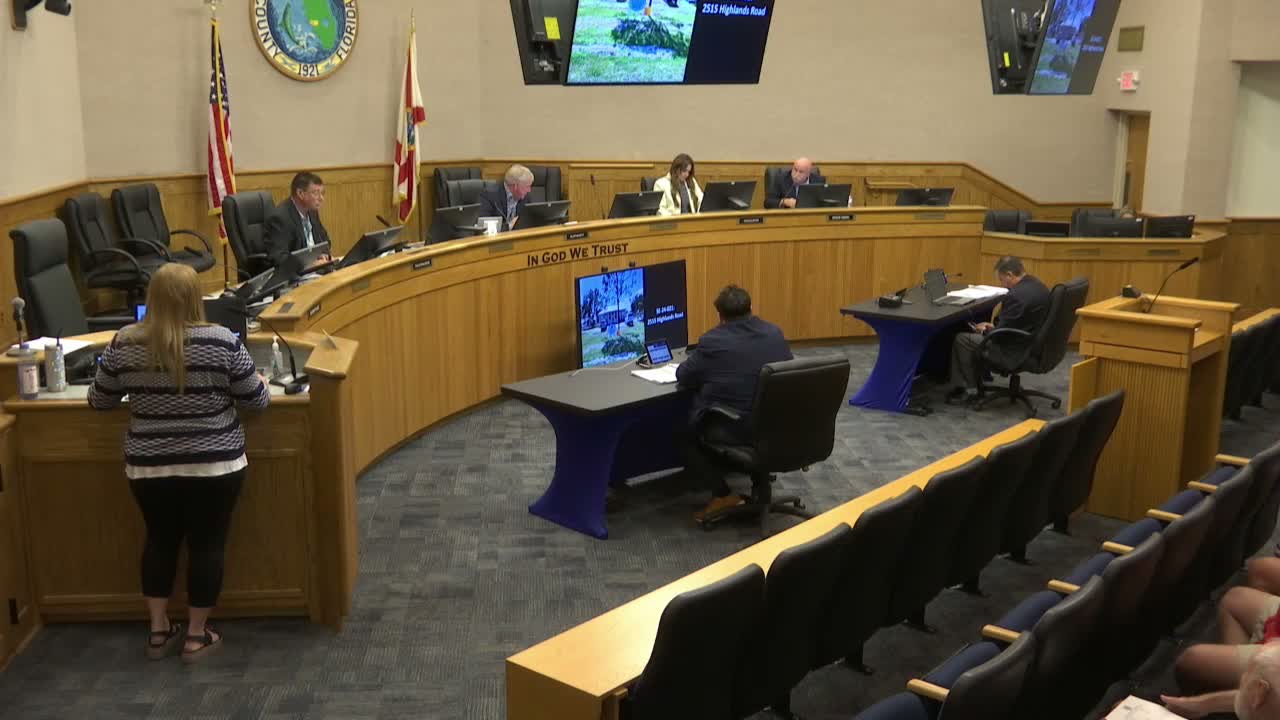
The Charlotte County Board of Zoning Appeals on Jan. 11, 2025, approved two special exceptions to allow 100-foot radio communications towers for Charlotte Harbor Water Association. The towers are intended for the utility's SCADA radio communications between facilities and are intended for exclusive use by the association and other essential service providers unless the special exception is later modified.
Senior planner Elizabeth Nocek presented both petitions (SE-24-021 at 2515 Highlands Road in Punta Gorda and SE-24-022 at 5002 Mystic Street in Port Charlotte) and concluded staff's review found the proposed towers met the three statutory criteria for special exceptions: consistency with the comprehensive plan, compatibility with surrounding uses, and no evidence that operation would endanger public health or safety. Nocek noted the Highlands Road site is part of an approximately 8.51-acre utility compound; staff recommended conditions including a maximum overall element height of 105 feet (to accommodate minor lightning-rod adjustments), monopole design, required permits (site plan, building, environmental, stormwater, vegetation removal, fencing, and landscape plan approval), and a Type D buffer with an 8-foot opaque fence surrounding the tower compound. Staff also recommended a five-year term for the special exception with a provision that the exception would not expire if development commences before term expiration.
Derek Rooney, counsel for Charlotte Harbor Water Association, told the board the two approvals are linked: "The two approvals are linked together," he said, adding the towers are necessary to provide redundant, real-time communications between the utility's sites to monitor flows, pressure and to support operations during emergencies such as hurricanes.
Board members asked about colocation and safety. Nocek said the site has limited colocation potential and staff exempted the applicant from submitting colocation letters because the towers are intended for exclusive public-utility use; staff also submitted an environmental memorandum and an engineering report as part of the application. Deputy County Attorney Tom David recommended entering the staff reports into the record and asked staff to note any unique differences between the companion applications; legal counsel reminded the board that federal law limits local regulation of RF emissions and cautioned against considering unsworn RF-health materials.
Motions to approve each special exception were made and seconded; both motions carried on voice votes. Conditions adopted require compliance with all applicable permits, an 8-foot opaque fence as the Type D buffer, monopole design, and restrictions on commercial colocations absent a modification of the special exception.
The board recorded that the towers are intended to improve service redundancy and public-safety communications for the utility's service area; staff noted Charlotte Harbor Water Association had documented more than 85 power losses to the site over the past decade and said radio redundancy is critical for operations during extreme weather and emergencies.