Lifetime Citizen Portal Access — AI Briefings, Alerts & Unlimited Follows
FreePoint Ecosystems outlines proposed Eloy pyrolysis plant, board hears safety and tax questions
Loading...
Summary
FreePoint Ecosystems told the Pinal County Board of Supervisors it plans a 44‑acre pyrolysis plastic recycling facility in Eloy with about 100 permanent jobs and an estimated $19 million in property related tax revenue over 10 years; the project is informational and an air‑permit modification is in public review.
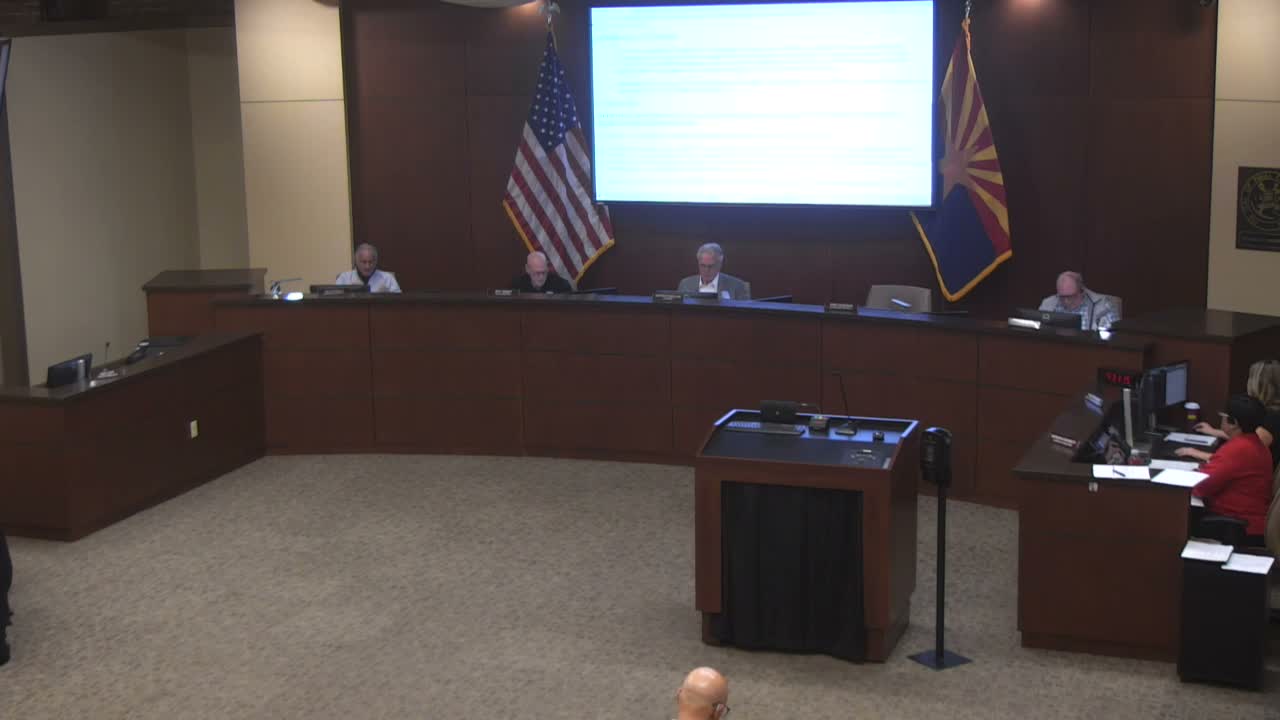
Jeff Story, chief development officer for FreePoint Ecosystems, told the Pinal County Board of Supervisors on Feb. 18 that the company plans a 320,000‑square‑foot pyrolysis facility in the Eloy Industrial Park that would create about 100 permanent jobs and 200 construction jobs.
The company said the plant would target specific plastic streams, sort them in a warehouse and feed pyrolysis rotary kilns that heat plastics in the absence of oxygen to produce a condensed hydrocarbon product the company ships by rail. “We turn waste plastic into a recycled oil product that we sell back to the petrochemical industry,” Story said.
County staff said FreePoint has obtained site‑plan approval from the city of Eloy and that a modification to a county air permit has been submitted and is under a 30‑day public review. Staff told the board the facility is inside Eloy corporate limits and that no county board approvals are required for the project itself.
Board members pressed FreePoint on the company’s claims. Supervisor Surdy asked how the company shows $19 million in tax revenue over 10 years and which taxes would be collected. Company representatives said the estimate reflects property and personal‑property tax assessments tied to the facility and its equipment, not sales taxes collected on finished consumer sales. “Over the term of the deal … it’s property taxes, not sales,” Story said.
Supervisors also asked where feedstock would come from. Story said FreePoint plans to contract with material recovery facilities (MRFs) in Phoenix and Tucson and to purchase certain manufacturing and residue streams — for example, pill bottles and trim waste — rather than mixed municipal solid waste, which he said is too contaminated and low in plastic content to be economical. “We typically do not take standard municipal solid waste,” Story said, adding most of the company’s material is landfill‑bound or residue streams and that suppliers often give material at little or no cost to avoid landfill fees.
On safety, board members asked what would occur if oxygen intruded into a reactor. Story warned that oxygen intrusion at high temperatures could lead to combustion and that hazard studies and multiple engineering fail‑safes are used to manage those risks; he said the Ohio plant had no known oxygen intrusions. “We do hazard studies. We do risk assessments,” Story said.
Story described the Ohio plant FreePoint operates in Hebron, Ohio, which he said processes about 175,000,000 pounds a year; he estimated the proposed Arizona capital cost at roughly $300 million to $400 million. He said FreePoint expects to ship certified recycled hydrocarbons by rail to petrochemical customers on the Gulf Coast and that the process is ISCC certified.
County staff and the board clarified the presentation was informational. No board action or vote was requested at the meeting; the county’s air permit review process and any regulatory determinations will proceed through the agency public‑review process.
What’s next: The air‑permit modification for the facility remains in public review and county staff said they will provide additional technical information as it becomes available.