Get Full Government Meeting Transcripts, Videos, & Alerts Forever!
Get email alerts on the Distilleries topic
No spam. Unsubscribe anytime.
Committee declines to advance small‑distillery overhaul after public‑health, enforcement concerns
Summary
LD 2160, a proposal to ease fees, inspection frequency, reporting, and direct sales for small distilleries, did not pass committee review; the Department of Agriculture cautioned that limiting inspections to every three years and extending license terms would hinder public‑health oversight, and the committee voted ought not to pass.
The committee voted 'ought not to pass' on LD 2160 after hearing technical and public‑health concerns from the Department of Agriculture, Conservation and Forestry (DACF) and other stakeholders.
Miss Olsen introduced LD 2160, which proposed a suite of changes for small distilleries: prohibition on certain Bureau fees, inspection frequency no greater than once every three years, longer licensing cycles (three years), loosened reporting, and new allowances for direct sales and mail order outside the U.S. Postal Service. DACF Director of Quality Assurance and Regulation Celeste Poulan told the committee QAR licenses and inspects manufactured‑food businesses (including distilleries) and strives to inspect vendors at least annually and respond promptly to complaints; she said a three‑year inspection floor would be incompatible with QAR’s consumer‑protection mission and would prevent timely follow‑up on credible complaints.
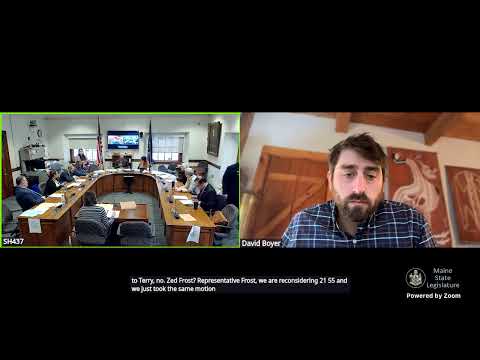
Members expressed sympathy for small producers but also concern about public safety and the complexity of the wholesale contract structure for spirits. The committee moved "ought not to pass," recorded in committee as 11 members in the affirmative with 2 absent.
Key point: QAR’s testimony emphasized that licensure and inspection frequency are public‑health tools; the department said complaint‑driven follow‑up and monthly inspections for significant deficiencies are essential.