Get email alerts on the Workers Compensation topic
No spam. Unsubscribe anytime.
Panel hears proposal to raise short-term disability pay for lower‑wage injured workers
Summary
SB 1519 would change the workers' compensation temporary disability calculation to a tiered system — 75% for wages below 75% of the state average weekly wage and 65% above — with proponents saying it would increase take-home benefit amounts for lower‑wage workers.
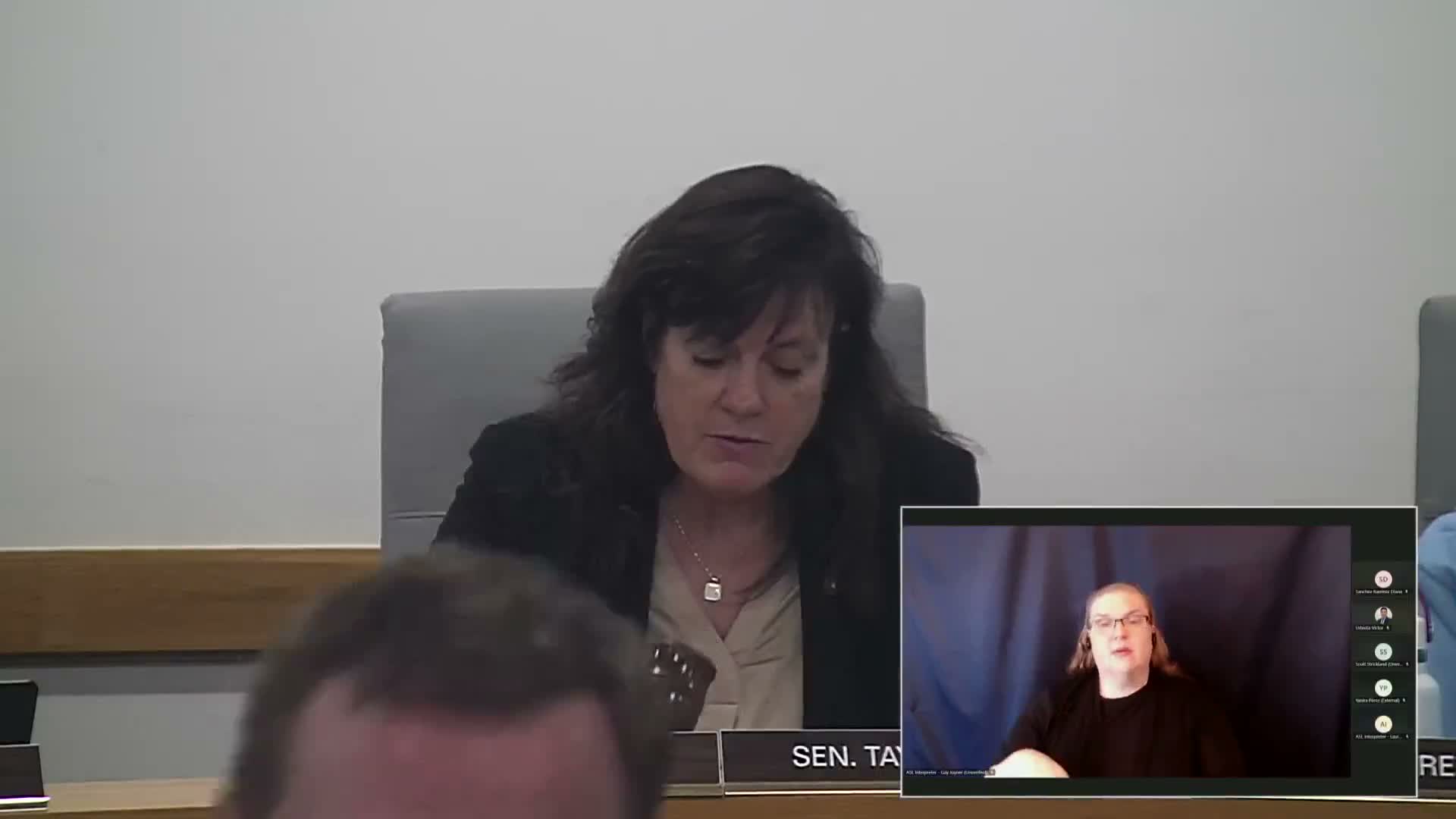
Senate Committee on Labor and Business members received an overview of Senate Bill 1519 and the Management Labor Advisory Committee (MLAC) subcommittee work on a proposed tiered formula for workers' compensation temporary disability benefits.
Matt West, administrator of the Workers' Compensation Division, said the subcommittee recommended moving away from the flat 66 2/3 percent formula toward a tiered approach designed to increase replacement pay for lower‑wage workers: 75% of weekly wage for earnings below 75% of the state's average weekly wage and 65% for wages above that threshold. West said the change is intended to bring temporary disability benefits closer to a worker's estimated net pay prior to injury.
West also noted that a dash-1 amendment circulated for SB 1519 extends similar adjustments to permanent total disability and that MLAC would review the draft language and is scheduled to vote at its next meeting on Thursday. "The recommended rate reflected in Senate Bill 1519 moves away from the current flat rate of 66 and 2 thirds to a tiered calculation," West said.
Committee members asked technical questions about the amendment and the MLAC process. West described a calculator developed for stakeholders to model scenarios and said the recommendation reflects a compromise between labor and management stakeholders after extensive subcommittee work.
AI generated
The text on this page is AI generated. Summaries, highlights, analysis, and video transcripts are all produced from the original source material.
AI can make mistakes, so if you spot one, and we will fix it for everyone.
Note: the source content is unaltered by us. Any content source we link to, be it a video, an audio recording, or a document, is presented exactly as its publisher released it. That publisher is usually a government body, sometimes an individual official or another organisation.