Get Full Government Meeting Transcripts, Videos, & Alerts Forever!
Get email alerts on the Federal Tax Briefing topic
No spam. Unsubscribe anytime.
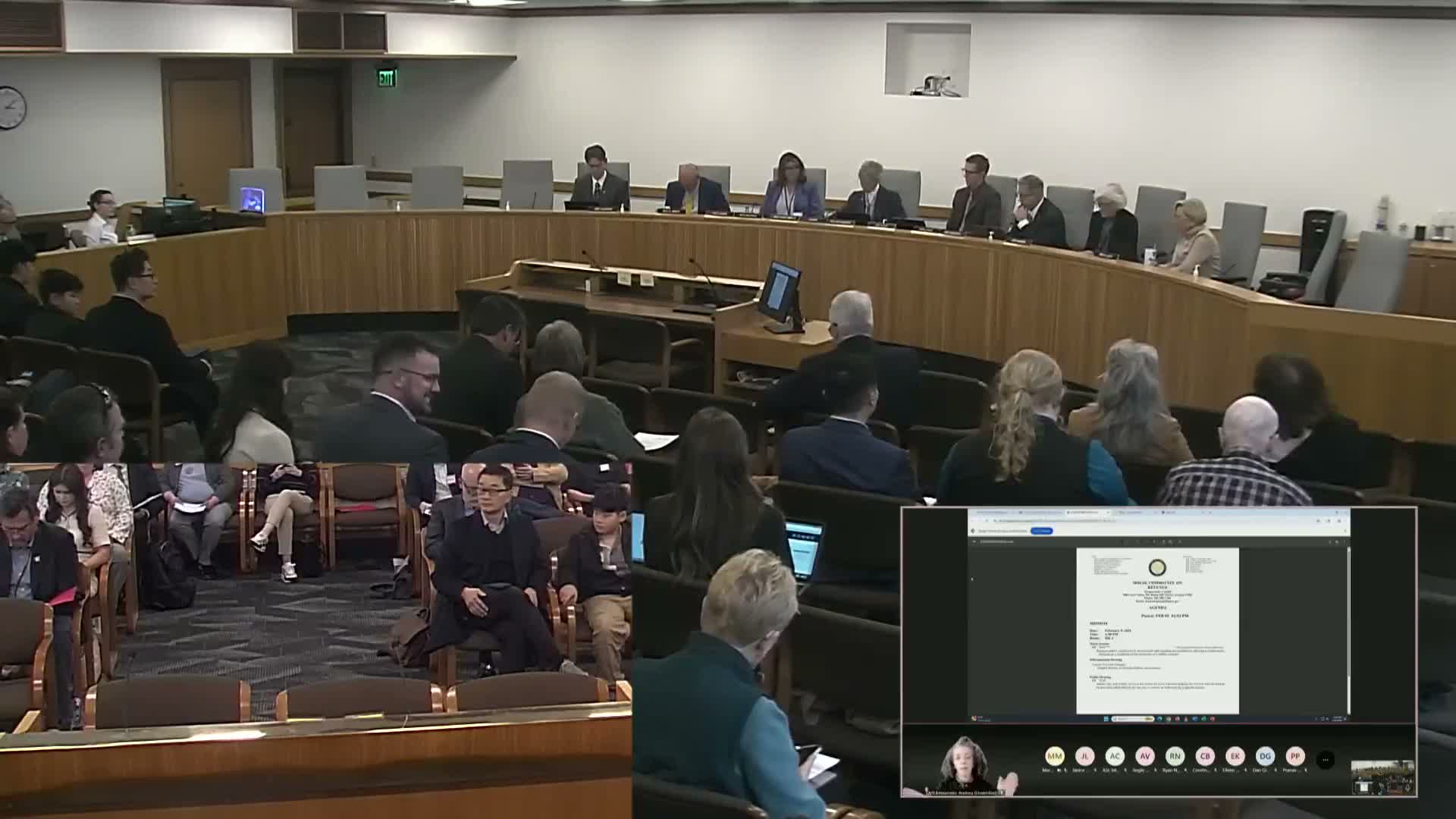
Oregon CPAs brief House revenue committee on federal tax law changes affecting state conformity
Summary
Representatives of the Oregon Society of CPAs gave an informational briefing to the House Revenue Committee on federal tax changes, highlighting rolling reconnection rules, a higher estate-tax exemption, reinstated bonus depreciation, a temporary SALT cap increase to $40,000, and a $2,000 informational-reporting threshold for 1099s beginning in 2026.
The House Committee on Revenue opened an informational session on federal tax-law changes and heard a technical briefing from John Hawkins and Heather Jackson of the Oregon Society of Certified Public Accountants. The presenters said their objective was to supply the committee with technical guidance about how recent federal changes may interact with Oregon law.
Hawkins explained Oregon’s different conformity approaches: the state uses a "rolling reconnect" for many items (meaning federal changes that alter federal taxable income typically flow into Oregon law automatically) and fixed-date conformity for others. The presenters reviewed business, individual, estate and international provisions from the federal act, noting which items would automatically affect Oregon taxpayers and which would require explicit state action to adopt.
Highlights included the presenters’ description that many business tax credits were eliminated or reduced in the federal act, while the advanced manufacturing investment credit increased from 25% to 35%. Heather Jackson called attention to what she said was a new 1% floor to claim charitable contribution deductions for businesses and described changes to Section 179 and new depreciation rules for qualified production property. She also noted that the federal informational-reporting threshold for nonemployee compensation would rise to $2,000 beginning in 2026.
On individual provisions, Hawkins said the federal law made permanent higher estate-tax exemptions (noted in testimony as about $15 million this year, indexed), extended or revised certain credits and made temporary changes to the state-and-local-tax (SALT) limit, raising it to $40,000 for a limited period (through 2029) before returning to the previous $10,000 cap in 2030. The presenters flagged that some federal provisions (for example, excise taxes or credits) would not affect Oregon’s taxable-income definition unless the Legislature acts.
Committee staff and members were offered the CPAs’ 60-plus page packet of materials. Chair Nathanson closed the informational meeting and opened the public hearing on HB 4148. The presentation was informational; no committee action on conformity or drafting decisions occurred during the session.