Get Full Government Meeting Transcripts, Videos, & Alerts Forever!
Get email alerts on the Hb4148 topic
No spam. Unsubscribe anytime.
Oregon House committee hears hours of testimony on bill to let local governments redirect lodging-tax dollars to services
Summary
Dozens of local officials, public-safety leaders and hoteliers testified Feb. 9 before the House Committee on Revenue for and against House Bill 4148, which would lower the minimum share of transient lodging-tax revenue reserved for tourism promotion from 70% to 40% and allow up to 60% for local services; supporters cited public-safety and infrastructure needs, opponents warned of lost visitors and jobs.
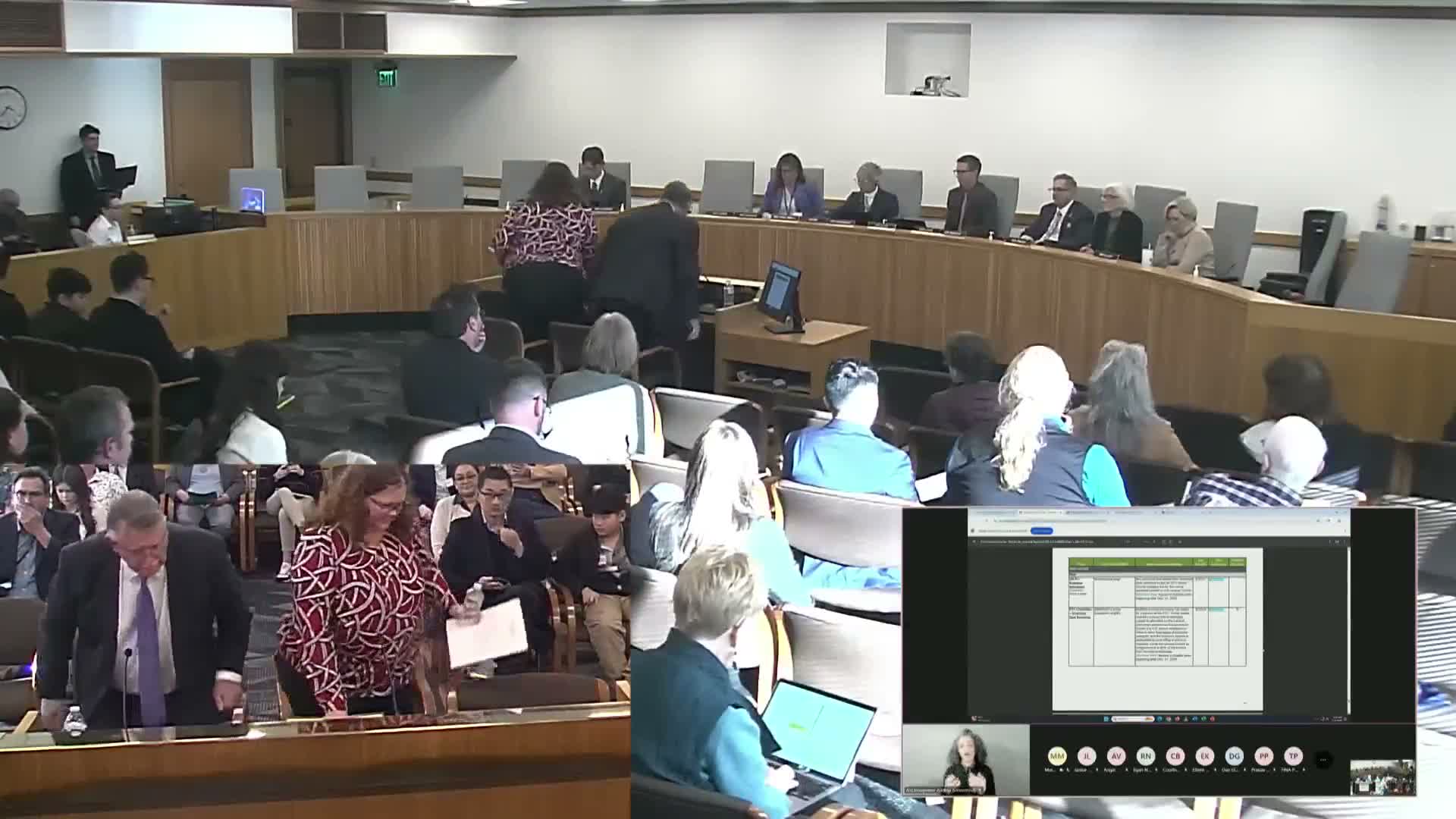
Chair Nathanson convened the House Committee on Revenue on Feb. 9 and opened a public hearing on House Bill 4148, which would change how local transient lodging tax (TLT) revenues are allocated. The bill would reduce the statewide minimum dedicated to tourism promotion from at least 70% to at least 40% and allow cities or counties to retain up to 60% for local services, including emergency services or services provided by special districts. It would take effect Jan. 1, 2027, include a reporting requirement to the Department of Revenue beginning Sept. 1, 2027, and repeal that reporting duty on Jan. 2, 2041.
Supporters argued the change is a targeted fix that preserves tourism promotion while giving communities flexibility to address strained infrastructure and public safety. Representative Jules Walters, the bill’s chief sponsor, said the measure “gives our communities the option for this source of revenue” to recoup the costs of emergency response, roads and wastewater without raising taxes. Senator Suzanne Webber described coastal towns that swell many times their resident population during summer weekends and urged passage so communities can fund responders and infrastructure.
Local elected officials and county commissioners provided concrete examples of strain. Steve Wright, mayor of Seaside, said his city has built a restricted lodging-tax surplus of roughly $11 million that is tied to tourism promotion and argued the current law does not match high-visitation realities. Paul Fournier and other county officials described using TLT funds for roads, boat launches and destination grants and said some counties need flexibility to maintain services visitors rely on.
Law-enforcement representatives also urged the committee to support the bill. Sheriff Matt Phillips, speaking for the Oregon State Sheriffs Association and the Oregon Association of Chiefs of Police, said destination counties often see arrests, collisions and correctional burdens from nonresidents and that allowing TLT funds to be used for public safety would “ensure those areas most affected by tourism have the capacity to respond.” Chief Stacy Kelly of Astoria testified that a high share of DUI arrests and traffic crashes in her county involve out-of-area drivers and described staffing strains.
Opponents — chiefly hotel operators, destination marketing organizations (DMOs) and tourism-industry representatives — warned that lowering the guaranteed reinvestment floor would reduce promotion, lower overnight stays and harm small businesses and hospitality-sector jobs. Saraida Cross, a hotel operator, said when rooms are full “housekeepers get more shifts, front desk staff have stable schedules” and argued diverting visitor dollars would reduce bookings and employee stability. Several DMOs and industry groups, including the Oregon Restaurant & Lodging Association and the Oregon Destination Association, pressed for alternatives such as targeted parity provisions, stronger transparency rules, or a less dramatic ratio change.
Industry speakers also urged more complete data before reallocating funds. Christina Recla of Visit Corvallis and others asked the committee to pause or delay action until spending and program data on how local jurisdictions currently use TLT revenues are collected and analyzed.
Several witnesses proposed compromise approaches. Jason Brandt of ORLA delivered an industry amendment that would raise unrestricted baseline access for jurisdictions currently capped at 30% while preserving existing percentages for places that already retain larger shares; he also called for improved transparency across the 120 taxing jurisdictions. Some tourism leaders suggested a smaller change (for example, moving toward 50/50 in certain places) rather than a blanket 40/60 baseline.
The committee heard roughly 53 registered speakers during this session representing mayors, county commissioners, DMOs, hoteliers, law enforcement and chambers of commerce. Testimony highlighted both immediate local fiscal pressures (roads, wastewater, emergency response and jails) and concerns about long-term tourism competitiveness if promotion funding is reduced. No committee vote was taken at the hearing; Chair Nathanson closed the public hearing and adjourned the meeting.